

WTW Interview Questions 2027: Competing Priorities
For this Willis Towers Watson interview question, use STAR as a triage decision: the colliding demands, how you ranked them by impact and urgency, what you sequenced versus deliberately deferred, how you communicated trade-offs early, and the result. Deciding is half the skill — bringing stakeholders along is the other.
Willis Towers Watson Interview Questions: What the Competing-Priorities Question Assesses
Competing priorities are commonly reported by candidates in WTW interviews because advisory analysts juggle multiple workstreams, deadlines, and stakeholders simultaneously — and how you triage determines whether everything ships or everything slips. Interviewers are testing for a real prioritization method rather than frantic multitasking: can you assess impact and urgency, make explicit trade-offs, and communicate them proactively? They also test stakeholder management — the deprioritized party needs to hear it from you early, with a plan.
Willis Towers Watson Interview Questions: How to Answer
Structure your STAR as a triage decision:
- Situation. The competing demands — two or three real ones with real deadlines — and why they collided.
- Task. Your responsibility across them and what was at stake for each stakeholder.
- Action. Your method: (1) mapped all demands with their deadlines, stakeholders, and consequences of slipping; (2) ranked by impact and urgency — explicitly, not by gut; (3) sequenced the work and time-boxed each piece; (4) communicated proactively with affected stakeholders: what would be delivered when, and what was being deferred with a clear rationale; (5) executed and tracked, adjusting as needed.
- Result. What shipped, what was deferred (and how that landed), and what the experience taught you about managing load.
Example line: "With a client deliverable, an internal report, and exam revision colliding in one week, I ranked them by consequence of failure, put the client work first, negotiated a two-day extension on the internal report with my manager before it was due — not after — and protected two evening revision blocks. Everything shipped, and the early renegotiation is the habit I kept."
Common Mistakes
- "I just worked harder." Effort without prioritization is the absence of a method.
- Silent reprioritization. Deciding without telling stakeholders is how trust breaks — communication is scored equally.
- Claiming nothing slipped. Honest trade-offs are credible; perfect juggling usually isn't.
Keep Reading
- houlihan lokey restructuring interview questions
- Jefferies Spring Week Interview 2027: Questions & How to Convert
- Jefferies Stock Pitch Interview 2027: How to Pitch in 2 Minutes
FAQ
How many competing priorities should I describe? Two or three — enough to require real triage, few enough to explain clearly.
Should I name what I deprioritized? Yes — explicit trade-offs are the proof of judgment.
What if a stakeholder was unhappy? Describe how you managed it honestly; not every trade-off lands perfectly, and handling that is part of the skill.
Can I mention tools or frameworks? Briefly — an impact/urgency matrix or a simple tracker adds credibility without dominating the story.
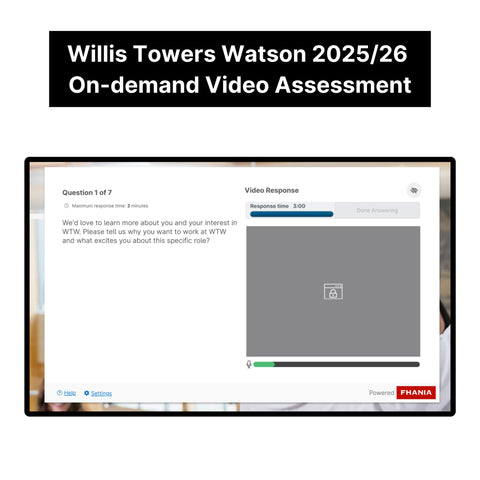
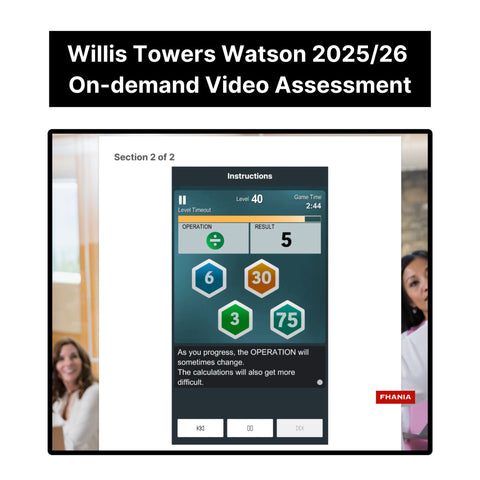
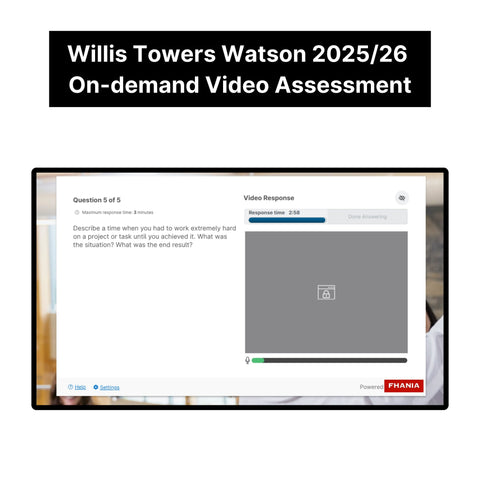
Preparing for Willis Towers Watson's interview? Our 2027 Willis Towers Watson WTW On-demand Video Assessment Exact Questions and Answers has practice questions and answers — $79 one-time, instant download.