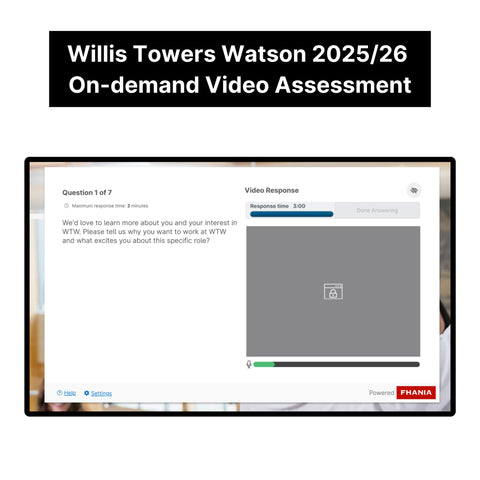
WTW Interview Questions 2027: Tell Me About a Time You Faced a Challenge
For this Willis Towers Watson interview question, tell a STAR story about a significant challenge with real stakes: what made it significant, how you broke it down into manageable parts, the actions you took step by step, and the outcome. The assessor wants your challenge-handling method — decomposition, prioritization, persistence — more than the drama of the challenge itself.
Willis Towers Watson Interview Questions: What the Challenge Question Assesses
This broad behavioral question is commonly reported by candidates across WTW's interview stages, and its very breadth is the test: can you select a genuinely significant challenge and analyze your own handling of it with maturity? Interviewers are looking for composure under pressure, structured problem-solving, and self-awareness — the qualities that determine whether a junior professional escalates well, asks for help appropriately, and keeps delivering when work gets hard. Pick something with weight; trivial challenges waste the opportunity.
Willis Towers Watson Interview Questions: How to Answer
Build your STAR around a clear handling method:
- Situation. The challenge and why it was significant — scale, stakes, complexity, or personal difficulty. Establish weight in three lines.
- Task. What you were responsible for and what was at risk.
- Action. Your method, in sequence: (1) broke the challenge into parts and identified the critical few; (2) tackled the highest-leverage part first; (3) sought input or help where you lacked expertise — name who and why; (4) tracked progress and adjusted as new information emerged; (5) communicated with stakeholders throughout rather than going silent.
- Outcome. The result and, importantly, what the experience added to your toolkit — a method, a habit, a perspective you still use.
Example line: "When our dissertation dataset turned out to be corrupted three weeks before the deadline, I split the problem: salvage what was recoverable, re-collect the critical subset, and renegotiate scope with my supervisor in parallel. I asked a postgrad for help with the recovery scripts, delivered on time with a narrower but solid analysis, and learned to validate data pipelines on day one of any project — a habit I've kept since."
Common Mistakes
- Drama without method. A harrowing story with no visible thinking process scores poorly.
- Solo heroics. Never asking for help when it was clearly needed reads as poor judgment, not strength.
- No lasting lesson. Challenges that changed nothing about how you work are just anecdotes.
Keep Reading
- kkr tell me about yourself
- Bloomberg Assessment Centre 2027: Exercises & How to Prepare
- Bloomberg Assessment Timeline 2027: How Long Each Stage Takes
FAQ
How "significant" should the challenge be? Significant enough that the outcome genuinely mattered — academic, professional, or personal all qualify.
Should I show emotion? Composed honesty — acknowledge the difficulty, then focus on the method.
What if the challenge was interpersonal? Fine, if you handled it maturely — focus on your actions and communication, not the other party's faults.
Can I use the same story as another question? Better to have distinct stories; assessors notice repetition across a video assessment.
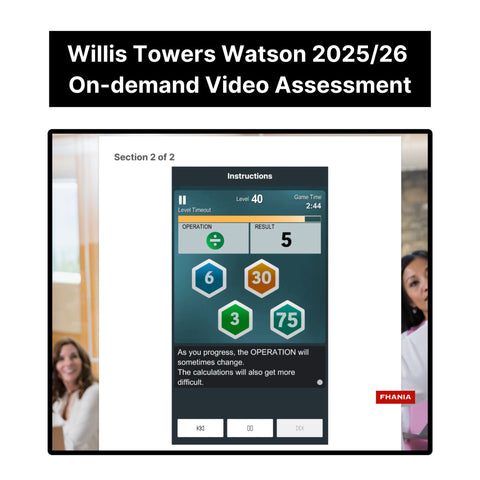
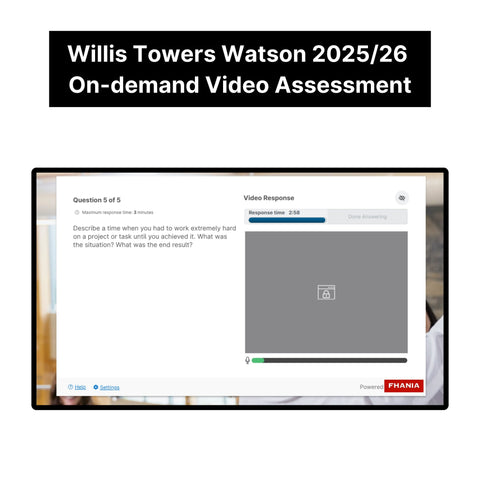
Preparing for Willis Towers Watson's interview? Our 2027 Willis Towers Watson WTW On-demand Video Assessment Exact Questions and Answers has practice questions and answers — $79 one-time, instant download.