Telstra Coding Questions 2027: How to Pass the Technical Assessment
For these Telstra graduate program coding questions, use a solve-then-explain method: clarify edge cases, ship a working brute force first, then optimize and test — and in the follow-up video, walk through your logic, trade-offs, and complexity out loud. Process and communication are scored, not just correct output.
Telstra Graduate Program Coding Questions: What the Assessment Tests
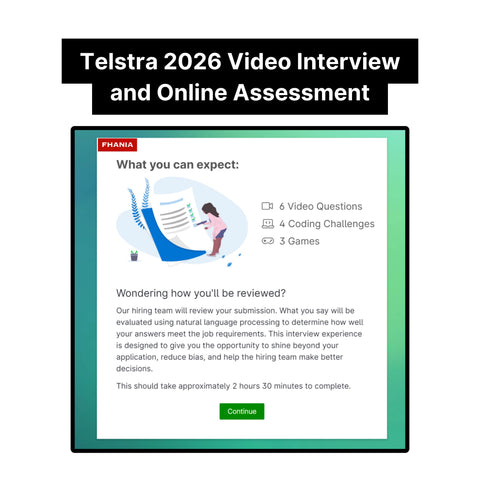
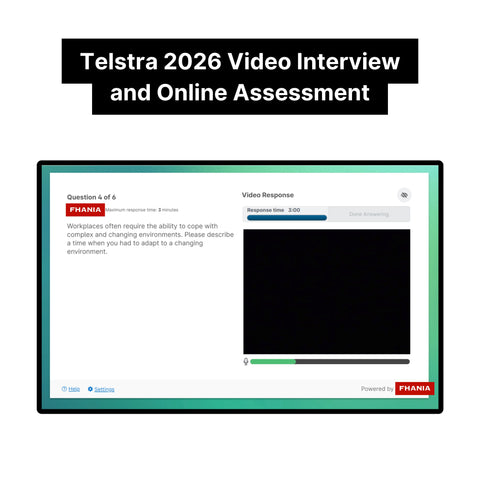
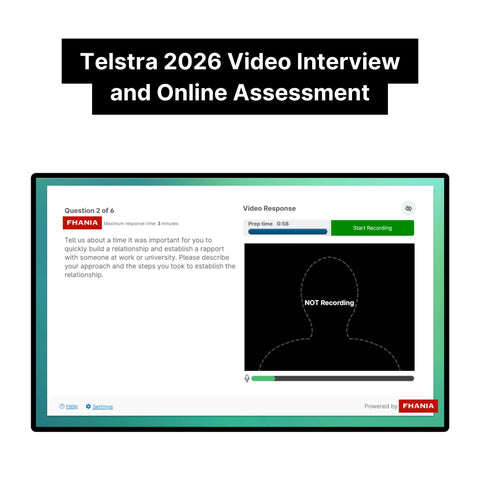
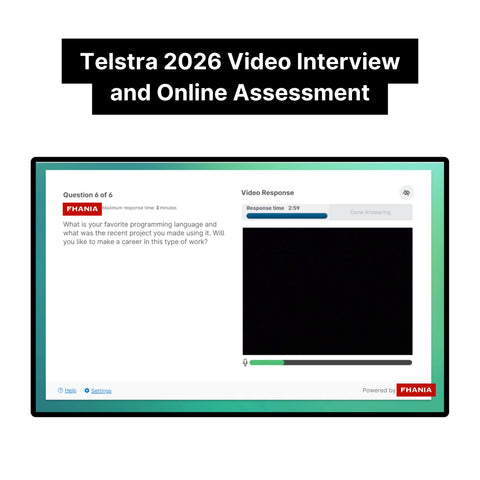
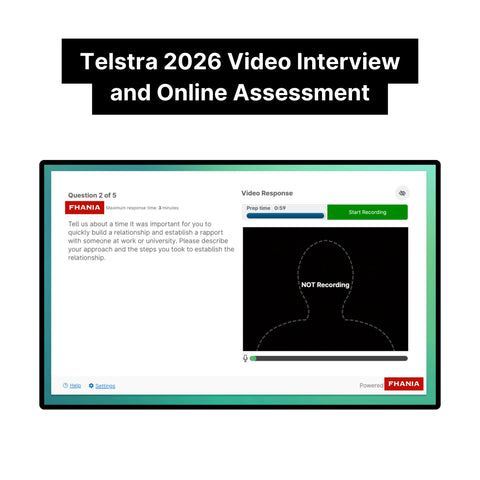
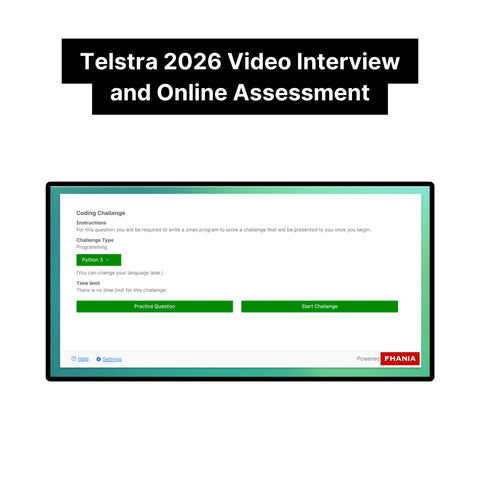
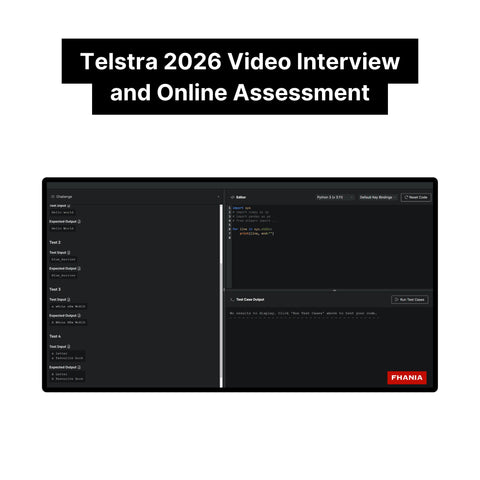
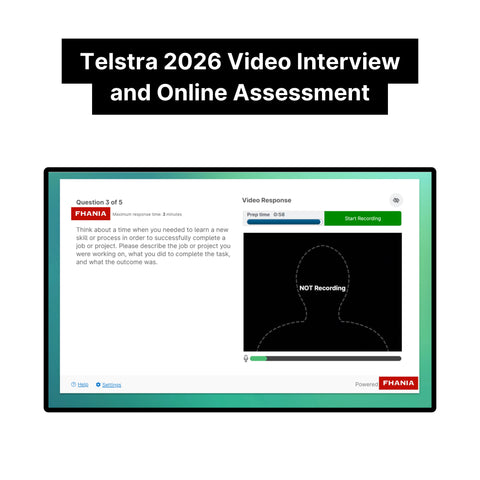
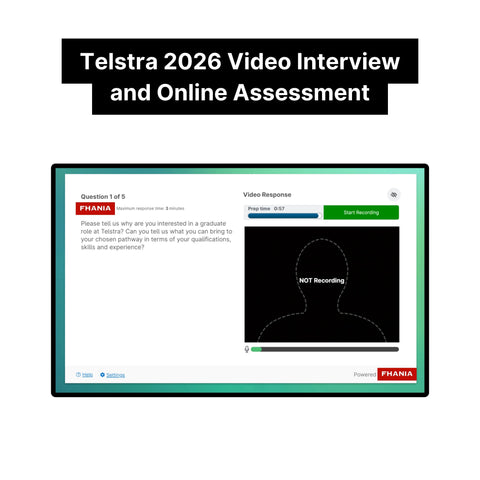
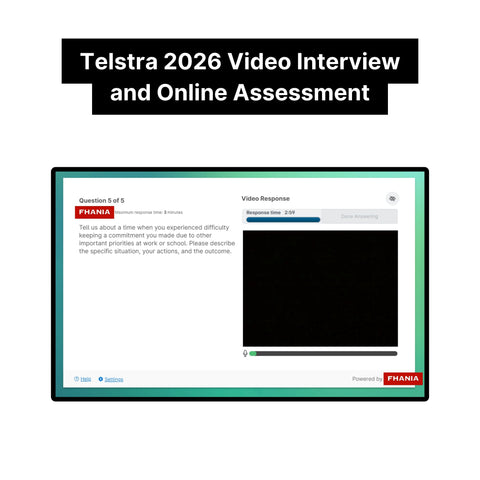
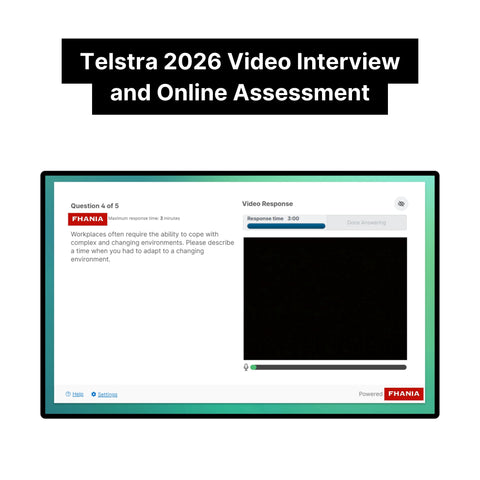
The coding assessment is commonly reported by candidates as part of Telstra's graduate online process: a series of short coding tasks in a language of your choice, followed by a recorded video explaining your solutions. It tests practical problem-solving under time pressure plus the ability to communicate technical thinking — the video explanation is not an afterthought, it is where assessors check whether you actually understand your own code. Exact format and timing may vary by intake.
Telstra Graduate Program Coding Questions: How to Pass
Solving the tasks:
- Read twice, clarify once. Restate the requirements in your own words; pin down edge cases (empty inputs, duplicates, large sizes) before coding.
- Brute force first. Get a working solution down fast — a correct slow answer beats an elegant unfinished one.
- Optimize deliberately. Look for the standard upgrades: hash maps for O(1) lookups, two pointers for sorted data, sorting when it simplifies logic. State the complexity of each version.
- Test edge cases. Run through empty, single-element, and worst-case inputs mentally before submitting.
Recording the explanation video:
- Structure it: problem restatement → your approach → why it works → complexity → what you'd improve.
- Narrate decisions, not syntax. "I used a hash map here so lookups stay constant time" beats reading code line by line.
- Be honest about trade-offs. "This is O(n log n) because of the sort; a linear approach would need..." shows depth.
- Speak with energy. A flat monotone suggests memorization; engaged explanation suggests understanding.
Common Mistakes
- Silent coding. Even if not required live, narrating your thinking in the video's walkthrough is what gets scored.
- Skipping the brute force. Jumping straight to optimal solutions often leads to bugs under time pressure.
- Ignoring complexity. Failing to analyze time and space complexity in the explanation is a common reason for low scores.
Keep Reading
- bcg difficult people interview question
- Telstra Coding Questions: Data Structures & Algorithms to Revise
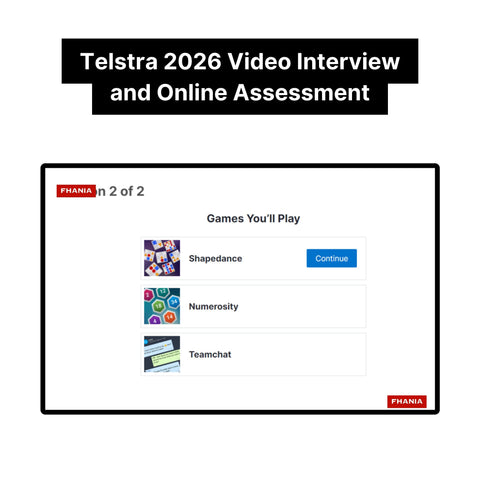
- Telstra Game-Based Assessment: What the Games Test & How to Win
FAQ
Which language should I choose? Your strongest one — familiarity beats theoretical language advantages under time pressure.
How much should I prepare? Regular practice on fundamental data structures and algorithms; focus on arrays, strings, hash maps, and basic complexity analysis.
What if my solution is not optimal? A correct, well-explained suboptimal solution with honest complexity analysis still scores well.
Can I re-record the video? Check the platform's rules for your intake — if allowed, use it; a clear second take beats a rambling first.
Preparing for Telstra's interview? Our 2027 Telstra Online Assessment | Video Interview Tutorials has practice questions and answers — $79 one-time, instant download.