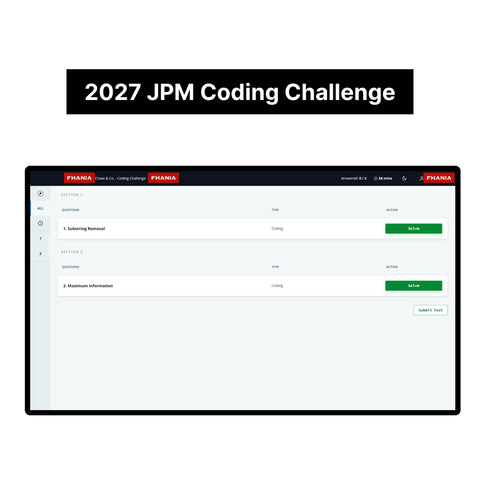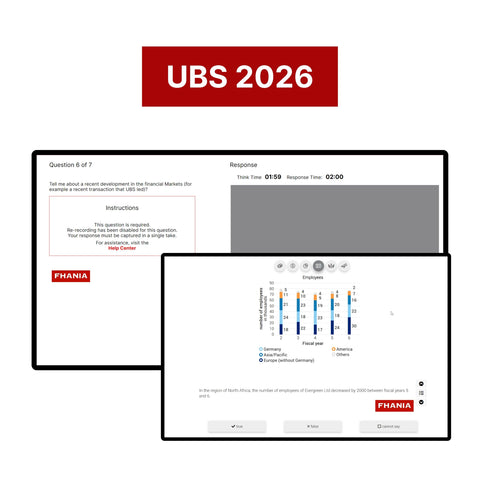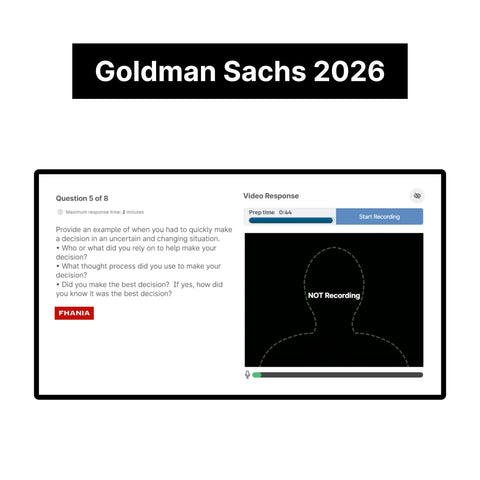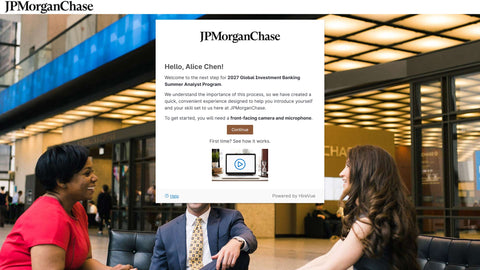
Real question from JPMorgan's 2027 Global Investment Banking Summer Analyst HireVue (4 questions, ~1 min prep, 3 min per answer). The technical one:
"Discuss a transaction where the acquirer paid a premium to the target's current share price. What are the possible rationales for paying that premium?"
Answer like this and you fail
- "Because of synergies" — and nothing else. Correct, and the most common way people fail. One rationale reads as a memorised buzzword.
- No named deal. "An acquirer might…" with no real transaction = can't talk about live markets.
- Drifting into EV/EBITDA or DCF. Premium = price paid over the current share price, not a valuation method. Wrong question.
- Never mentioning overpayment. List only reasons to pay up, never that a premium can be too high, and you sound like you'd approve any deal.
- Running out the 3-minute clock. Three clean rationales beat five rushed half-answers.
Answer like this and you win
1. Name one real deal in a sentence. E.g. Microsoft / Activision Blizzard at $95/share, a clear premium to the undisturbed price.
2. Give three to four rationales:
- Synergies — cost (remove duplicate functions) and revenue (cross-sell, new markets).
- Control premium — majority ownership buys control of strategy, cash flows, management.
- Competitive tension — in an auction, price is set by the next bidder.
- Strategic / scarcity value — unique IP, technology, talent, or blocking a rival.
- Undervaluation — buyer thinks the market misprices the target.
3. Close on discipline. The premium is justified only if value created (synergies + strategic benefit) exceeds the premium paid; otherwise the acquirer overpays and destroys shareholder value.