A candidate can know every standard use of cash and still give a weak answer. This JP Morgan 2027 Video Interview prompt for Corporate Client Banking & Specialized Industries Risk is really testing whether you can make a recommendation under competing priorities.
The real question
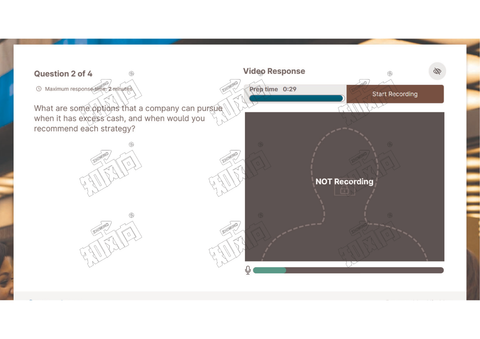
Here is the question shown in the assessment:
What are some options that a company can pursue when it has excess cash, and when would you recommend each strategy?
Your answer needs both breadth and a decision rule. Naming reinvestment, debt repayment, acquisitions, dividends, and buybacks is only the opening move.
How you lose points
- Using vague growth language: Saying you would invest in growth opportunities gives no return threshold, strategic rationale, or constraint.
- Calling all debt dangerous: Automatic debt repayment ignores borrowing cost, maturity, covenants, and the value of preserving flexibility.
- Skipping the cash buffer: The answer assumes cash is surplus before checking working capital, planned spending, and downside protection.
- Defaulting to acquisitions: Available cash does not make a target strategically sound or fairly priced.
- Treating distributions as interchangeable: A dividend creates a recurring expectation, while a buyback depends heavily on valuation and timing.
How you pass
First, protect liquidity. State that you would confirm operating needs, near-term commitments, and an appropriate contingency buffer before calling any cash excess.
Second, compare expected returns. Internal projects should clear the company's hurdle rate, debt repayment should be judged against the effective financing cost, and an acquisition should create strategic value at a defensible price.
Third, match the tool to the objective. A hypothetical mature company with predictable cash flow and no attractive reinvestment may choose a dividend. A buyback is more convincing when the shares are undervalued and flexibility matters. Debt repayment can lead when leverage is constraining the business or financing costs are high.
- Protect liquidity: Identify the cash that must remain available.
- Compare returns: Rank each use against risk, cost, and strategic value.
- Match the tool: Recommend the option that fits the objective and explain when another option would take priority.
A strong response does not pretend that one strategy always wins. It shows a stable method for reaching a recommendation.
Get the questions for this role
This is one question from the JP Morgan Corporate Client Banking & Specialized Industries Risk Video Interview material. OfferTutoring has the complete questions for this JP Morgan role, which lets you practise the broader set without guessing what the assessment may cover.