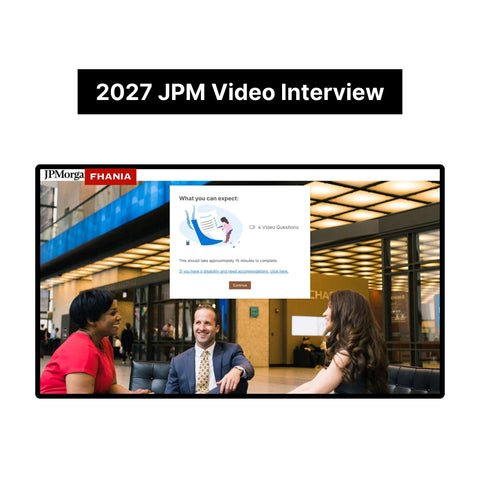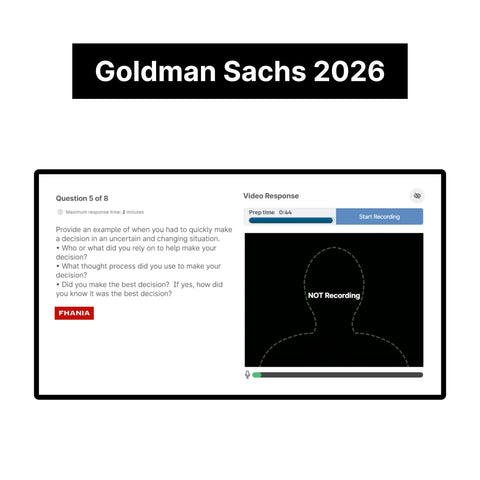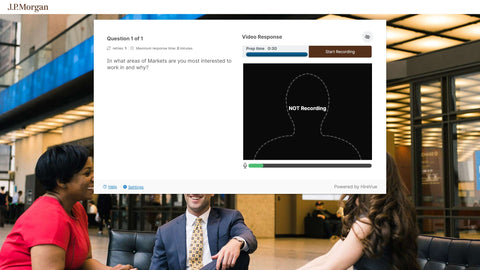
The 2027 Commercial and Investment Bank Markets Summer Analyst Program at J.P. Morgan in Hong Kong opens with a recorded HireVue before anyone from the desk gets involved, and it cuts a lot of people early. The ones who clear it usually practiced the real question rather than improvising into a webcam on 30 seconds of prep. It is a single question with one retry, roughly 30 seconds to think and 2 minutes to speak, so there is nowhere to hide behind other answers. This one is about motivation, and it is really asking whether you know what the Markets desks actually do.
Here is the exact wording:
In what areas of Markets are you most interested to work in and why?
The word to notice is "areas." The interviewer wants a real desk or asset class and a reason, not a general speech about how much you enjoy financial markets. This is where candidates who have never followed a single desk get exposed.
Where candidates go wrong
- Answering "I love markets" and leaving it there. That is not an area, and it tells the desk you never looked at what the individual products trade.
- Naming a desk you cannot describe. If you say Credit, be ready to say something true about how credit trades. Naming a desk and then describing a different one is the fastest way to look unprepared.
- Giving a reason that fits any desk. "It is fast paced and exciting" describes every seat on the floor, so it grades as nothing. The reason has to come from how that one market works.
- Choosing a product with no Asia link. The seat is in Hong Kong. Picking something that barely trades in the region, with no connection to Asian clients or issuers, reads as if you ignored where the job is.
- Hedging by naming everything. Listing five areas to stay flexible signals real interest in none of them. One or two, defended properly, is stronger.
- Blurring Sales, Trading, and Structuring. Knowing you want to be in Markets is not the same as knowing whether you want to price risk, distribute it, or build the product. Show the distinction.
What a strong answer does
A strong answer commits to one or two areas and defends them with something specific to that market. Pick Rates and talk about trading around central bank policy and the shape of the yield curve, so the seat is a daily read on macro. Pick Credit and talk about pricing the risk of an individual issuer defaulting and how that spread moves with the cycle. Pick FX and talk about how Asian currencies move on capital flows, rate differentials, and central bank intervention. The reason should be one that could not be pasted onto a different desk.
Then it connects the choice to Hong Kong. The city is J.P. Morgan's hub for Asian rates, credit, and currencies, so name products that genuinely trade in the region and touch Asian clients. Finish on real curiosity: a recent move you followed, or a specific thing about how the desk operates that you want to learn from the inside. Keep it near ninety seconds, one or two areas, a reason rooted in the product, and a clear tie to Asia. That combination is what separates someone who has studied the desks from someone reciting a brochure.
Get the ones for your role
This one is a single question, but the motivation and fit prompts repeat across J.P. Morgan Markets roles, and choosing your desk in advance beats scrambling on the timer. OfferTutoring keeps the full J.P. Morgan Markets question set if you want to know which area you will name and exactly why before you record.