Telstra Interview 2027: How to Answer the 'Learn a New Skill' Question
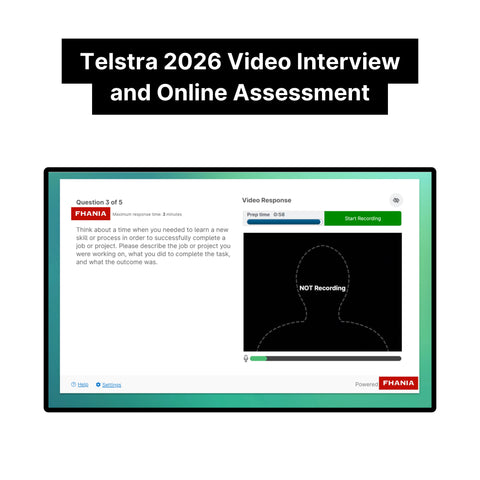
For this Telstra graduate interview question, detail your learning system: what demanded the new skill, how you decomposed it, which resources you chose, how you practiced on real tasks and got feedback, and the before-and-after outcome. Rotations demand constant re-skilling — the method is the answer.
Telstra Graduate Interview Questions: What the New-Skill Question Assesses
Learning agility is commonly reported by candidates as a core trait Telstra screens for in graduate interviews — the programme moves you across teams and technologies, and nobody arrives knowing everything. Assessors are testing whether you have a repeatable learning method: do you decompose the skill, find the right resources, practice deliberately, and seek feedback? Or do you just "pick things up"? A story of structured struggle beats a story of effortless talent every time.
Telstra Graduate Interview Questions: How to Answer
Make the learning process the centerpiece of your STAR:
- Situation. What required the new skill, and what the deadline or stakes were.
- Task. What "proficient enough" looked like and by when.
- Action. Detail the system: (1) broke the skill into sub-skills and sequenced them by priority; (2) chose the fastest credible resources — documentation, a course, a colleague to shadow; (3) practiced on real work, not tutorials alone; (4) got feedback early — a code review, a mentor check-in, a test; (5) tracked progress against the bar.
- Outcome. The concrete before-and-after: what you could do at the end that you could not do at the start.
Example line: "My internship required Python automation I'd never done. I did one focused module each morning, applied it to a real reporting task each afternoon, had the team's developer review my scripts twice a week, and within a month my automation was saving the team several hours weekly."
Common Mistakes
- Choosing something too easy. Learning a tool adjacent to your degree shows no agility — pick a real stretch.
- No feedback loop. Solo study with no external validation looks undisciplined.
- Vague outcome. "I improved a lot" is weak; name the capability gained.
Keep Reading
- natwest serving customer important
- Telstra Interview Rejection Reasons: 7 Common Mistakes in 2027
- Telstra Logical Reasoning Test: Question Types & Tips
FAQ
Technical or non-technical skill? Match your pathway loosely, but prioritize the story with the clearest method and steepest curve.
What if I am still learning it? Describe progress honestly and your plan to continue — the trajectory is what matters.
Should I mention struggling? Yes, briefly — early mistakes make the method credible and show resilience.
How does this connect to the graduate programme? Close with one line: rotations demand exactly this kind of rapid, structured learning.
Preparing for Telstra's interview? Our 2027 Telstra Online Assessment | Video Interview Tutorials has practice questions and answers — $79 one-time, instant download.