

Telstra Interview 2027: How to Answer the 'Adapting to Change' Question
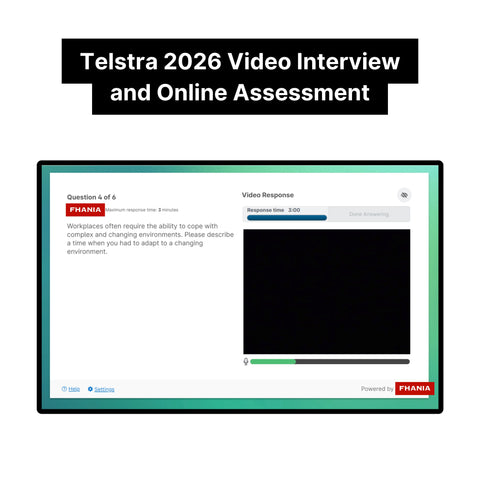
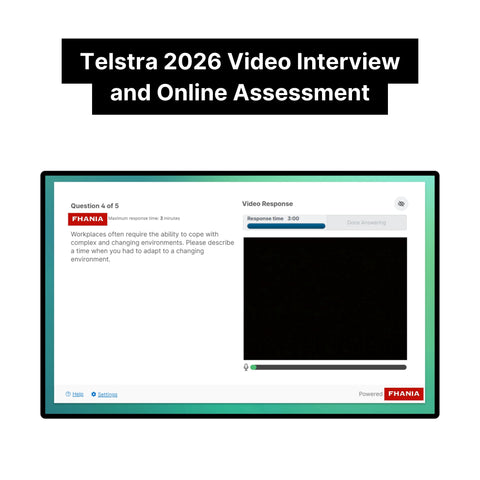
For this Telstra graduate interview question, use STAR to show a visible adaptation process: what changed, how you diagnosed what the new situation required, the deliberate adjustments you made, and the result. 'I embrace change' without evidence is the weakest possible answer — show the method.
Telstra Graduate Interview Questions: What the Adaptability Question Assesses
Adapting to change is commonly reported by candidates as a recurring theme in Telstra graduate interviews — the telecommunications industry evolves fast, and the graduate programme itself is a sequence of new environments. Interviewers are testing whether you have a repeatable adaptation process: do you diagnose what the new situation requires, adjust your approach deliberately, and stabilize quickly? "I embrace change" without evidence is the weakest possible answer.
Telstra Graduate Interview Questions: How to Answer
Structure your STAR around the adaptation sequence:
- Situation. The original environment and what changed — a restructure, a new team, a strategy pivot, a move. Be specific about what was disrupted.
- Task. What you needed to achieve in the new reality.
- Action. Your adaptation method: (1) diagnosed what the change actually required — new skills, new relationships, new priorities; (2) let go of the old approach explicitly rather than clinging to it; (3) learned what you needed fast — asked questions, observed, found guides; (4) communicated proactively with affected people; (5) established a new routine and measured whether it worked.
- Result. How the adaptation paid off, plus what the experience taught you about handling change generally.
Example line: "When my internship team was restructured mid-project and my manager left, I mapped the new stakeholders in my first week, asked each what success looked like now, reprioritized the deliverables around their answers, and delivered the project on the revised scope — it taught me to re-anchor on stakeholder needs whenever the ground shifts."
Common Mistakes
- Attitude without process. "I stayed positive" is not an adaptation method — show the steps.
- Resisting first. Stories where you fought the change before accepting it need a very good lesson to recover.
- Tiny changes. Pick a disruption that genuinely required adaptation, not a minor schedule tweak.
Keep Reading
- baird interview questions
- Telstra Coding Challenge 2027: What to Expect & How to Prepare
- Telstra Coding Questions: Data Structures & Algorithms to Revise
FAQ
Should the change be workplace-related? Work or university both work — pick the disruption with the clearest adaptation arc.
What if the adaptation was only partially successful? Honest partial success with clear learning still scores well.
How do I show speed of adaptation? Include time markers: "in the first week I...", "by week three...".
Can I connect it to Telstra's industry? One closing line works: fast-moving industries reward exactly this kind of deliberate adaptation.
Preparing for Telstra's interview? Our 2027 Telstra Online Assessment | Video Interview Tutorials has practice questions and answers — $79 one-time, instant download.