

Standard Chartered "Usual Approach Didn't Work": Answer (2027)
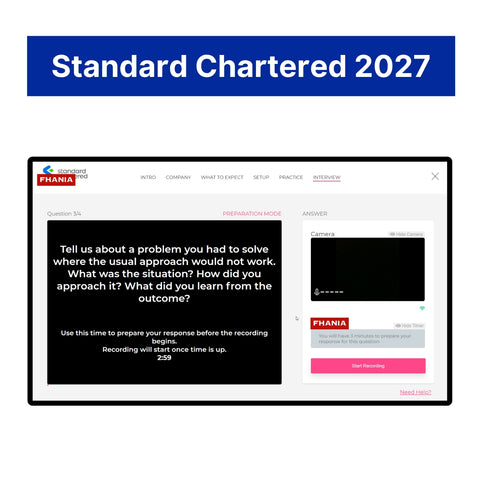
An effective answer to the Standard Chartered usual approach didn't work question is commonly reported by candidates in Standard Chartered interviews, and STAR carries it in 90 seconds with one twist: make the pivot the hero. Framework: Situation (the problem and your standard method), Task (why the usual approach failed — what signal told you), Action (how you diagnosed the failure and what you tried instead), Result (the outcome and the new tool in your kit). Interviewers prize the moment you recognized failure early and adapted.
What This Question Assesses
This question tests intellectual flexibility and ego management — can you abandon a favored method when evidence says it is not working? Banks need people who escalate and adapt rather than grinding a broken approach to the deadline. The diagnostic moment (how you knew it was failing) matters as much as the pivot itself.
How to Answer: Standard Chartered Usual Approach Didn't Work
- Situation: The task and your go-to method — establish that the approach was reasonable, not foolish.
- Task: The failure signal — what told you it was not working, and the stakes of persisting.
- Action: How you diagnosed the root cause, what alternative you designed, and how quickly you moved. Show structured experimentation, not random thrashing.
- Result: The outcome with the new approach, plus the meta-lesson: how you now detect failing approaches earlier.
Sample line: “My usual approach to the analysis was a bottom-up build, but the data was too patchy and I was burning days. I recognized the sunk-cost trap, switched to a top-down triangulation with sanity checks, and delivered on time — now I set explicit ‘is this working’ checkpoints in every long analysis.”
Common Mistakes: Standard Chartered Usual Approach Didn't Work
- A “failure” that was not your approach’s fault — the question is about your method, not bad luck.
- Persisting too long in the story before pivoting — it makes the adaptation look slow.
- No lesson extracted — without the meta-learning, it is just an anecdote.
Adaptability stories are memorable because they show judgment in motion — exactly what interviewers try to predict. Candidates without one prepared default to a weaker example, and the difference is audible.
Keep Reading
- millennium local volatility model limitations
- Standard Chartered HireVue Questions 2027: List & Answers
- Standard Chartered International Graduate Programme 2027: Streams & Ho
FAQ
Should the original approach be mine or the team’s?
Yours ideally — owning the method makes the pivot more impressive. A team method you personally championed also works.
How quickly should the pivot happen in the story?
Fast enough to show judgment, slow enough to be realistic — emphasize the signal you acted on, not just speed.
What if the alternative also struggled?
Honesty about iteration is fine — structured experimentation with eventual success shows real problem-solving.
Can this be an academic example?
Yes, if the method and the pivot are substantive — a research or project methodology change with real stakes works well.
Preparing for Standard Chartered's interview? Our 2027 Standard Chartered Pymetrics Online Assessment & Video Interview Tutorials has practice questions and answers — $79 one-time, instant download.