Pricing case (Explained): Interview Answer Guide 2027
A pricing case asks what price to set; the framework balances customer value, competitor prices, and cost floors, then tests elasticity. A strong pricing case interview question answer estimates willingness to pay by segment, positions against competitors, checks margin over costs, considers cannibalization and competitor response, and proposes testing the price first.
What the Pricing Case Interview Question Tests
- Whether you triangulate: value-based, competitor-based, and cost-plus — not just one lens.
- Whether you segment willingness to pay instead of assuming one price fits all customers.
- Whether you think dynamically: elasticity, cannibalization, and how competitors will react.
How to Answer the Pricing Case Interview Question
Understand the three anchors and the dynamic layer:
- Anchor 1 — customer value. What is the willingness to pay by segment? Value-based pricing starts here: price the outcome, not the cost.
- Anchor 2 — competitors. Where are rivals priced, and what justifies a premium or demands a discount? Positioning is relative.
- Anchor 3 — costs. The floor: price must clear variable costs and contribute to fixed costs with target margin.
- The dynamic layer. Elasticity (how volume responds), cannibalization of your own products, competitor retaliation, and channel implications.
- De-risking. Propose a test: A/B pricing, pilot market, or phased rollout — never bet the company on an untested price.
Sample answer: "I triangulate willingness to pay by segment, competitor positioning, and the cost floor, then layer on elasticity and competitor response. The recommendation is a price plus a test plan, because pricing is a hypothesis until the market votes."
Common Mistakes With the Pricing Case Interview Question
- Cost-plus tunnel vision: 'costs are $40, so price $50' ignores what customers will actually pay.
- One price for everyone — leaving money on the table from high-willingness segments.
- Forgetting competitor response: your price cut is their price cut next quarter.
Pricing cases separate memorizers from thinkers because there is no single right answer — only well-reasoned trade-offs. Candidates who segment, quantify elasticity, and plan a test look commercial; candidates who pick a number and stop look academic.
Keep Reading
- mckinsey pei courageous change
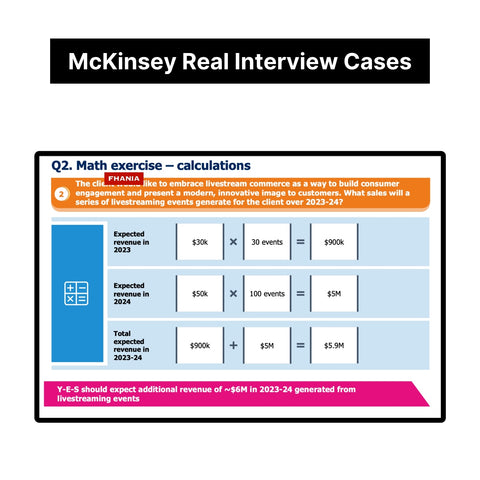
- mental math interview question
- McKinsey Case Interview 2027: Interviewer-Led Format Explained
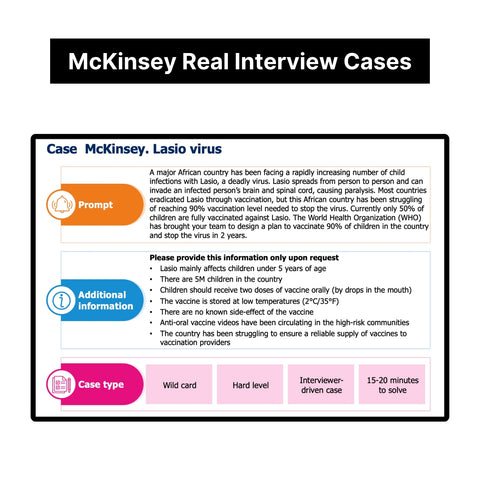
- McKinsey Case Interview Examples: 5 Real Prompts & How to Crack Them
FAQ
What is the framework for a pricing case?
Customer value (willingness to pay by segment), competitor pricing (positioning), cost floor (margin check), then elasticity, cannibalization, competitor response, and testing.
What is value-based pricing?
Setting price from the customer's perceived value and willingness to pay rather than from costs — it captures more margin when value exceeds cost-plus levels.
How do you estimate willingness to pay?
Segment customers, use proxies: current alternatives' prices, surveys or conjoint when available, and observed behavior like premium-tier uptake.
Should different customers pay different prices?
Often yes — tiered pricing, student discounts, or enterprise vs. SMB plans capture more surplus, as long as segments can't arbitrage between tiers.
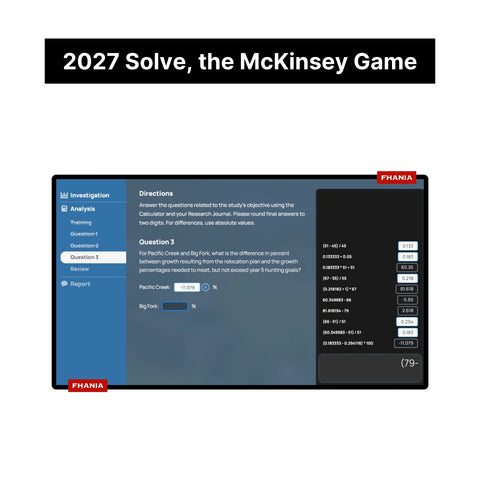
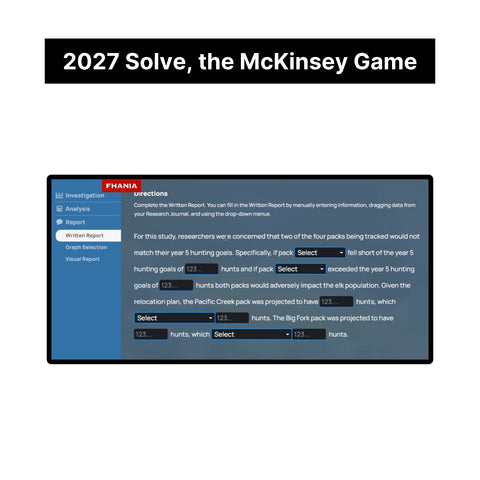
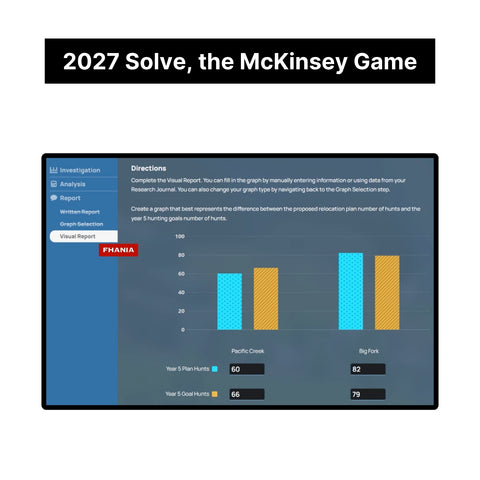
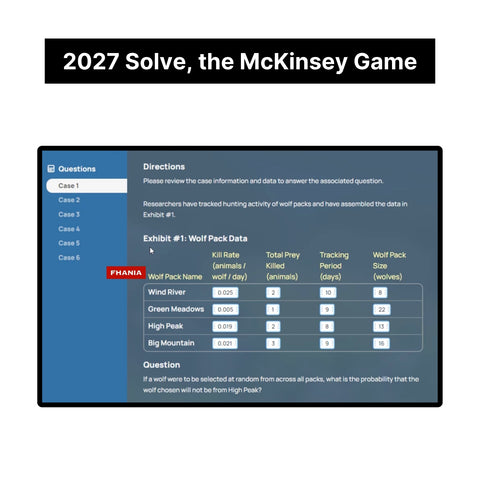
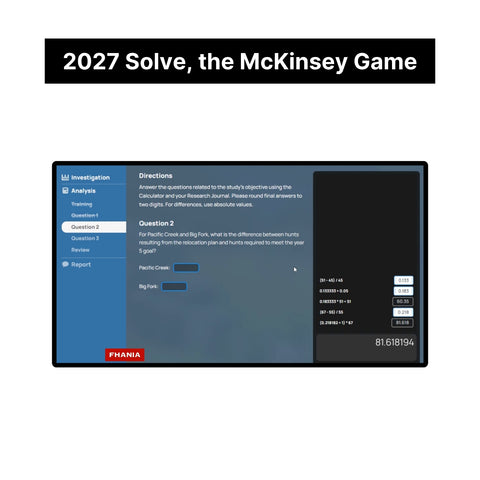
Preparing for McKinsey's interview? Our 2027 McKinsey Solve Game, RedRock, Sea Wolf, Sustainable Futures Lab, Case Interview Interactive Simulations has practice questions and answers — $79 one-time, instant download.