KPMG "Time You Lost Money" 2027: What They're Testing
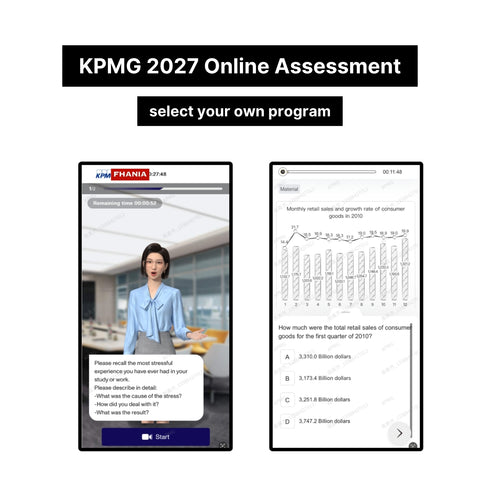
For KPMG's ‘time you lost money’ question, use STAR: what happened, what you did about it, and — most importantly — what you changed afterwards. This unusual question is commonly reported by candidates. Interviewers are not judging the loss; they are testing honesty, accountability, and whether you learn from mistakes.
What Your Kpmg Time You Lost Money Must Prove
This tests integrity and resilience: can you own a failure openly and show you extracted a lesson? Interviewers look for candour (no minimising), accountability (your part in it), and concrete change in behaviour afterwards. Defensiveness or blaming others fails instantly; honest reflection passes strongly.
How to Build a Strong Kpmg Time You Lost Money
- Situation: describe what happened factually and briefly — a budgeting error, an investment loss, a costly mistake — without drama or excuses.
- Action: what you did when you realised — owned it, informed the right people, and took steps to limit the damage.
- Result and lesson: the outcome plus the specific change you made afterwards — a new check, a new habit — proving the loss taught you something durable.
Example line: "As society treasurer I double-counted expected sponsorship income and we overspent on an event by a few hundred pounds — I told the committee immediately, covered the gap from our reserve, and introduced a simple rule that no spending happens against unconfirmed income; we never repeated it."
Common Mistakes
- Minimising or reframing the loss as not really your fault; ownership is the entire point.
- No lesson or changed behaviour; without it, the story is just a confession.
- Choosing something trivial to dodge the question; interviewers notice evasion.
This question rewards honesty and punishes spin — a candid, reflective answer stands out precisely because most candidates dodge it.
Keep Reading
- oc&c market entry case
- KPMG Launch Pad Group Exercise: How It's Scored & How to Shine
- KPMG Numerical Reasoning Test: Format, Timing & Practice
FAQ
Does it have to be a large amount?
No. The scale matters far less than your honesty, accountability, and the lesson you took from it.
What if I have never lost money?
Use the closest real example: a budgeting mistake, a wasted purchase, an error with a cost. Everyone has one.
Should I be worried this counts against me?
No — handled with candour and reflection, it counts strongly in your favour. That is the design of the question.
Is this really asked?
It is commonly reported by candidates as an unusual KPMG question; formats may vary by role and region. Check the official careers page.
Preparing for KPMG's interview? Our 2027 KPMG Online Assessment and Video Interview Tutorials has practice questions and answers — $79 one-time, instant download.