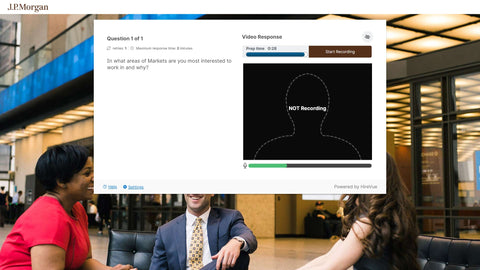
J.P. Morgan runs a HireVue video interview for its 2027 Commercial and Investment Bank Markets Summer Analyst Program, Research, in Hong Kong, and it cuts a large share of applicants before a person watches a single clip. The people who get through have usually rehearsed the real questions. This is a single question interview, Question 1 of 1, with two minutes to answer. It sounds like a soft warm up, and that is exactly why people waste it. A vague answer here reads as a candidate who has not decided why they want the seat.
Here is the question, word for word:
In what areas of Markets are you most interested to work in and why?
The trap is the urge to keep your options open. Saying you are interested in all of it feels safe and lands as nothing. Markets is a wide floor, from Rates and Foreign Exchange to Credit, Equities, Commodities, and Securitized Products, and this is a Research seat that sits on top of those desks generating ideas. The interviewer wants to hear that you know the map, that you have a real pull toward part of it, and that you can say why in a way that fits the job.
How you lose points
- You say you are open to everything. It sounds flexible and reads as undecided. Nobody remembers the candidate who liked all of it equally.
- You name an area with no reason. Picking Rates and stopping there is half an answer. The word why is in the question for a reason.
- You lean on empty adjectives. Fast paced, dynamic, and exciting describe every desk and reveal nothing about you.
- You show you do not know the floor. Confusing sales, trading, structuring, and research, or naming a product that does not exist on the desk, tells them you have not done the reading.
- You forget this is Research. The role is about forming a view and defending it, not just taking risk. An answer that ignores the analytical side of the seat misses the point.
- You connect it to nothing you have done. Interest with no thread back to a class, a project, or a market you have actually followed sounds invented on the spot.
How you pass
A strong answer names one area with conviction and gives a reason that only you could give. For example: you are most drawn to Rates, because the market sits right on top of central bank policy and macro data, so a view on growth and inflation turns directly into a trade idea, and that is the kind of thinking a Research seat rewards. Then you make it yours: tie it to a specific thread, a macro course, a period when you tracked the Hong Kong Monetary Authority moving with the Federal Reserve because of the currency peg, a piece of analysis you actually did. Show you understand what the desk does day to day: reading the curve, framing relative value between tenors or against another market, and writing a view that a trader or client can act on.
Close by widening slightly without going soft. Say you are also curious about Foreign Exchange because it is the cleanest expression of the same macro views, and that in a Research role you like that the two connect. That signals range without diluting the conviction you led with. The whole thing should read as someone who has looked at the floor, chosen a corner, and can defend the choice, while staying genuinely open to learning the rest. That is what makes an interviewer believe you will actually enjoy the job.
Get the ones for your role
This is the only question in the interview, and it rewards people who have thought about the floor and their own reasons before the timer starts. The full J.P. Morgan Markets question pack is on OpenInterview if you want to see the real prompts across the Sales, Trading, and Research roles before you record.