

The interviewer is asking for a pattern
The Grant Thornton 2027 Video Interview does not reward a candidate for knowing the four CARE words. The real test is whether one of those values can be traced through a decision, an action, and a normal working habit.
People who meet the question cold often spend too long explaining the value. Prepared candidates protect time for the evidence that makes the choice believable.
The original prompt
Candidates receive this wording:
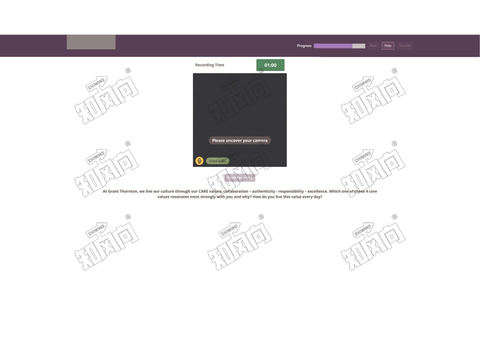
At Grant Thornton, we live our culture through our CARE values: collaboration - authenticity - responsibility - excellence. Which one of these 4 core values resonates most strongly with you and why? How do you live this value every day?
Common ways the story breaks
- Opening with every value. The question asks for a choice, so a broad company compliment avoids the decision.
- Using a perfect story. An example with no tension gives the value nothing to change.
- Hiding behind the group. The listener needs to know what the candidate personally noticed and did.
- Claiming a result without a link. The action has to explain why the outcome improved.
- Ignoring daily behaviour. One dramatic example does not answer how the value is lived consistently.
Use three levels of proof
The first level is the choice. The candidate states the value and gives a personal reason for it in one or two sentences. The second is a concrete event where that value affected a difficult decision or relationship.
The third level is repetition. The candidate names a small behaviour used regularly, such as documenting ownership, asking for an opposing view, or acknowledging an error before proposing the fix.
That sequence gives the answer both depth and consistency. It shows that the value is not just a label attached to one convenient story.
Prepare the full assessment
One values prompt cannot cover the whole interview. OfferTutoring has the complete Grant Thornton question set, which lets candidates assign different evidence to different parts of the assessment. That preparation reduces the risk of forcing the same example into every answer.





























