WTW Interview Questions 2027: Complex Problem Solved With Quantitative Methods
For this Willis Towers Watson interview question, walk through one substantial problem end to end: how you defined and scoped it, the data and its limits, why you chose your method (and rejected alternatives), how you validated results, and how you communicated them. Show quantitative judgment — not just technique.
Willis Towers Watson Interview Questions: What the Quantitative Problem Question Assesses
"Walk me through a complex problem you solved with quantitative methods" is commonly reported by candidates in WTW interviews — particularly for actuarial and analytical roles — because it reveals how you actually do technical work, not just what you know. Interviewers are testing problem framing (did you solve the right problem?), method selection (why this technique and not another?), rigor (how did you check your work?), and communication (could a non-technical stakeholder use your answer?). Technique without judgment is the failure mode.
Willis Towers Watson Interview Questions: How to Answer
Use a six-stage walkthrough with decision points made explicit:
- Problem definition. What the problem was and why it mattered — and how you scoped it: "The question was really X, not Y, because..." Framing is scored.
- Data. What data you had, its limitations, and what you did about them — cleaning, missing values, proxies. Honesty about data flaws shows maturity.
- Method selection. What you chose and — critically — why: "I used [regression / simulation / optimization] because the problem had [structure], and I rejected [alternative] because [reason]." The rejected alternatives prove judgment.
- Validation. How you checked the answer: holdout testing, sensitivity analysis, sanity checks against benchmarks, peer review. This section separates rigorous candidates from the rest.
- Communication. How you presented it — what you emphasized for technical vs. non-technical audiences, and what decision your analysis supported.
- Outcome and learning. What happened and one methodological lesson you kept.
Example line: "For my dissertation I modelled [phenomenon] with [method] — I chose it over [alternative] because the data was [structure]; I validated with [approach] and stress-tested the key assumption by [test]; the headline for my supervisor was one chart showing [insight], with the technical appendix behind it."
Common Mistakes
- Method without justification. Naming techniques without explaining the choice shows cookbook knowledge.
- No validation. An unvalidated model is just a guess with extra steps — always include checks.
- Losing the audience. Drowning the interviewer in equations instead of narrating decisions.
Keep Reading
- why barclays answer
- Citi Superday 2027: Format, Questions & Preparation Tips
- Citi Technology Interview 2027: Java, SQL & Karat OA Guide
FAQ
How technical should the walkthrough be? Technical enough to show real method, narrated as decisions — assume an intelligent non-specialist is listening.
What if my best example is academic? Fine — dissertations and major projects are the most common strong answers.
Should I mention tools and languages? Briefly — they add credibility, but the thinking matters more than the stack.
What if the analysis was wrong? A candid story about catching and fixing an error — especially through validation — can be the strongest possible answer.
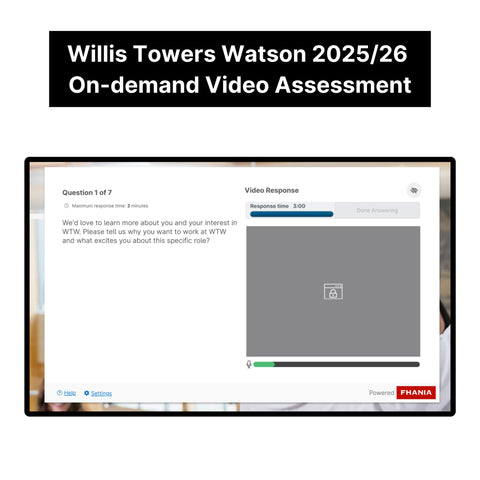
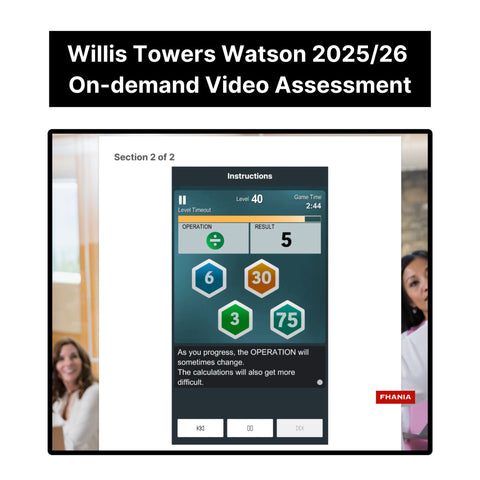
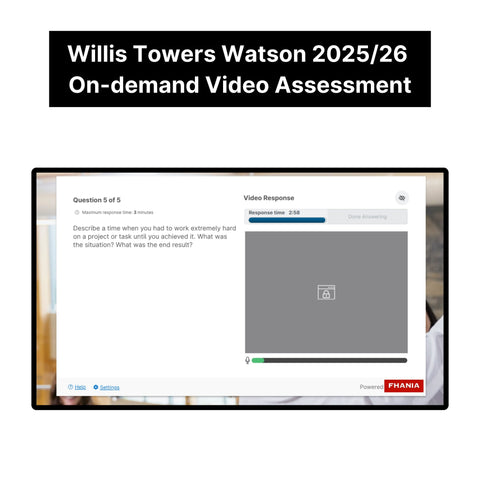
Preparing for Willis Towers Watson's interview? Our 2027 Willis Towers Watson WTW On-demand Video Assessment Exact Questions and Answers has practice questions and answers — $79 one-time, instant download.