Why GIC Rejects Candidates: Common Reasons
GIC rejects candidates for a handful of repeatable reasons: failing the PI screen, generic motivation answers, shallow technical knowledge, weak behavioral stories, and poor cultural fit signals. Understanding why gic rejects candidates is more useful than studying success stories — the failure modes are fewer and more predictable.
Reason 1: Failing the Predictive Index Screen
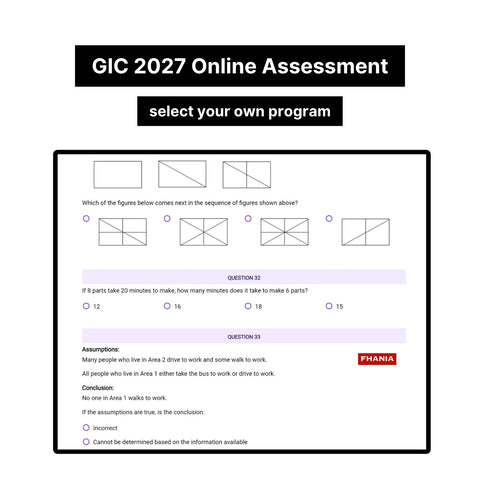
The most common reason why gic rejects candidates is also the earliest: the PI assessment. A large share of applicants never get past the 12-minute cognitive test — not because they lack ability, but because they walked in unprepared for the speed. No recruiter ever reviews these applications. If your PI score misses the role's target, your resume, no matter how strong, never gets read. This is the silent killer of GIC applications.
Reason 2: Generic "Why GIC" Answers
The second filter is motivation. Candidates who give answers that could apply to any bank, fund, or asset manager — "I'm passionate about finance," "GIC is prestigious" — get cut at the HireVue or first live interview. GIC wants specific reasons: its mandate as a sovereign wealth fund, its long-term investment horizon, specific portfolio companies or strategies that genuinely interest you. Generic motivation signals you applied everywhere and care about nowhere.
Reason 3: Shallow Technical Depth
Candidates who memorize technical scripts without understanding them get exposed fast. "Walk me through a DCF" followed by "why does enterprise value exclude cash?" separates the prepared from the rehearsed. GIC interviewers drill down until they find the boundary of your knowledge — if that boundary is one question deep, you are done. Related: bluffing. Getting caught fabricating an answer is an instant, non-negotiable rejection.
Reason 4: Weak Behavioral Stories and Fit Signals
Vague behavioral answers — stories with no specifics, no personal actions, no real outcomes — tell interviewers you lack self-awareness or experience. Arrogance, entitlement, or visible disinterest in the firm's long-term culture also kills candidacies at the superday stage. GIC hires for decades-long careers; anyone who signals they are using GIC as a stepping stone gets passed over. Our 2027 GIC Learning Indicator PI Cognitive Assessment Exact Questions & Answers helps you eliminate the most common rejection reason — the PI screen — with the exact questions and formats GIC uses.
Here is the FOMO truth: GIC's rejection reasons are not mysteries — they are the same short list, cycle after cycle. Most rejected candidates failed at a stage they underestimated, usually the PI or the motivation questions. Read this list, fix your weak spots before you apply, and you are already ahead of the majority. The candidates who get cut are the ones who never asked why.
FAQ
What is the most common reason GIC rejects candidates? Failing the PI assessment screen — it eliminates candidates before any human review, and most failures come from lack of timed preparation.
Does GIC tell you why you were rejected? Typically you receive a polite generic rejection without specific feedback. That is why understanding the common reasons in advance matters.
Can I reapply to GIC after being rejected? Reapplication policies vary by program and timing. Check the official GIC careers page for current guidance before reapplying.
Does a referral help avoid rejection at GIC? A referral may help your resume get noticed, but it does not exempt you from the PI screen or interviews — every stage still applies.
Preparing for GIC's PI Cognitive assessment? Our 2027 GIC Learning Indicator PI Cognitive Assessment Exact Questions & Answers has the exact questions and answers — $79 one-time, instant download.