Why Capital One Rejects Candidates: 7 Common Reasons
Most Capital One rejections are not mysteries — they follow patterns. Understanding why Capital One rejects candidates lets you check whether you are making the same mistakes before the process makes the decision for you. Here are the seven reasons that end the most candidacies.
1. Failing the Virtual Job Tryout
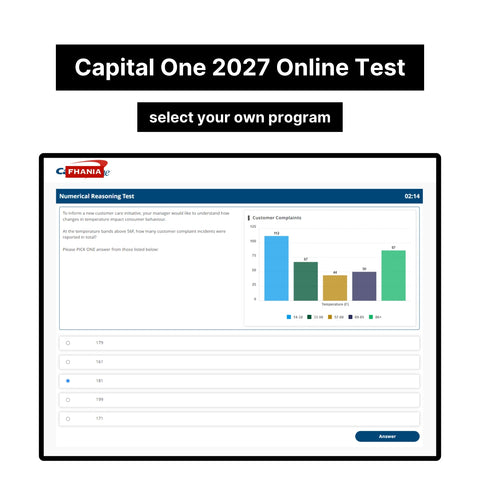
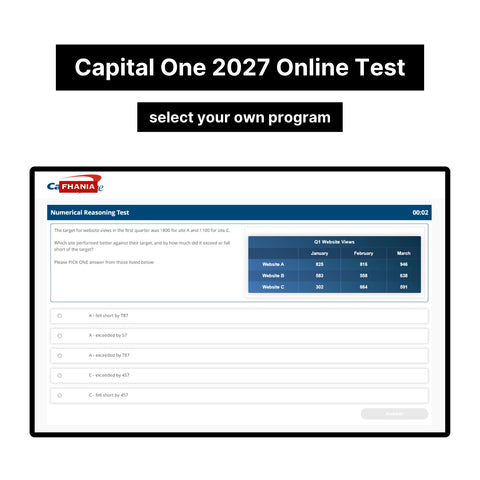
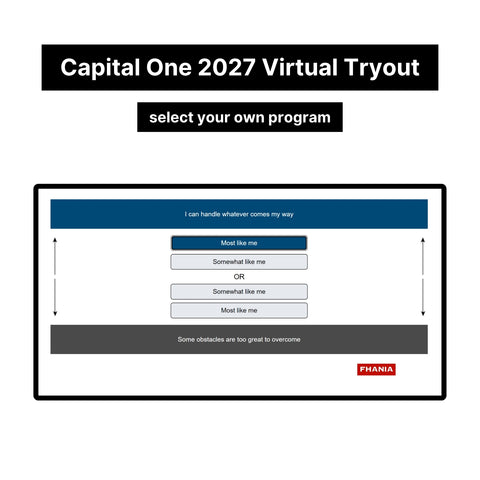
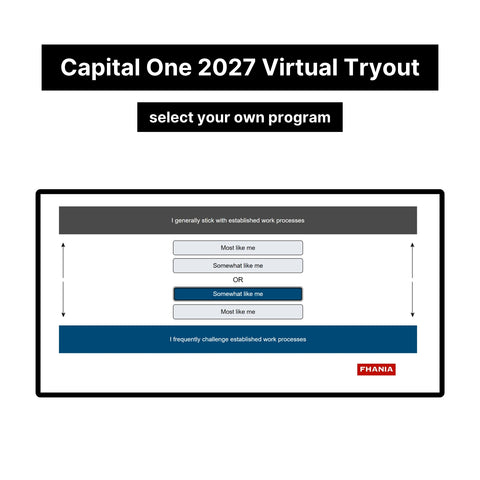
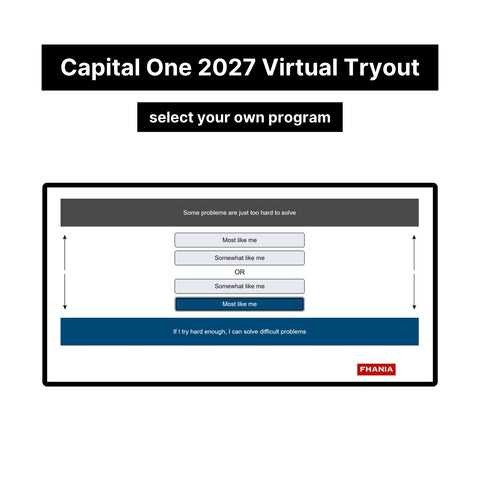
The VJT is the first gate and the most common elimination point. Candidates fail it by winging the most/least rankings, running out of time on the business cases, or contradicting themselves across sections. Since there are no retakes, a weak VJT score ends the application immediately.
2. Scoring Below the CodeSignal Bar
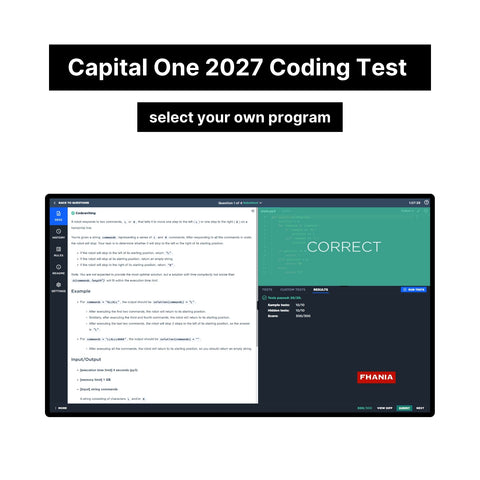
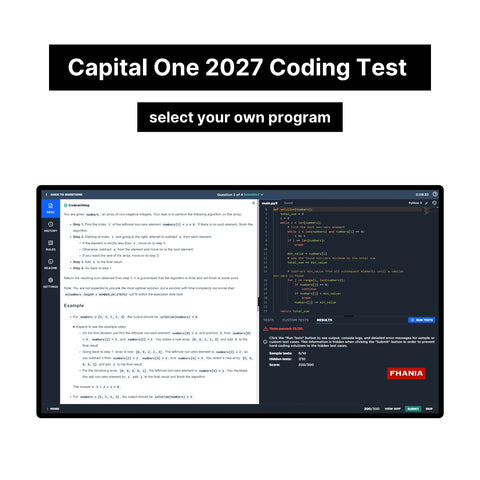
For technical roles, a CodeSignal score under the ~750 benchmark stops your application cold. Strong resumes do not override it. Candidates who underestimate the test and sit it unprepared never reach a human interviewer.
3. Inconsistent Answers Across Assessments
The VJT's biodata and personality sections detect contradictions — and so do interviewers comparing your digital interview to your resume. Candidates who embellish get caught when details do not line up.
4. Weak STAR Stories in Behavioral Rounds
Vague, team-focused, unquantified answers signal a candidate with no real ownership experience. "We improved things" without your specific contribution and measurable results does not pass.
5. Collapsing on the Case
Candidates who never practiced structured case problem-solving freeze when asked to break down a business problem live. No framework, no recommendation, no offer.
6. Showing No Knowledge of Capital One
"Why Capital One" answered with generic praise tells interviewers you applied everywhere. Candidates who cannot discuss Capital One's products, data-driven culture, or current direction look unserious.
7. Poor Digital Interview Delivery
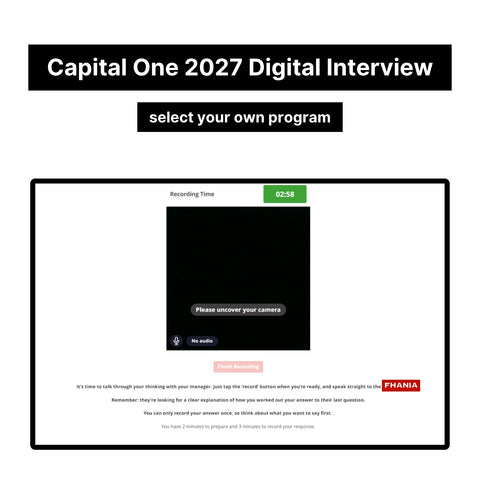
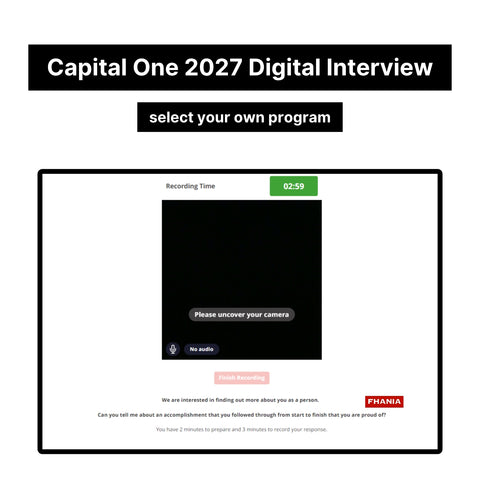
Rambling answers, ignoring the actual question, bad audio and lighting — the asynchronous format magnifies every weakness because there is no interviewer to rescue you.
How to Avoid All Seven
Every one of these is preventable with preparation: timed VJT practice, a diagnostic CodeSignal run, a consistent story bank, live case reps, real company research, and on-camera rehearsal. Our 2027 Capital One Virtual Job Tryout Online Test and Digital Interview Tutorials covers the VJT and digital interview stages with real-format questions — $79 one-time, instant download.
Read that list again and count how many apply to you right now. Most rejected candidates recognize themselves in at least three — and every one of them assumed it would not be them. The process does not reject unlucky people. It rejects unprepared ones.
FAQ
What is the most common reason Capital One rejects candidates? Failing the Virtual Job Tryout — it is the first gate, has no retakes, and eliminates the most applicants.
Does Capital One tell you why you were rejected? Usually not in detail. Rejection emails are generic, which is why knowing the common patterns matters.
Can I reapply after a Capital One rejection? For new roles in later cycles, yes. A failed VJT does not permanently ban you from the company.
How can I find out which stage I failed? Track where communication stopped — after the VJT invite, after CodeSignal, after interviews. The silence point is your answer.
Preparing for Capital One's hiring process? Our 2027 Capital One Virtual Job Tryout Online Test and Digital Interview Tutorials has the exact questions and answers — $79 one-time, instant download.