Why Candidates Fail the Bank of England SJT
Candidates fail the Bank of England SJT for predictable reasons: they treat it as common sense, practise with generic materials, and walk into values traps they have never seen. Every one of these failure modes is avoidable — and most failing candidates share at least two of them.
Pitfall 1: Treating It as Common Sense
The most common reason candidates fail the Bank of England SJT is assuming it needs no preparation. The scenarios feel easy to read and hard to get wrong — until you learn that the "obvious" answer was the Bank's third choice. The test is engineered to split instincts, not to confirm them. Unprepared candidates routinely score below the cut-off while feeling confident throughout.
Pitfall 2: Practising with Generic SJT Materials
SJT frameworks differ by employer. An answer that is ideal at a commercial bank can be penalised at a central bank, where process, prudence, and public accountability carry extra weight. Candidates who drill hundreds of generic questions arrive calibrated to the wrong institution — and fail questions they would have passed with Bank-specific practice.
Pitfall 3: Falling for the "Reasonable" Traps
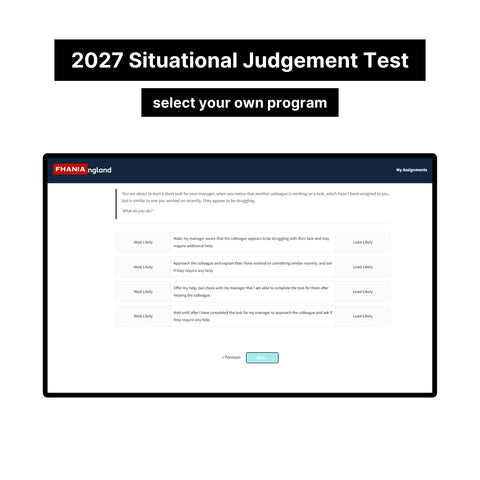
Every failing candidate remembers the questions where two answers both looked right. That is the test working as designed. The difference between the top answer and the trap is usually a subtle values signal: escalating through proper channels versus fixing it yourself, supporting the team versus protecting your deadline. Without explained practice, you cannot learn to spot these.
Pitfall 4: Rushing Under Time Pressure
The 45-question format punishes both rushing and overthinking. Candidates who rush misread scenarios; candidates who agonise run out of time. Both fail questions they could have answered correctly with paced, timed practice.
Pitfall 5: Ignoring the Values Framework
Candidates who never learn the Bank's values answer each scenario from personal instinct — which is inconsistent by definition. The passing candidates answer from one framework, applied 45 times. That consistency is what the scoring rewards.
The fix for all five pitfalls is the same: practise with real Bank of England-style questions and study the explanations until the Bank's framework is your framework. Our 2027 Bank of England Situational Judgement Test and Video Interview and Answers gives you exactly that — the exact question styles with full answer breakdowns, $79 one-time, instant download.
Frequently Asked Questions
What is the number one reason candidates fail the Bank of England SJT? Underpreparation — treating a hard values filter as a casual quiz.
Can I retake the Bank of England SJT if I fail? Not in the same intake. A failed attempt means waiting for the next application cycle.
Do strong academics protect against SJT failure? No. The SJT tests judgement and values fit, not intellect. High achievers fail it every year.
How do I avoid these pitfalls? Bank-specific practice with explained answers, timed full-length runs, and learning the values framework before test day.
Preparing for Bank of England's SJT pitfalls? Our 2027 Bank of England Situational Judgement Test and Video Interview and Answers(https://offertutoring.com/products/bank-of-england-prep-tutorials) has the exact questions and answers — $79 one-time, instant download.