UBS Situational Judgement Test 2027: Values-Based Scoring
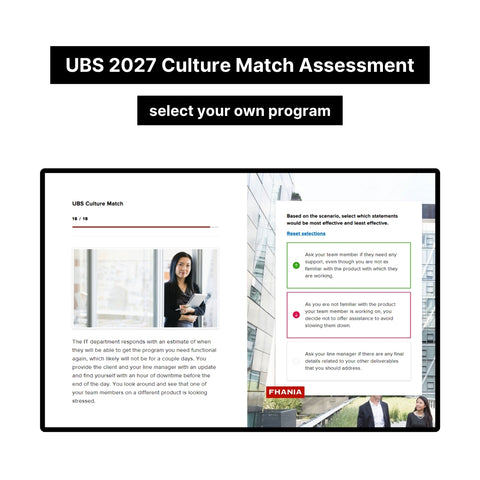
The UBS Situational Judgement Test 2027 presents realistic workplace scenarios and asks you to rank or choose the best responses — and every answer is scored against UBS's values. Picking the response that sounds nice instead of the one UBS rewards is the fastest way to fail a section most candidates assume is "common sense."
What Is the UBS Situational Judgement Test?
The UBS Situational Judgement Test is the behavioral module inside the UBS Online Assessment, closely linked to the Culture Match questionnaire. You read short scenarios — a difficult client, a deadline clash, a colleague who cut corners — and rate or rank several possible actions. There are no calculations and usually no time limit, which lulls candidates into answering casually. That is the trap: each response is mapped to UBS's values framework.
How the UBS Situational Judgement Test Scores Your Values
The UBS Situational Judgement Test does not have objectively right answers — it has UBS-right answers. Responses that demonstrate client focus, accountability, collaboration and integrity score highest; responses that prioritize personal convenience, avoid confrontation or shift blame score lowest. The classic trap is the "hero" answer: doing everything yourself looks efficient, but UBS rewards the answer that loops in the team and escalates properly. Consistency matters too — contradicting yourself across scenarios flags you as unreliable.
How to Prepare for the UBS Situational Judgement Test
Prepare by studying UBS's values until you can rank any scenario answer through their lens. For each practice scenario, ask: which response puts the client first, which one takes ownership, which one involves the team? Eliminate the selfish and the evasive options first, then choose between the remaining good answers by picking the one most aligned with accountability. Never answer as the person you are on a bad day — answer as the junior banker UBS wants to hire. Our tutorial pack includes UBS Situational Judgement Test practice scenarios with values-based answer explanations, so you learn the scoring logic instead of guessing what "sounds right."
Candidates treat this section as easy and prepare zero minutes for it. That is exactly why it eliminates people — the values scoring is invisible, and the "wrong persona" answer looks perfectly reasonable until you understand what UBS is measuring.
FAQ
Is the UBS Situational Judgement Test timed? Usually not, or only lightly timed. The challenge is judgment, not speed — which is why careless answers get punished.
Should I answer honestly or strategically? Answer as the professional UBS is hiring. Inconsistent or overly "authentic" answers that clash with banking values will sink your score.
What values does UBS test for? Client focus, accountability, collaboration and integrity run through every scenario. Frame every answer around these four.
Can I fail the assessment on the SJT alone? Yes. A weak values score can sink an otherwise strong cognitive performance, because UBS weighs cultural fit heavily at the first round.
Preparing for UBS's Online Assessment? Our 2027 UBS Online Assessment and ModernHire Video Interview Answers has the exact questions and answers — $79 one-time, instant download.