Telstra Interview 2027: How to Talk About Your Previous Projects
For this Telstra graduate program interview question, present each project as context → your role → technical decisions → outcome: what it was, what you personally owned, the stack framed as choices plus the hardest problem you solved, and the result. Prepare two projects in depth and let the interviewer choose.
Telstra Graduate Program Interview Questions: What the Projects Question Assesses
"Tell us about your previous projects" is commonly reported by candidates in Telstra's graduate interviews — especially for technical pathways — because projects are the best available evidence of what a graduate can actually do. Interviewers are testing depth of understanding (can you explain your decisions, not just list technologies?), ownership (what was yours vs. the team's?), and problem-solving (what was hard and how did you crack it?). Reciting a tech stack without the thinking behind it is the classic failure mode.
Telstra Graduate Program Interview Questions: How to Talk About Projects
Use the same four-part structure for each project:
- Context (15 seconds). What the project was, who it was for, and why it mattered — one to two lines.
- Your role. What you personally owned vs. what the team did. Be precise: "I designed the data pipeline; two teammates handled the frontend."
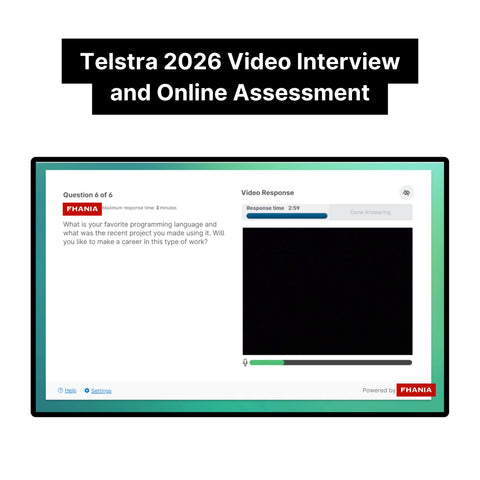
- Technical decisions. The stack, but framed as choices: "We chose [X] over [Y] because..." Then the hardest technical problem you faced and how you solved it — this is the scored section.
- Outcome and learning. What it achieved (users, performance, grades — quantify where honest) and one thing it taught you.
Example line: "My final-year project was a network monitoring dashboard for our department's lab. I owned the backend — I chose a time-series database over relational because the data was append-heavy metrics; the hardest problem was handling late-arriving data, which I solved with watermarking. It now monitors 40 lab devices, and it taught me to design for messy real-world data from the start."
Common Mistakes
- Tech-stack recitation. Listing tools without explaining choices shows surface knowledge.
- Hiding your contribution. "We built..." for everything leaves the interviewer guessing what you did.
- No hard problem. If nothing was difficult, the project does not demonstrate much — pick projects with real challenges.
Keep Reading
- blackstone why should we hire you
- Telstra Coding Questions: Data Structures & Algorithms to Revise
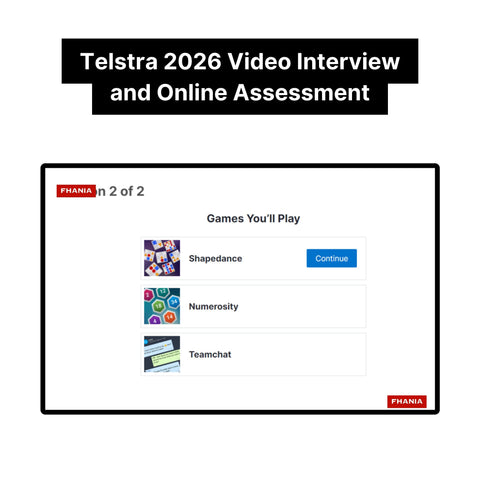
- Telstra Game-Based Assessment: What the Games Test & How to Win
FAQ
How many projects should I prepare? Two in depth, plus one-line summaries of two more as backup.
Should I bring code or demos? If the format allows, a brief demo or architecture sketch strengthens credibility — check the interview instructions first.
What if my best project was a team effort? Fine — just be explicit about your personal ownership and decisions.
What if they ask about something I have forgotten? Be honest: "I'd need to refresh on the exact implementation, but the design reasoning was..." — reasoning matters more.
Preparing for Telstra's interview? Our 2027 Telstra Online Assessment | Video Interview Tutorials has practice questions and answers — $79 one-time, instant download.