

Swire Management Trainee 2027: How to Answer 'Anticipated Challenge'
For this swire management trainee interview question, name one genuine anticipated challenge — e.g., earning credibility as a newcomer each rotation — explain why it's hard for you specifically, and give concrete steps you'll take. Honest self-awareness plus a plan beats both arrogance and vague hand-waving.
Swire Management Trainee Interview Questions: What the Anticipated-Challenge Question Assesses
This question is commonly reported by candidates in Swire Management Trainee interviews and is a maturity test: the programme deliberately rotates trainees across industries and regions, so the challenges are real and the interviewers know it. They are checking whether you have thought seriously about what will be hard — steep learning curves, building credibility from scratch every rotation, adapting across cultures — and whether you respond to difficulty with a plan or with platitudes. "I don't anticipate any challenges" is a red flag for lack of self-knowledge.
Swire Management Trainee Interview Questions: How to Answer
Use an honest three-part structure:
- Name a real challenge. Pick one that is credible for you: e.g., "Each rotation I'll be the newcomer in an industry I don't know, and I'll need to add value before I've earned credibility," or "I'll be managing or influencing people with far more experience than me."
- Explain why it is hard for you. Connect it to your background specifically — what about your experience makes this the stretch? Specificity is what makes it believable.
- Give your plan. Concrete steps: "In each rotation I'd spend the first two weeks shadowing frontline staff and reading operational reports before proposing anything; I'd find one mentor per rotation; I'd ask for feedback explicitly at the one-month mark." A plan with verbs and timelines beats adjectives.
Example line: "The challenge I most anticipate is earning credibility as a newcomer in each rotation — my background is in [X], so in an aviation or property rotation I'd be starting from zero. My plan is to learn the operation firsthand in the first weeks, deliver one small visible win early, and ask directly for feedback rather than waiting for it."
Common Mistakes
- Fake challenges. "I work too hard" or "I'm a perfectionist" — interviewers see through these instantly.
- Challenge with no plan. Naming a difficulty and stopping there just advertises a weakness.
- Overconfident dismissal. "Challenges don't faze me" suggests you haven't understood the programme.
Keep Reading
- why investment banking swire group
- bank of england video interview questions
- Swire Group Case Study 2027: Property Scenarios & Discussion Tips
- Swire Group Case Interview 2027: Virtual Group Format Guide
FAQ
Should the challenge be about the programme or about me? Both — the best answers connect a real programme feature (rotations, new industries) to your personal stretch.
Can I mention more than one challenge? One deep challenge with a real plan beats three shallow ones.
What if they ask a follow-up about my plan? Welcome it — have one more level of detail ready, like how you'd find a mentor.
Does this question hurt my chances if I'm honest? No — calibrated honesty is exactly what it rewards; everyone knows the programme is demanding.
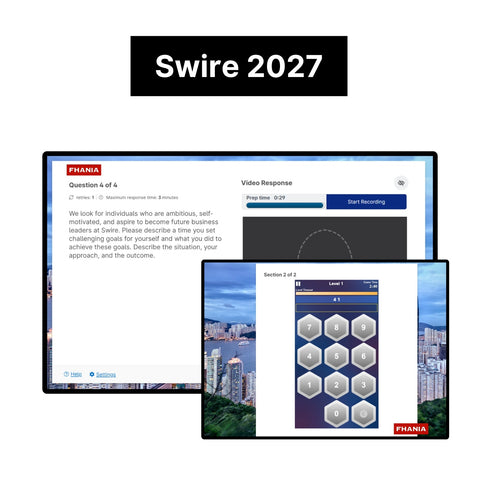
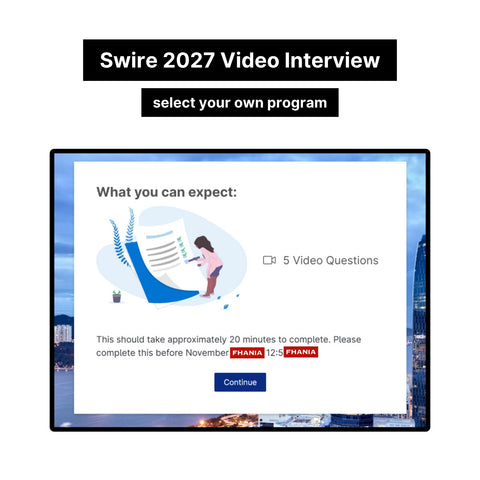
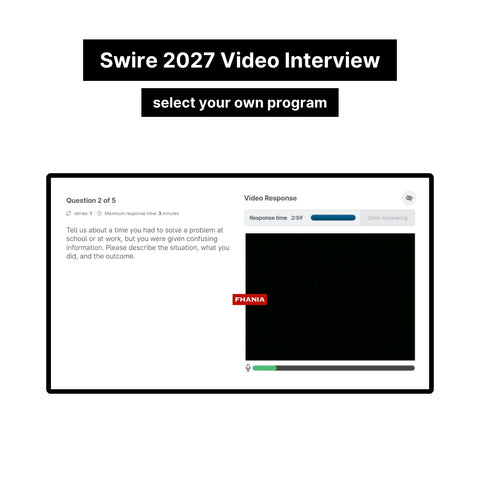
Preparing for Swire Group's interview? Our 2027 Swire Group Video Interview and Online Assessment Exact Questions and Answers has practice questions and answers — $79 one-time, instant download.