Swire HireVue 2027: How to Answer the 'Learn a New Skill' Question
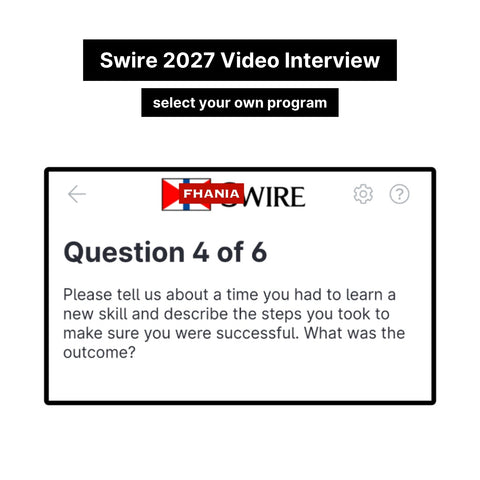
For this swire hirevue question, walk through your learning method step by step: what demanded the new skill, how you broke it down, which resources you used, how you practiced and got feedback, and the outcome. Management Trainees must ramp up in unfamiliar industries every rotation — so the system matters more than the skill.
Swire HireVue Questions: What the "Learn a New Skill" Question Assesses
Learning agility is commonly reported by candidates as one of the most-tested traits in Swire's HireVue stage — the Management Trainee programme deliberately drops you into aviation, property, trading, and other businesses in sequence. Assessors are not testing the skill itself; they are testing how you learn: do you have a method, do you seek feedback, do you persist through the clumsy early phase? A story of effortless talent tells them nothing; a story of structured struggle tells them everything.
Swire HireVue Questions: How to Answer
Make your learning process the hero of the STAR:
- Situation. What required the new skill and why the timeline was tight.
- Task. What "good enough" looked like and by when.
- Action. Detail the method: (1) broke the skill into sub-skills and sequenced them; (2) found the fastest resources — a mentor, a course, documentation, shadowing; (3) practiced deliberately with real tasks, not just theory; (4) sought feedback early and often; (5) tracked progress against a clear bar.
- Outcome. What you achieved and how fast — then one line on what the experience taught you about learning itself.
Example line: "I had three weeks to learn SQL for a data internship. I worked through one focused tutorial each morning, applied it to real company data each afternoon, asked the analyst to review my queries twice a week, and by week three I was writing the reporting queries the team used weekly."
Common Mistakes
- Picking something you already knew. "Learning" a skill adjacent to your degree shows no agility.
- No feedback loop. Self-study with no external check looks undisciplined; mention a mentor, reviewer, or test.
- Vague outcome. "I got better" is weak — name what you could do at the end that you could not do at the start.
Keep Reading
- why should we hire you swire group
- pwc personal professional goal
- Swire Group Case Interview 2027: Virtual Group Format Guide
- Swire Group Case Study 2027: Property Scenarios & Discussion Tips
FAQ
Technical or soft skill — which is better? Either, as long as the learning curve was steep and your method is clear.
What if I am still learning the skill? Fine — describe progress so far and your plan to continue; honesty about the journey works.
Should I mention failures during learning? Yes, briefly — early mistakes make the method credible.
How do I connect it to the trainee programme? Close with one line: rotations demand exactly this kind of rapid, structured learning.
Preparing for Swire Group's interview? Our 2027 Swire Group Video Interview and Online Assessment Exact Questions and Answers has practice questions and answers — $79 one-time, instant download.