Standard Chartered Online Assessment 2027: SHL Numerical & Inductive
The standard chartered online assessment for 2027 combines SHL-style numerical reasoning (tables, graphs and ratios under tight time limits) with inductive reasoning (pattern sequences where you spot the rule). It behaves adaptively — miss early questions and the later ones do not get easier — so the first five minutes decide far more than candidates realise.
What the Standard Chartered Online Assessment Contains
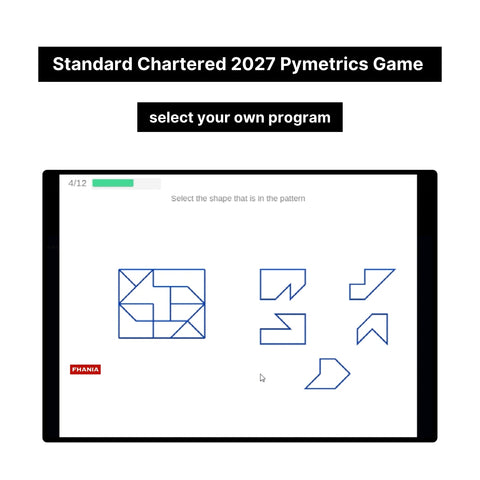
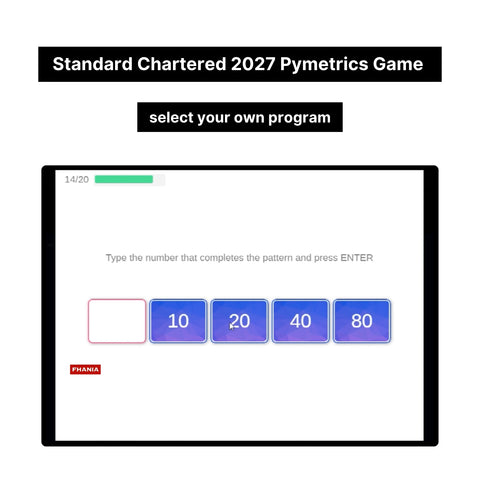
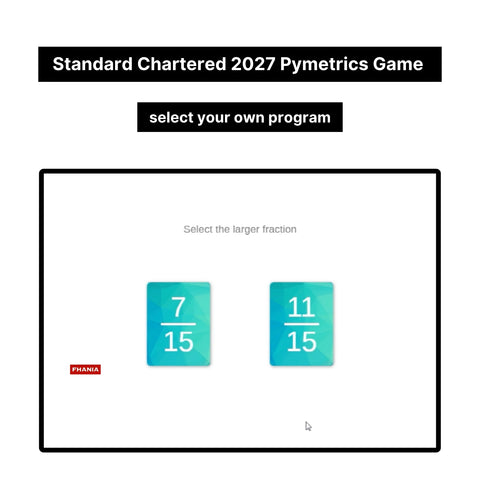
After the initial application screen, candidates face the numerical and inductive reasoning battery. Numerical questions give you data — sales figures, market shares, currency tables — and ask for percentages, ratios and projections, usually with around a minute per question. Inductive questions show sequences of shapes or numbers with one element missing; you identify the rule (rotation, alternation, progression) and select the completion. Both sections are strictly timed, and unanswered questions count the same as wrong ones.
What the Standard Chartered Online Assessment Measures
- Numerical reasoning — can you extract the right numbers from messy data and compute accurately under pressure? This mirrors real analyst work: fast, correct arithmetic on imperfect information.
- Inductive reasoning — can you detect patterns in unfamiliar data? Banks use this as a proxy for learning speed: how quickly you grasp new structures without being taught.
- Composure under time pressure — the adaptive-style difficulty means early accuracy matters disproportionately. Panic in the first section compounds through the rest.
Scores are benchmarked against other graduate applicants, not the general population. You are competing against people who prepared.
How to Prepare for the Standard Chartered Online Assessment
- Drill mental arithmetic until it is boring. Percentages, ratios, currency conversions and compound growth should be automatic. A calculator helps, but slow calculation still kills your pace.
- Learn the pattern families. Inductive sequences recycle a small set of rules — rotation, reflection, alternation, arithmetic progression, element counting. Recognising the family in seconds is the whole skill.
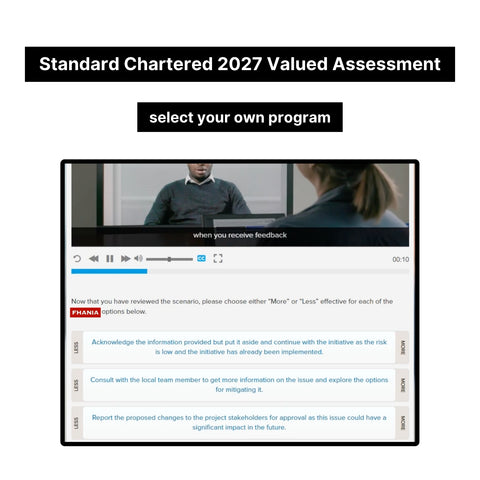
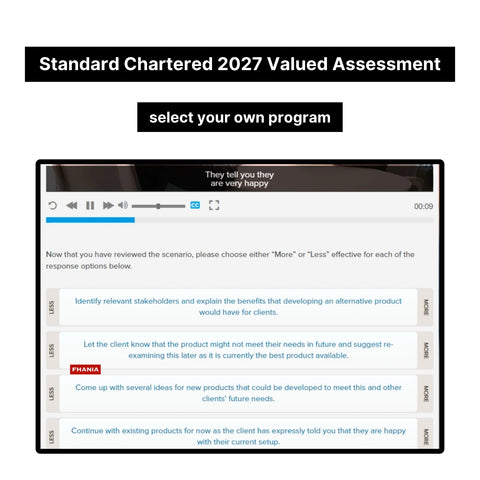
- Practise with the real item types. Our 2027 Standard Chartered Pymetrics Online Assessment & Video Interview Tutorials include the exact numerical and inductive formats the bank uses, worked solutions showing the fastest method per type, and timed drills that rebuild your pace.
Take every practice set under real timing. Untimed practice builds knowledge; timed practice builds scores.
Why the Early Questions Decide Everything
The standard chartered online assessment punishes slow starts more than any other round. Because difficulty adapts to your performance, a shaky opening locks you into a lower ceiling you cannot climb out of — even if you settle in later. Candidates who drilled timed sets walk in calm and bank the early questions; candidates who "just did a few practice questions" discover the timer is the real opponent. Do not let the first five minutes end your 2027 run.
FAQ
Can you use a calculator in the numerical test? Usually yes, on-screen or your own — but speed still decides your score, so mental arithmetic matters.
How many questions are there? Counts vary by year, but expect roughly 18–24 numerical and 20+ inductive items, each with about a minute or less.
Is the test adaptive? It behaves adaptively: your early performance shapes the difficulty curve of what follows.
What score do I need to pass? There is no published pass mark — you are benchmarked against the applicant pool, so aim to beat prepared candidates, not a threshold.
Preparing for Standard Chartered's Pymetrics Online Assessment? Our 2027 Standard Chartered Pymetrics Online Assessment & Video Interview Tutorials(https://offertutoring.com/products/standard-chartered-prep-tutorials) has the exact questions and answers — $79 one-time, instant download.