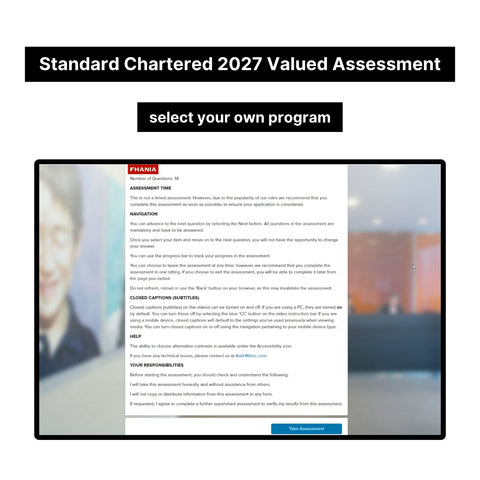
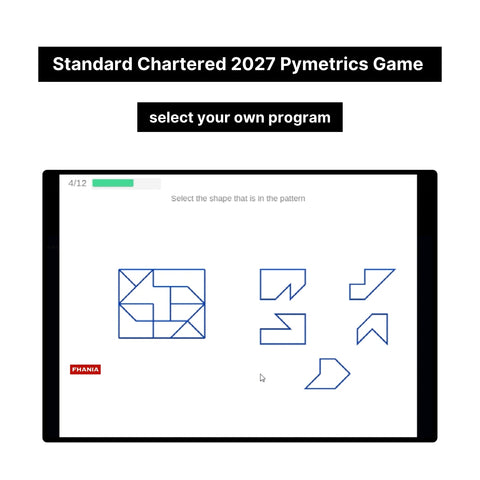
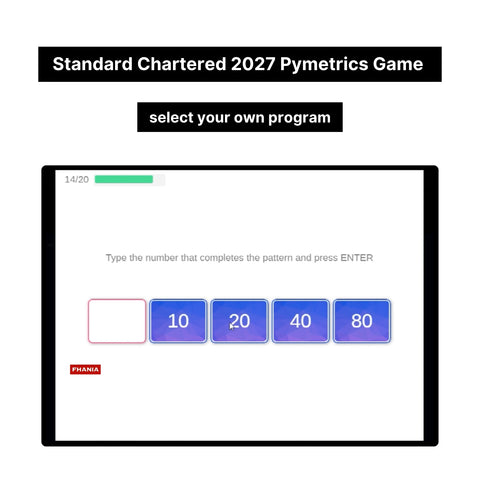
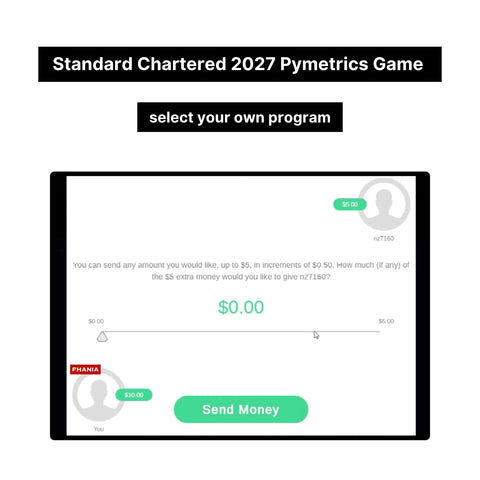
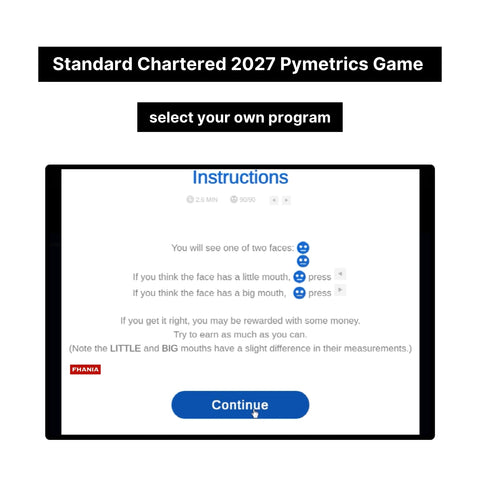
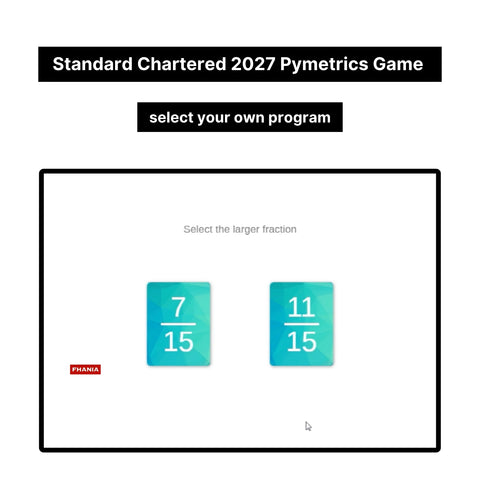
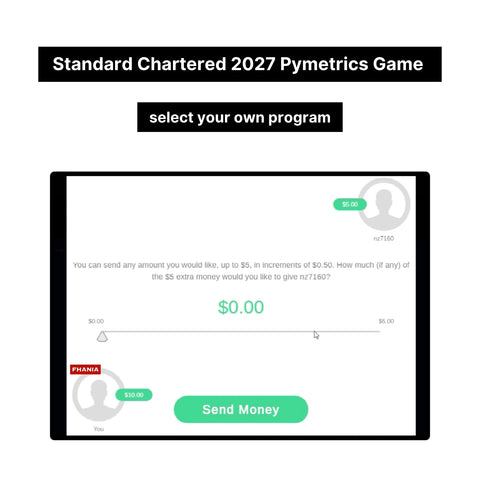
Standard Chartered's 2027 graduate recruitment runs through three stages: online application with Pymetrics-style assessments, a video interview, and a final assessment centre. The bank's process leans heavily on behavioural science — the games-based assessments measure traits, not just test scores. Here is what each round tests and how to prepare.
Programs & Timelines
Standard Chartered's 2027 International Graduate Programme covers Corporate & Investment Banking, Wealth & Retail Banking, Technology & Innovation, and Functions (Risk, Finance, Compliance). Applications for the 2027 intake opened in autumn 2026 and are reviewed on a rolling basis — the bank assesses candidates continuously and popular streams fill before published closing dates. Confirm your stream's status on the official Standard Chartered careers page and apply early.
Choose one stream per cycle. Standard Chartered values deliberate choices aligned with its footprint — the bank's strength is its Asia, Africa and Middle East network, and your application should show you understand that.
Round 1: Online Application & Assessments
The online application includes your background and motivational questions. Reference Standard Chartered's distinctive positioning — its emerging-markets franchise, its cross-border trade finance strength — rather than generic banking praise.
Then the assessments, which are different from most banks:
- Pymetrics-style games: Short neuroscience-based games measuring attention, risk tolerance, decision-making, and learning agility. You cannot "study" for these in the traditional sense, but you can familiarise yourself with the game formats so nerves do not distort your results.
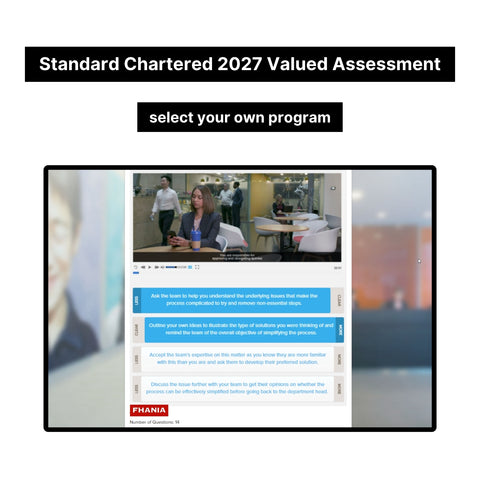
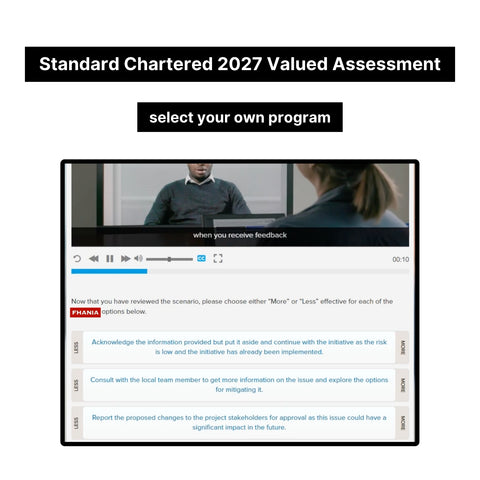
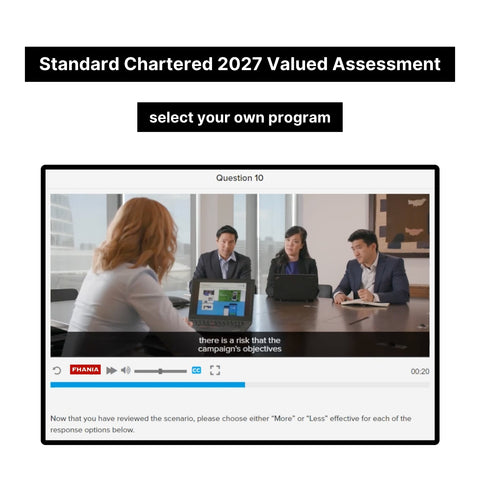
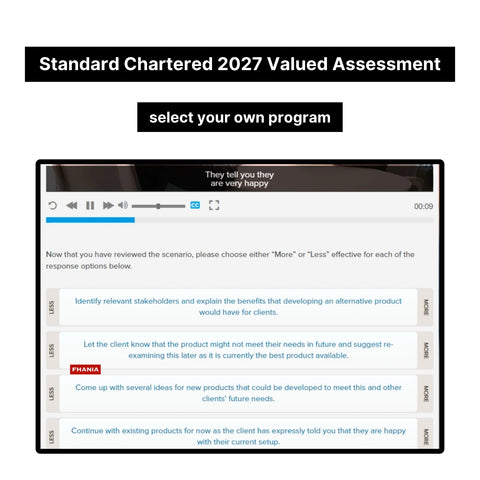
- Situational judgement test: Scenarios probing judgement and values alignment. Standard Chartered emphasises its "valued behaviours" — do the right thing, never settle, better together. Answers reflecting these score highest.
- Numerical and verbal reasoning: Timed tests on data interpretation and comprehension, similar to other banks but with tighter time limits than many candidates expect.
- What to prepare: Play through example Pymetrics-style games online to learn the mechanics. Drill timed numerical reasoning. And read the bank's valued behaviours — they are effectively the answer key for the SJT.
Round 2: Video Interview
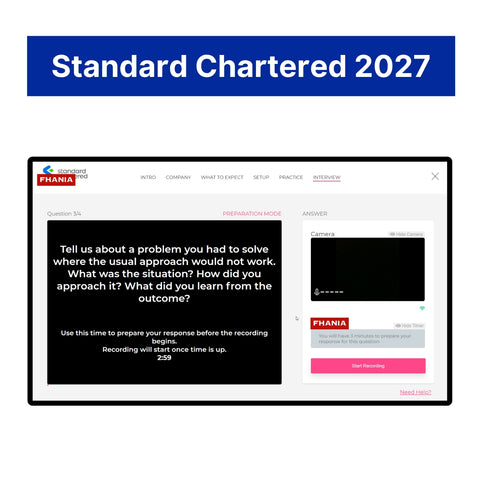
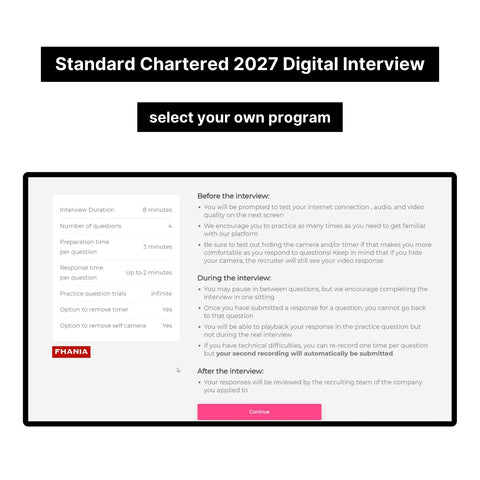
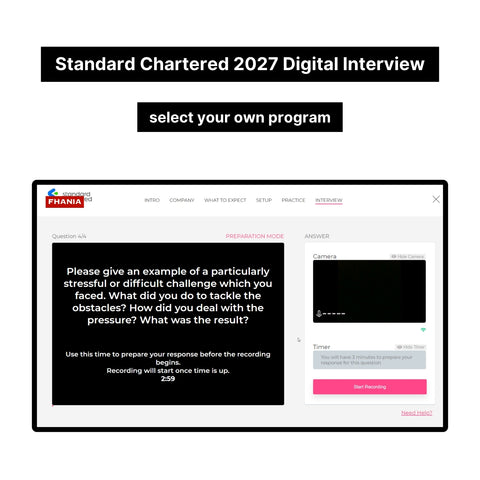
The video interview typically features 4–6 pre-recorded questions blending motivation and competency, with about 1–2 minutes to prepare and 2–3 minutes to answer. Expect "Why Standard Chartered?", "Why this stream?", and "Tell me about a time you adapted to an unfamiliar environment."
What is being tested: cultural fit with an emerging-markets bank and evidence of adaptability. Standard Chartered hires people who are comfortable with ambiguity and cross-cultural work — every example you give should ideally touch on navigating difference, whether cultural, organisational, or intellectual. Use STAR for behavioural questions and anchor motivational answers to the bank's actual footprint: a corridor, a market, a client segment. Practise on camera; the most common failure here is a technically fine answer delivered with zero energy.
Round 3: Assessment Centre
The final stage is an assessment centre with several evaluated components:
- Strength-based interview: Unlike traditional competency interviews, Standard Chartered often uses strengths-based questioning — "What energises you?", "When do you feel at your best?" Authenticity beats rehearsed stories here; the interviewers are trained to detect scripted answers.
- Group exercise: A business scenario with fellow candidates. The bank watches for inclusive behaviours — drawing quieter members in, building on ideas — consistent with its "better together" value.
- Case study / presentation: Some streams include an analytical case. Structure your thinking aloud, state assumptions, and deliver a clear recommendation.
- Role-play or written exercise: Occasionally used to test client-facing judgement. Stay calm, be structured, and keep the client's interest central.
FAQ
What assessments does Standard Chartered use for 2027?
Pymetrics-style neuroscience games, a situational judgement test, and timed numerical and verbal reasoning tests.
How is the Standard Chartered video interview structured?
4–6 pre-recorded questions (motivation plus competency), roughly 1–2 minutes preparation and 2–3 minutes per answer.
Does Standard Chartered hire on a rolling basis?
Yes. Streams are assessed continuously and can fill before published deadlines — early application is important.
What does Standard Chartered look for in candidates?
Adaptability, cross-cultural comfort, and alignment with its valued behaviours — particularly relevant given the bank's Asia, Africa and Middle East footprint.
Applying to Standard Chartered? Our 2027 Standard Chartered Pymetrics & Video Interview prep covers every round — $79 one-time, instant download.