

SIG Logical Reasoning: Pattern Recognition Questions
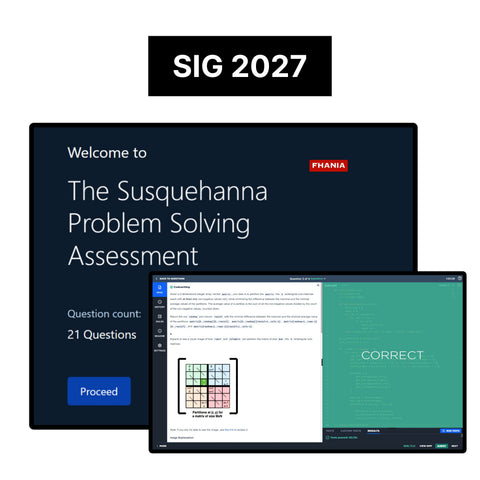
The SIG logical reasoning section tests pattern recognition: shape grids, sequence completion, odd-one-out, and matrix puzzles under strict timers. For the 2027 intake, it's the part of the problem solving assessment that most candidates underestimate — and the one where a single blind spot ("I just don't see it") costs the most points. Pattern recognition is trainable, but only with the right material.
What the Pattern Questions Are
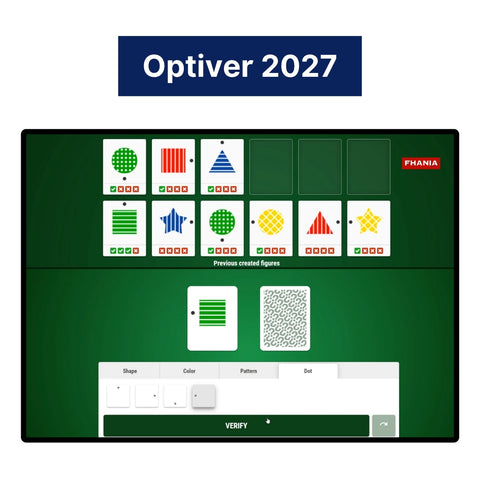
SIG's logical reasoning questions present visual puzzles: 3x3 grids with a missing cell, sequences of shapes with evolving rules, sets where one figure breaks the pattern. The rules involve rotation, reflection, counting, alternation, superposition, and progression — often two rules layered together. Each question is timed at about a minute. You either see the rule quickly or you don't, and "don't" is expensive.
What Pattern Recognition Assesses
The SIG logical reasoning pattern questions assess:
- Abstract rule extraction: Finding the governing rule in novel visual data — the purest test of raw reasoning the process has.
- Speed of insight: It's not enough to eventually see the pattern; the timer demands fast insight.
- Resistance to fixation: The hardest questions punish locking onto the first plausible rule. Candidates must test and discard hypotheses quickly.
- Composure on stuck questions: Everyone blanks on one or two. The test measures whether you move on or burn three minutes staring.
How to Train Pattern Recognition
- Learn the rule vocabulary. Rotation, reflection, counting elements, shading progression, alternation, row/column operations — nearly every SIG logical reasoning question combines two from this list. Learn to check them systematically.
- Drill with a 60-second cap. Untimed practice builds understanding but not test skill. Every rep should have a timer.
- Study the exact question styles. SIG's grids have house flavors — certain rule combinations recur. Recognizing a familiar structure cuts solve time in half.
Our 2027 SIG Susquehanna Online Problem Solving | Coding Assessment Tutorials include the exact logical reasoning and pattern recognition questions from SIG's assessment with answers and rule explanations — so the patterns are familiar before the timer starts.
"I Don't See It" Is a Training Problem
Every candidate who fails the SIG logical reasoning section describes the same experience: staring at a grid, knowing there's a rule, not finding it before time runs out. That's not a talent ceiling — it's an untrained rule vocabulary. Candidates who drilled the pattern families see the same grid and spot the rule in 20 seconds. The difference is reps on the right material, not IQ. Build the vocabulary now, while a blank stare still costs nothing.
FAQ
What logical reasoning questions does SIG ask? Shape grids, sequence completion, odd-one-out, and matrix puzzles with rules like rotation, counting, and progression.
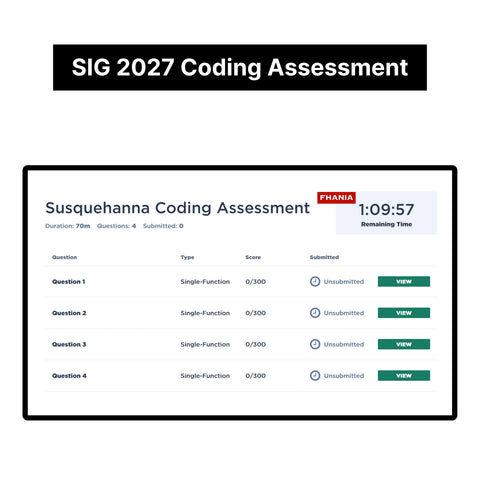
How much time per question on the SIG logical reasoning test? About a minute or less per item — fast rule extraction is the scored skill.
Can pattern recognition be improved? Yes, significantly. Learning the standard rule families and drilling timed reps is the proven method.
Is the logical reasoning section harder than numerical? Most candidates find it less trainable-feeling but equally improvable — the key is systematic rule-checking, not staring.
Preparing for SIG Susquehanna's problem solving? Our 2027 SIG Susquehanna Online Problem Solving | Coding Assessment Tutorials has the exact questions and answers — $79 one-time, instant download.