SIG Behavioral Interview: Why SIG & Poker Culture
The SIG behavioral interview for 2027 asks the classics — "Why SIG?", "Why trading?", "Tell me about yourself" — but grades them through a poker-culture lens. Generic answers about loving markets get you cut. SIG wants evidence you think in bets, handle variance, and actually enjoy the game-theoretic worldview the firm is built on.
What the Behavioral Round Is
SIG's behavioral interview usually appears in later rounds and at Discovery Day: conversations with traders and team members about your motivations, background, and fit. The questions sound standard, but the interviewers are listening for something specific — whether you reason about decisions the way a poker player does. "Why SIG" isn't a trivia question about the firm; it's a test of whether you understand what the job actually is and want it for the right reasons.
What "Why SIG" Really Assesses
The SIG behavioral interview assesses:
- Genuine game-theoretic interest: Do you play poker, bet on sports, trade, or otherwise make decisions under uncertainty for fun? Zero such interests raises a flag.
- Comfort with variance: Can you describe a time you made the right decision and got a bad outcome — and were fine with it? This is the poker-culture shibboleth.
- Why this firm specifically: Answers that could apply to any trading firm fail. Know what distinguishes SIG — its poker roots, its training, its culture of internal competition.
- Intellectual honesty: Bluffing about your interests is the fastest way to fail an interview run by professional game players. They can tell.
How to Prepare Your Answers
- Build a real poker/games narrative. If you don't play, start — even casually. You need authentic stories about decisions under uncertainty, not rehearsed lines.
- Prepare the variance story. Have a concrete example of a good decision with a bad outcome that you owned without tilting. This answer matters more than your resume summary.
- Research SIG specifically. Know the firm's history, its poker culture, and why its environment fits you — with specifics, not platitudes.
- Do mock behaviorals with pushback. Have someone challenge your "Why SIG" until the generic parts fall off.
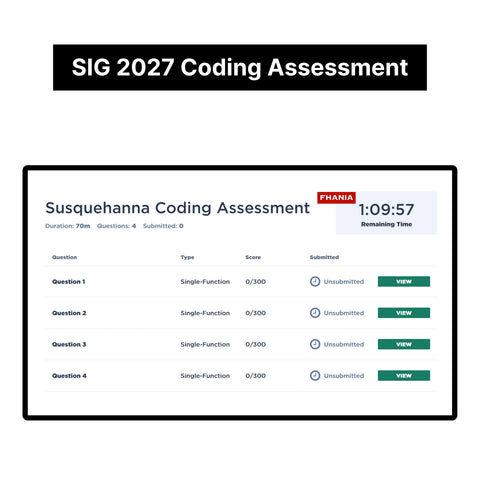
Our 2027 SIG Susquehanna Online Problem Solving | Coding Assessment Tutorials get you through the technical gates — CodeSignal, problem solving, and interview questions — so you reach the behavioral rounds with a real shot, not a theoretical one.
They Can Smell a Bluff
The SIG behavioral interview is conducted by people who make a living reading other people's decisions. A "Why SIG" answer you don't believe, a poker interest you don't have, a variance story you invented — they'll spot all of it. The candidates who pass aren't better actors; their genuine interests already rhyme with the culture. If yours don't yet, start building the real thing now. Authenticity here isn't a tactic. It's the test.
FAQ
What behavioral questions does SIG ask? Why SIG, why trading, tell me about yourself, plus questions probing risk tolerance, decision-making, and competitive drive.
Do I need to play poker for the SIG behavioral interview? Not professionally — but genuine interest in games of incomplete information strongly helps.
How important is "Why SIG" specifically? Very. Generic answers that fit any trading firm are a common rejection reason.
When does the behavioral interview happen? Later rounds and Discovery Day, after the technical filters — but prepare it in parallel, not at the end.
Preparing for SIG Susquehanna's behavioral? Our 2027 SIG Susquehanna Online Problem Solving | Coding Assessment Tutorials has the exact questions and answers — $79 one-time, instant download.