

Shell VJT Stakeholder Scenarios 2027: How to Show Judgment
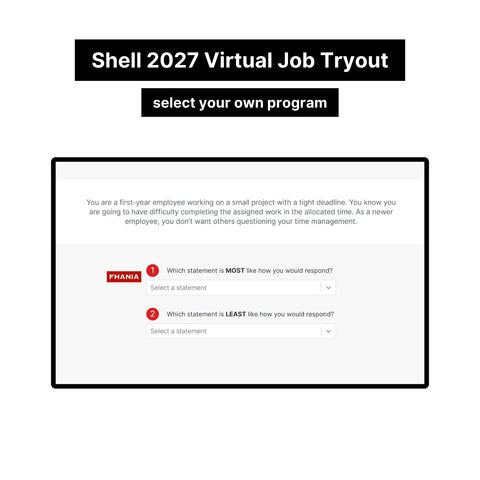
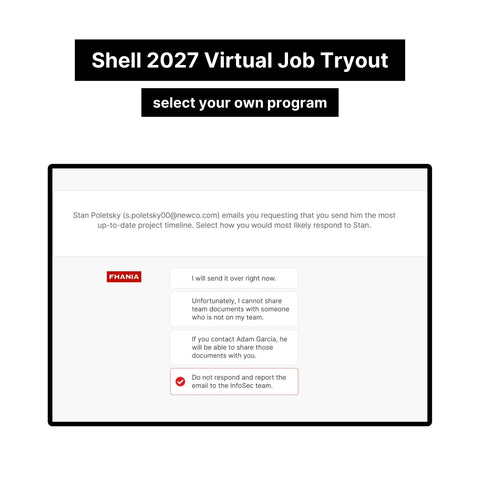
Shell VJT stakeholder scenarios are the Virtual Job Tryout tasks where competing interests collide — a customer deadline versus a safety check, two managers pulling you in opposite directions, a community concern versus a project timeline. For the 2027 intake, these Shell VJT stakeholder scenarios test the judgement Shell prizes most: balancing interests without dropping any of them.
What Shell VJT Stakeholder Scenarios Are
Stakeholder scenarios present realistic Shell working situations with multiple parties who each want something different: your manager, a colleague, a customer, a contractor, a local community. You typically rank possible responses from most to least effective. There is rarely a clean answer — the exercise is designed so that pleasing one stakeholder visibly costs another. What Shell measures is how you navigate the trade-off: do you communicate proactively, escalate properly, protect safety and integrity, and keep every stakeholder informed? Or do you silently pick a winner and hope nobody notices?
What Good Judgment Looks Like
The scoring logic behind Shell VJT stakeholder scenarios is consistent:
- Communicate early and openly. The top-ranked responses almost always involve telling affected stakeholders what is happening and why — before they discover it themselves.
- Never sacrifice safety or integrity for a stakeholder. No deadline, customer, or manager justifies a shortcut. The option that does is always the trap.
- Escalate through proper channels. Raising a conflict to the right level of management outranks both unilateral action and passive compliance.
- Seek the balanced solution. Responses that acknowledge all parties and propose a workable compromise score above those that serve one stakeholder at another's expense.
- Follow through. Committing to an update or action and delivering it beats grand promises with no ownership.
How to Show Judgment in Stakeholder Scenarios
- Map the stakeholders before ranking. Quickly note who is affected and what each needs — the best answer usually serves the most needs without violating values.
- Apply the Shell filter: safety, integrity, communication. Run every option through those three in order. Most rankings solve themselves.
- Distrust the silent option. Any response where you act without telling anyone is almost never the top answer at Shell.
- Practise full rankings. Spotting the best response is easy; ordering the middle three is where marks are won. Drill complete rankings until the logic is instinctive.
Our 2027 Shell Virtual Job Tryout and On-demand Interview Tutorials include stakeholder-scenario practice sets with the scoring logic explained, training the balanced-judgement instinct Shell's assessors reward.
No Judgment, No Offer
Stakeholder scenarios are Shell's way of asking: can we trust you with real conflicts involving real money, real people, and real risk? A candidate who picks the path of least resistance in a simulation is telling Shell exactly how they will behave when the stakes are real. Show the judgement now, or someone else shows it instead.
FAQ
What is a stakeholder scenario in the Shell VJT? A situational task where multiple parties have competing interests and you must rank the most effective responses.
How are Shell VJT stakeholder scenarios scored? By effectiveness ranking — responses reflecting Shell's values (safety, integrity, proactive communication) score highest.
Should I always prioritise the customer in stakeholder scenarios? No. Shell expects balanced judgement: customers matter, but never at the expense of safety, integrity, or other stakeholders.
Preparing for Shell's Stakeholder Scenarios? Our 2027 Shell Virtual Job Tryout and On-demand Interview Tutorials has the exact questions and answers — $79 one-time, instant download.