

Shell VJT Safety & Security Scenarios 2027: How Shell Scores You
Shell VJT safety scenarios are the situational questions in the Virtual Job Tryout where workplace safety or security is on the line — a deadline pushing you toward a shortcut, a colleague skipping a procedure, an unfamiliar hazard on site. For the 2027 intake, these scenarios carry outsized weight: safety is Shell's core value, and how Shell scores you on them reflects how seriously the company takes its "Goal Zero" culture.
What Shell VJT Safety Scenarios Are
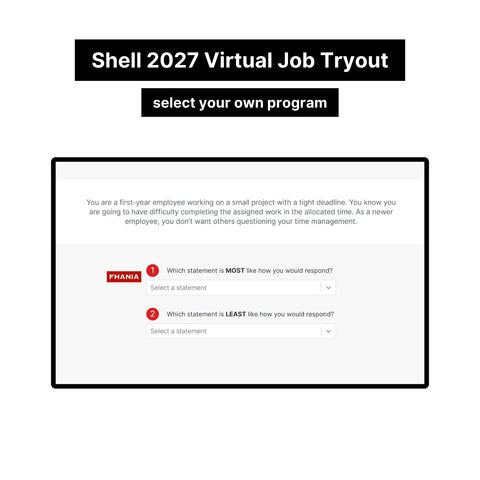
Shell VJT safety scenarios are work-challenge items built around Shell's non-negotiable priority: nobody gets hurt. A typical scenario — deadline pressure, an ambiguous procedure, a teammate taking a risk — asks you to rank the most effective responses. The "efficient" option is deliberately written to look attractive: skip the check, sign off quickly. That option is the trap. Shell is watching whether your judgement defaults to safety when it costs you something.
How Shell Scores Safety & Security Scenarios
Understanding the scoring logic is the whole game:
- Safety first, always. The response that stops work, raises the hazard, or follows procedure scores highest — even when it is slower or unpopular.
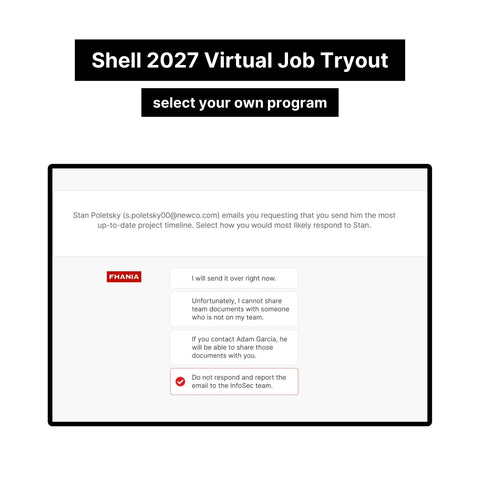
- Escalation beats silence. Reporting a risk to a supervisor outranks handling it alone, and both outrank ignoring it.
- Shortcuts score lowest. Any option that trades safety for speed, cost, or convenience sits at the bottom of the ranking. Choosing it signals you do not share Shell's values.
- Consistency across scenarios. One safe answer among several shortcut-tolerant ones looks like luck, not judgement. Shell wants a pattern.
How to Handle Shell VJT Safety Scenarios
- Apply one rule to every safety scenario: would a Shell site manager do this? If the answer is no, rank it last. This single filter answers most items correctly.
- Practise ranking, not just spotting the best answer. Marks are lost on the middle options — learn to order all responses from most to least safe.
- Never pick "deal with it quietly." Shell's culture rewards raising issues through proper channels. The lone-hero option is never the top answer.
- Rehearse with real examples. Work through safety scenario practice sets until the safe-first instinct is automatic — under time pressure, instinct is all you have.
Our 2027 Shell Virtual Job Tryout and On-demand Interview Tutorials include dedicated safety-scenario practice with the scoring logic explained, so the safe-first judgement becomes reflex before test day.
Safety Is Shell's Religion — Get It Wrong and You Are Done
No other section of the VJT carries this kind of cultural weight. Shell has built its entire operating reputation on safety; a candidate who picks the shortcut in a simulation is telling the company exactly what they would do on a real asset. These are the easiest marks in the whole assessment if you know the logic — and the most expensive to lose if you do not.
FAQ
Why does Shell test safety scenarios in the VJT? Because safety culture cannot be taught from zero. Shell screens for candidates whose instincts already align with its Goal Zero mindset.
Do safety scenarios appear for non-technical roles too? Yes. Safety is a company-wide value at Shell, so expect safety-flavoured scenarios whatever role you apply for.
What is the worst answer in a Shell VJT safety scenario? Any response that ignores, hides, or works around a safety risk — especially to save time or money.
Preparing for Shell's Safety Scenarios? Our 2027 Shell Virtual Job Tryout and On-demand Interview Tutorials has the exact questions and answers — $79 one-time, instant download.