

RSM 'Multiple Priorities' Question 2027: How to Answer
The RSM multiple priorities question — "tell me about a time you juggled multiple priorities" — is one of the highest-frequency questions in RSM's video interview for the 2027 intake. It is the time management question's tougher sibling: not just deadlines, but genuinely competing demands. In audit busy season, multiple priorities are not an interview topic — they are every day from January to March.
Why the RSM Multiple Priorities Question Matters
An RSM trainee routinely runs two or three client engagements at once — each with its own manager, deadlines, and crises — while studying for ACA exams. The assessor is running a survival forecast: will this candidate cope, or quietly drown while the team covers for them?
That is why vague answers are fatal. "I'm good at multitasking" says nothing. They want a system — how you triage, what you renegotiate, how you communicate when something has to give. Audit rewards people who know what to do first and have the professionalism to renegotiate the rest, not people who try to do everything.
How to Answer the RSM Multiple Priorities Question
Use STAR with the action built around your triage system:
- Situation: genuine conflict. "During my internship I was given a client report due Friday, asked to cover a colleague's analysis, and had a university exam the same week."
- Task: the stakes of each. What happens if each slips? This shows you think in consequences.
- Action: your triage, explicitly. "I listed everything with real deadlines and consequences, ranked by immovability, and flagged what could be renegotiated. I told my supervisor on day one the cover work needed an extra day, proposed the new timeline myself, and blocked revision around the report. When the data arrived late, I re-ranked that evening and updated everyone before they chased me."
- Result: everything delivered, the renegotiated item on its new agreed timeline. Nothing dropped silently.
Scoring details: ranking by consequence, proactive renegotiation (you proposed the new deadline), communicating changes before being chased. "I worked late every night" without a system sounds like a burnout plan, not a method.
How to Prepare This Answer
Pick your best example of genuinely competing demands — messy is fine if the outcome was controlled. Write the STAR version, rehearse to 90 seconds, and stress-test it: does a stranger hear a triage system, or just busyness?
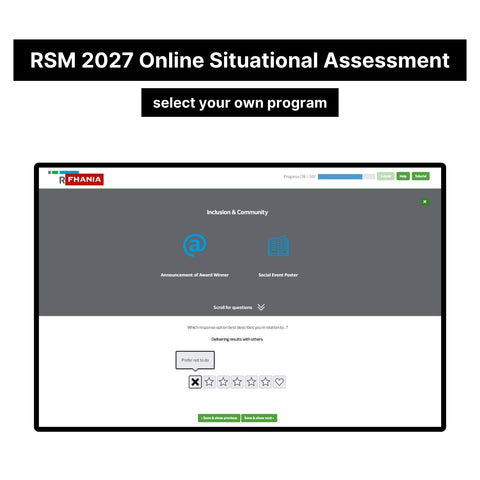
Our 2027 RSM Online Situational Assessment and Job Simulation Assessment Tutorials includes a model answer for the multiple priorities question and every other high-frequency question in RSM's video bank. $79 one-time, instant download.
Busy season is multiple priorities with no opt-out. If your answer shows no systematic thinking about competing demands, the assessor will conclude January will break you. Show the triage system, or lose the offer to someone who did. The 2026 application season for the 2027 intake is live; check RSM's official careers page for exact dates and deadlines.
FAQ
How is this different from the time management question? Time management is scheduling; multiple priorities is triage — choosing what wins when everything cannot. Your example must show real conflict.
How do I show "saying no" positively? Frame it as renegotiation: you proposed an alternative timeline, communicated early, delivered on the revised commitment.
How long should the answer be? 60–90 seconds. Enough for the triage logic, not so long the structure collapses.
Preparing for RSM's Video Interview (Competency)? Our 2027 RSM Online Situational Assessment and Job Simulation Assessment Tutorials has the exact questions and answers — $79 one-time, instant download.