

RSM Article Discussion 2027: AI in Audit (How to Analyze)
For the RSM ai audit discussion — 'Read this article on AI in audit: what are the benefits and risks of introducing it?' — analyse it like a consultant: summarise the argument, lay out benefits and risks in a balanced structure, then give your own reasoned verdict.
What the RSM AI Audit Discussion Assesses
This case-style question is commonly reported by candidates and tests critical thinking under time pressure — can you digest unfamiliar material and form a balanced, structured view quickly? The interviewer is watching for even-handedness: candidates who cheerlead AI or dismiss it both fail the judgement test. What scores is structured analysis — separating the article's claims from your own assessment, weighing both sides, and reaching a reasoned conclusion.
How to Analyze the RSM AI Audit Discussion
Work through four moves: summarise, benefits, risks, verdict.
- Summarise first: In one or two sentences, state the article's core argument. This proves you read for meaning, not just for points to borrow.
- Benefits — structure them: Typical benefits to draw out: full-population testing instead of sampling, anomaly detection at scale, efficiency freeing auditors for judgement work, and improved risk targeting. Group them; do not just list.
- Risks — structure them too: Typical risks: over-reliance and automation bias, data quality determining output quality, the "black box" problem for explainability, and the irreplaceable role of professional scepticism on ambiguous findings.
- Your verdict: Take a position. A strong close: AI strengthens audit when governed well — with human judgement reviewing outputs and clear accountability — but introduced carelessly it creates false confidence. End with one concrete governance point, like keeping the auditor's sign-off on AI-flagged items.
Example line: "The article argues AI can raise audit quality by testing full populations — I would weigh that against automation bias and data-quality risks, and conclude AI is a powerful amplifier of good audit judgement, not a substitute for it."
Common Mistakes in the RSM AI Audit Discussion
- Summarising without analysing. Restating the article is comprehension, not analysis. The interviewer wants your structured evaluation on top.
- One-sided argument. Candidates commonly report that pure enthusiasm or pure scepticism both read as uncritical. Balance is the skill being tested.
- No verdict. Ending with "there are pros and cons" is evasion. Take a reasoned position — that is what professionals do.
Article discussions reward the habit of structured critical reading — a skill that serves every stage of a professional career. Practice the summary-benefits-risks-verdict flow on any business article and this question becomes routine.
Keep Reading
- barclays tell me about yourself hirevue
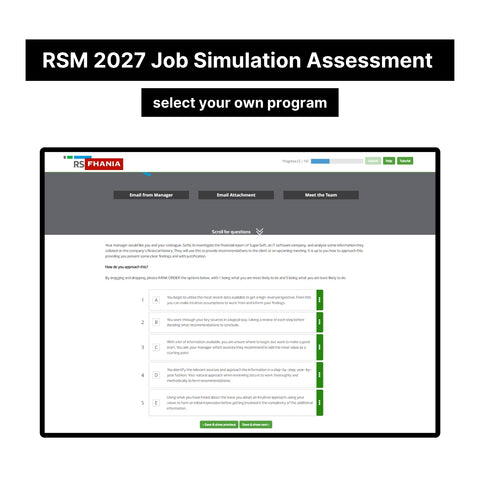
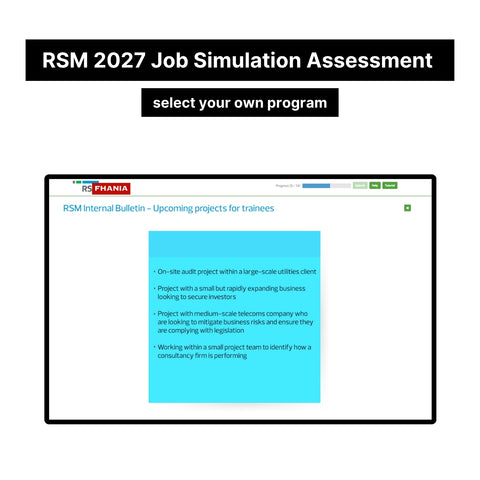
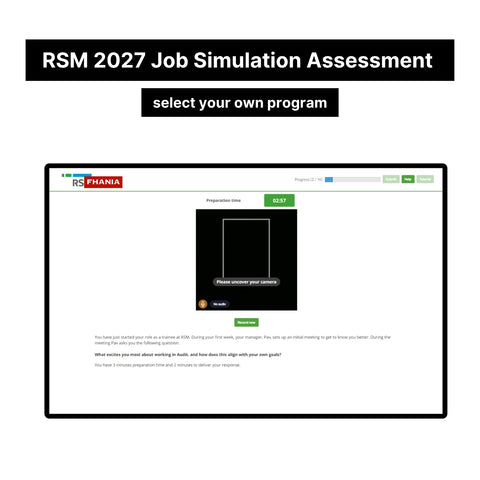
- RSM Job Simulation 2027: 5-Day Window, Video + Ranking Guide
- RSM Motivational Interview Questions 2027: List & Tips
FAQ
How much time do I get with the article? It varies by format — read actively, noting the core argument and two points per side as you go. Do not try to memorise; structure your notes.
Should I agree or disagree with the article? Neither automatically. Evaluate its claims on merit — agree where it is strong, challenge where it is weak, and say why. Independent judgement is the point.
What if I know nothing about AI in audit? The article gives you the material; your general reasoning does the rest. Structured thinking about unfamiliar content is exactly what is being tested.
Should I bring outside knowledge? Lightly, if relevant — a real example of analytics in audit strengthens your answer. But the article is the primary source; do not lecture beyond it.
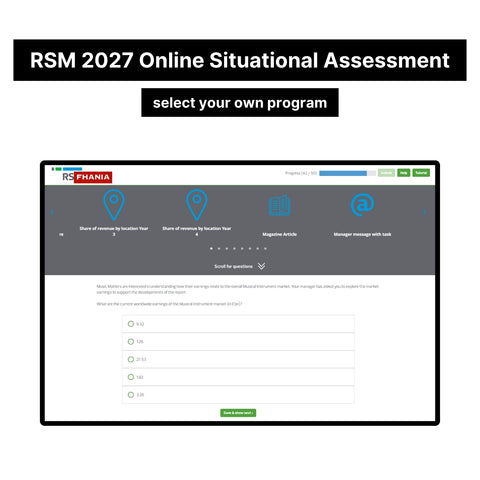
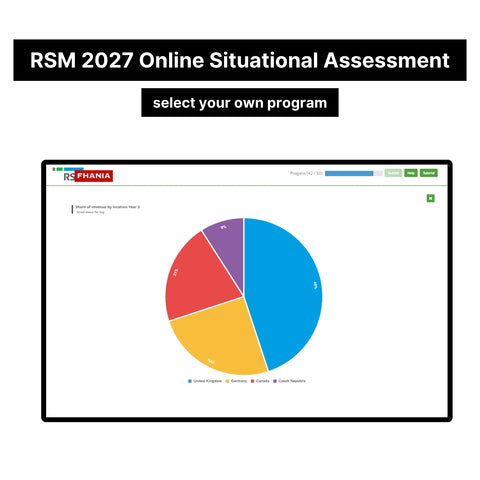
Preparing for RSM's interview? Our 2027 RSM Online Situational Assessment and Job Simulation Assessment Tutorials has practice questions and answers — $79 one-time, instant download.