

PwC Behavioural Assessment 2027: What It Measures & How to Approach
The PwC behavioural assessment for the 2027 intake has no right answers — and that's the trap. It measures your working style and values against the profile of successful PwC professionals, and candidates who fake an "ideal" persona get caught by inconsistency checks. To pass the PwC behavioural assessment test, understand what it measures, then answer honestly and consistently.
What the PwC Behavioural Assessment Test Is
This is a psychometric questionnaire — typically forced-choice or agree/disagree statements about how you work: how you handle pressure, make decisions, work with others, and respond to change. It may be bundled with the game-based or online assessment stage. There is no time pressure like the SHL tests; the challenge is different. The test is designed to detect faking, so trying to reverse-engineer the "perfect" PwC profile usually backfires.
What the PwC Behavioural Assessment Test Measures
- Work style fit: Do you naturally collaborate, take initiative, and adapt — the behaviours PwC's framework rewards? Extreme or inconsistent patterns raise flags.
- Values alignment: Responses are mapped against integrity, inclusion, and client-focus themes. Answers that contradict each other across the test reveal a manufactured profile.
- Consistency: The same trait is probed multiple times in different wording. Candidates who answer strategically rather than honestly contradict themselves — and the algorithm notices.
The key insight: PwC isn't looking for a personality type. It's screening out profiles that clash with professional services work — for example, strong aversion to teamwork or discomfort with ambiguity.
How to Approach the PwC Behavioural Assessment
Answer as your genuine professional self, not the person you think PwC wants. Read each statement carefully — forced-choice formats punish rushing. Avoid extreme answers on every item; real people have nuanced work styles, and all-extreme profiles look faked. Most importantly, don't try to game it: pick the response that's actually true, and you'll stay consistent across the whole test.
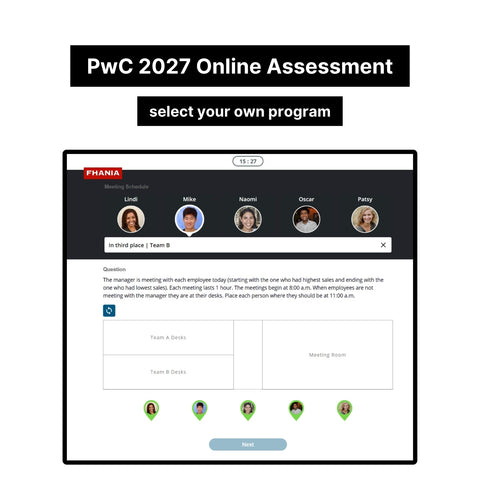
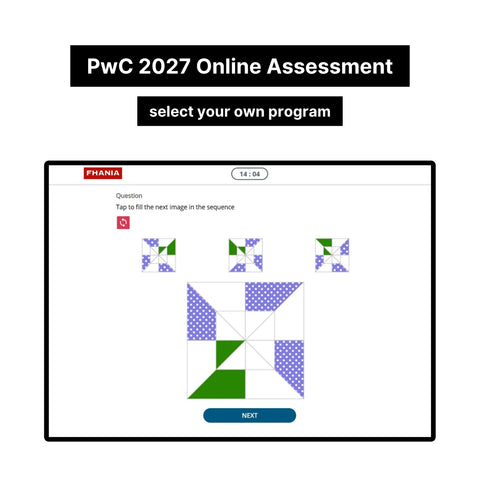
That said, "be yourself" isn't the whole story. Understanding the format prevents self-sabotage — like misunderstanding what a statement is really asking. Our 2027 PwC Online Assessment | Video Interview Tutorials includes PwC-style behavioural assessment practice with explanations of what each question type measures, so you walk in knowing the format instead of second-guessing every answer.
Candidates who try to fake a persona get flagged by their own contradictions — and a flagged behavioural profile ends the application quietly, with no feedback and no appeal. Know the format, answer honestly, stay consistent, and let the real you pass.
FAQ
Can you fail the PwC behavioural assessment? Yes. While there's no pass mark like a numerical test, profiles that strongly misalign with PwC's professional framework can end your application.
How long does the PwC behavioural assessment take? Usually 20–35 minutes. It's not strictly timed, but don't overthink each item.
Should I answer what PwC wants to hear? No. Inconsistency detection punishes strategic answering. Answer honestly — but understand the format first so you don't misread questions.
Is the behavioural assessment the same as the Career Valuation? They're related but distinct: Career Valuation uses video-based situational scenarios, while the behavioural assessment is a work-style questionnaire. You may face both.
Preparing for PwC's Behavioural Assessment? Our 2027 PwC Online Assessment | Video Interview Tutorials has the exact questions and answers — $79 one-time, instant download.