Profitability case framework (Explained): Interview Answer Guide 2027
A profitability case asks why profits fell and how to fix it; the framework is Profit = Revenue − Costs, with revenue as price × volume and costs as fixed vs. variable. A strong profitability case interview question answer isolates which side moved first, drills the guilty branch with hypotheses, and only then proposes fixes tied to the diagnosis.
What the Profitability Case Interview Question Tests
- Whether you decompose profit mechanically: revenue vs. costs, then price/volume and fixed/variable.
- Whether you diagnose before prescribing — hypotheses tested against data, not instant solutions.
- Whether you distinguish company-specific problems from industry-wide trends.
How to Answer the Profitability Case Interview Question
Master the decomposition and the diagnostic logic:
- Level 1. Profit = Revenue − Costs. Ask which side moved: "Have revenues fallen, costs risen, or both?"
- Level 2 — revenue. Revenue = Price × Volume × Mix. Falling volume with steady price means demand or share loss; falling price with steady volume means pricing pressure.
- Level 2 — costs. Fixed vs. variable. Rising variable costs point to inputs or efficiency; rising fixed costs point to overhead or expansion.
- The benchmark question. "Is this happening to competitors too?" Industry-wide → external forces; company-only → internal execution.
- Hypothesis discipline. State a suspect for each branch, test with the data given, prune aggressively.
Sample answer: "I decompose profit into revenue and costs, then price-times-volume and fixed-versus-variable. I isolate which component moved, check competitors to separate internal from external causes, and only recommend fixes once the root cause is proven."
Common Mistakes With the Profitability Case Interview Question
- Jumping to solutions ('cut costs!') before identifying which cost, or whether costs are even the problem.
- Treating revenue as one blob instead of price × volume × mix.
- Ignoring the benchmark: are competitors suffering too? That changes the entire diagnosis.
Profitability is the most common case type, which makes it the most dangerous: everyone knows the framework, so interviewers differentiate on diagnosis quality. The winners isolate the moving piece fast and test hypotheses; the rest wander the tree.
Keep Reading
- strengths and weaknesses oc&c strategy consultants
- agile interview question
- Which OC&C Strategy Consultants 2027 Role Is Right for You?
- How to Apply to OC&C Strategy Consultants 2027: Step-by-Step Guide
FAQ
What is the basic profitability framework?
Profit = Revenue − Costs. Revenue = Price × Volume (and mix); Costs = Fixed + Variable. Find which component moved, then drill down.
How do you start a profitability case?
Clarify the objective and timeframe, check whether the issue is revenue-side, cost-side, or both, and benchmark against competitors before drilling deeper.
What are common causes of falling profits?
Revenue side: price pressure, volume loss, mix shift. Cost side: input inflation, bloated fixed costs, scaling inefficiencies. External: regulation, demand shocks.
Should I propose solutions early?
No — diagnose first. Recommendations earn credit only when they target the proven root cause; premature fixes signal sloppy thinking.
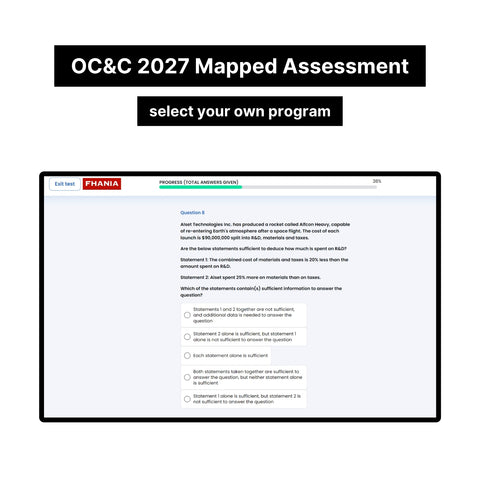
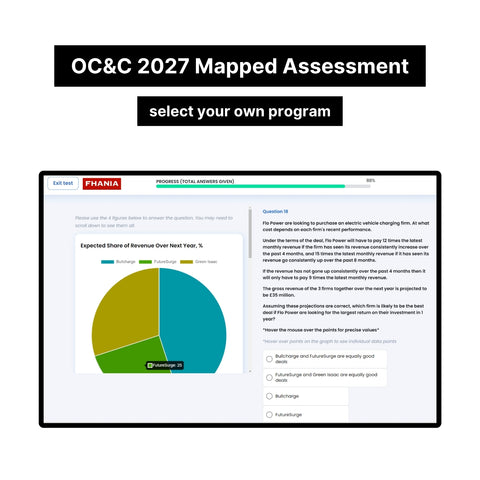
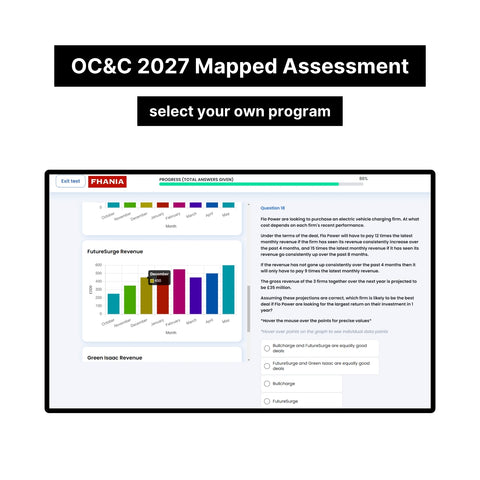
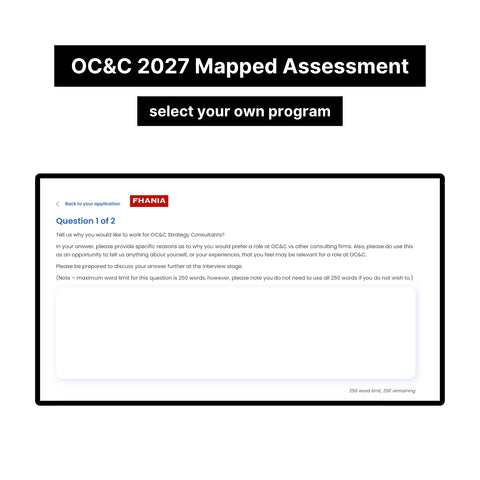
Preparing for OC&C Strategy Consultants's interview? Our 2027 OC&C Strategy Consultants Online Test Tutorials (One-Way Video Assessment and Mapped Test) has practice questions and answers — $79 one-time, instant download.