PEG ratio: Answer Guide 2027
The PEG ratio divides the P/E ratio by the expected earnings growth rate — it adjusts valuation for growth so you can compare a fast grower with a slow grower on equal footing. A PEG around 1 is traditionally viewed as fairly valued. In a PEG ratio interview, give the formula, the intuition, and the limitations.
PEG Ratio Interview Questions: What They Test
Interviewers want to know whether you understand what P/E misses: growth. A stock at 30x earnings looks expensive until you learn earnings are growing 30% a year — the PEG of 1.0 reframes it. The classic rule of thumb (associated with Peter Lynch) is that a PEG near 1 suggests fair value, well below 1 suggests cheap, well above suggests expensive.
The limitations matter more than the rule. PEG uses a single growth number — usually a 3–5 year estimate — that may be unreliable, and it ignores risk, capital intensity, and earnings quality. Two companies with the same PEG can have very different risk profiles, which is why practitioners treat it as a screening shortcut, not a valuation.
How to Answer a PEG Ratio Interview Question
- State the formula. "PEG = (P/E) / earnings growth rate — for example, 20x P/E with 20% growth gives a PEG of 1.0."
- Explain the intuition. "It answers: how much am I paying per unit of growth?"
- Give the rule of thumb. "Around 1 is often considered fair value — but it is a heuristic, not a law."
- Flag the flaws. "Growth estimates are uncertain, and PEG ignores risk and return on capital — use it to screen, not to conclude."
Common Mistakes in PEG Ratio Interview Answers
- Treating PEG = 1 as a valuation. It is a screening heuristic — presenting it as precise valuation looks naive.
- Using historical growth. Forward expected growth is the correct input; trailing growth can mislead after a one-off spike.
- Ignoring negative earnings. PEG is meaningless when earnings or growth are negative — say so explicitly.
PEG is a quick mental-math tool interviewers like because it tests whether you adjust multiples for growth instinctively.
Keep Reading
- goldman sachs vs morgan stanley salary
- mean reversion interview
- Goldman Sachs 2027 Online Assessment & HireVue: What to Expect
- Goldman Sachs 2027 Programs & Divisions Explained
FAQ
Q: What is a good PEG ratio? A: Around 1.0 is traditionally considered fairly valued, below 1 potentially cheap, above 1 potentially expensive — but this is a rough heuristic, not a precise measure.
Q: Should you use historical or projected growth in PEG? A: Projected forward growth is standard, since valuation is about the future; historical growth can distort after one-off events.
Q: Why is PEG useless for unprofitable companies? A: With negative earnings there is no meaningful P/E, and negative growth rates produce nonsensical ratios.
Q: Who popularized the PEG ratio? A: Peter Lynch popularized it as a growth-at-a-reasonable-price screening tool for comparing growth stocks.
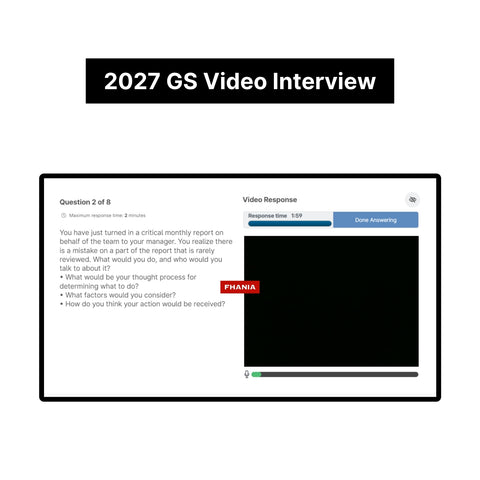
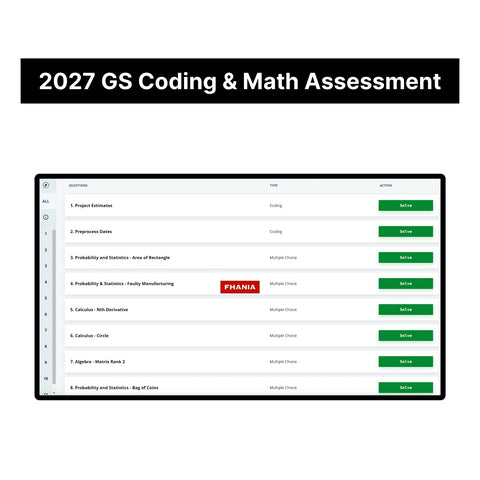
Preparing for Goldman Sachs's interview? Our 2027 Goldman Sachs Video Interview, Coding & Math Technical Assessment Answers has practice questions and answers — $79 one-time, instant download.