OC&C Pricing Case 2027: Membership Programme Design
For the OC&C pricing case — "A luxury hotel chain is considering a premium membership programme. How would you design it and price it?" — design from the customer backwards: segment members by willingness to pay, build tiered benefits around what each segment values, then price on value and test against unit economics.
What This Question Assesses in an OC&C Pricing Case
This case is commonly reported by candidates and tests customer-centric commercial thinking — pricing is where strategy meets psychology. The interviewer is watching whether you start from customer value or from cost-plus habit, whether you segment rather than averaging, and whether your design hangs together economically. Candidates commonly report that the trap is designing benefits first and bolting on a price at the end; strong answers price and design jointly.
How to Structure This OC&C Pricing Case
Segment, design benefits, then price and validate.
- Segment the members: Not all guests value the same things. Business travellers value upgrades and late checkout; leisure guests value experiences and spa; event bookers value priority access. Define two or three tiers around distinct willingness-to-pay profiles.
- Design tiered benefits: Build benefits each segment actually values — room upgrades, guaranteed availability, member rates, exclusive experiences, status recognition. In luxury, recognition and access often outweigh discounts; discounting too hard can cheapen the brand.
- Price on value: Set the fee against the perceived value of benefits and against alternatives (what would the perks cost bought separately?). Consider annual versus monthly framing and an initiation structure that screens for commitment.
- Validate the economics: Check uptake assumptions, incremental cost per member, cannibalisation of full-price bookings, and breakeven membership numbers. A beautiful programme that loses money per member is a failure.
Example line: "I would segment members by travel purpose, design tiers around the benefits each segment values most — upgrades and flexibility for business, experiences and recognition for leisure — then price against perceived value and validate with breakeven uptake maths."
Common Mistakes With the OC&C Pricing Case
- One-size-fits-all design. A single tier for all guests ignores the segmentation the question invites. Tiers are the point.
- Discount-led benefits in luxury. Candidates commonly report that interviewers probe brand impact — heavy discounting can erode the premium positioning the chain sells.
- Skipping the economics. Forgetting to check cost per member and breakeven turns a pricing case into a marketing brainstorm. Always close the loop on profit.
Pricing cases reward thinking like both the customer and the CFO simultaneously. Practice holding value perception in one hand and unit economics in the other, and membership designs become natural.
Keep Reading
- oc&c strategy consultants rejected after interview
- societe generale interview questions
- How to Apply to OC&C Strategy Consultants 2027: Step-by-Step Guide
- OC&C Strategy Consultants 2027 Applications: Deadlines, Timeline & How
FAQ
How many tiers should I propose? Two or three. One tier misses segmentation; five tiers create confusion. Name them clearly and differentiate benefits sharply between tiers.
Should the programme be paid or free? The question says premium membership, implying paid — but address why paid beats free here: commitment, self-selection of high-value guests, and direct revenue.
How do I estimate willingness to pay? Reference methods rather than inventing numbers: conjoint-style trade-off research, pilot pricing, or benchmarking comparable programmes. Name the method, not a fabricated figure.
What is the biggest risk? Cannibalisation — members shifting spend they would have made anyway into discounted member rates. Mitigate with benefits weighted toward incremental behaviour, like off-peak incentives.
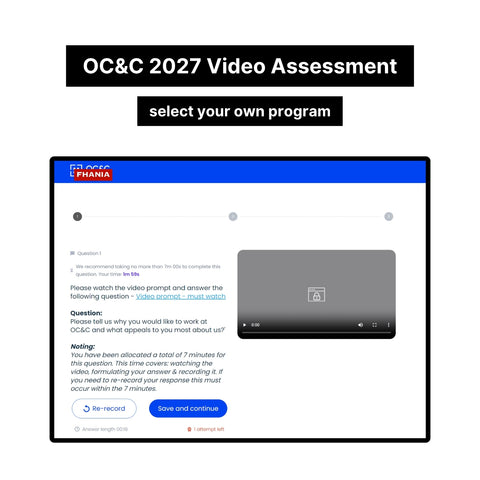
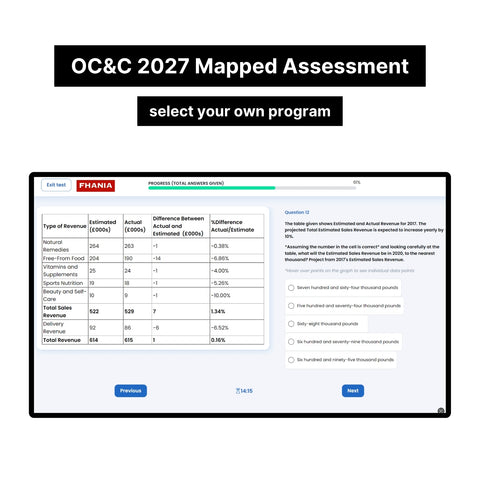
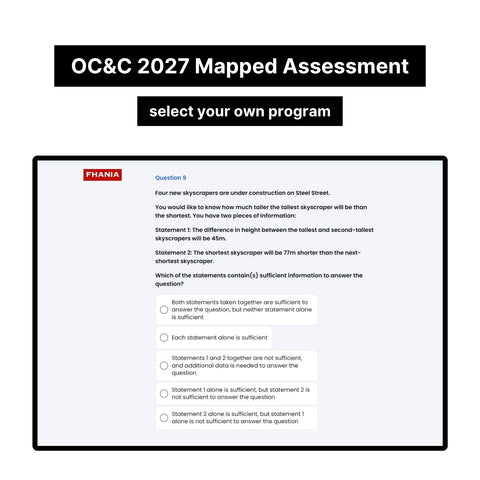
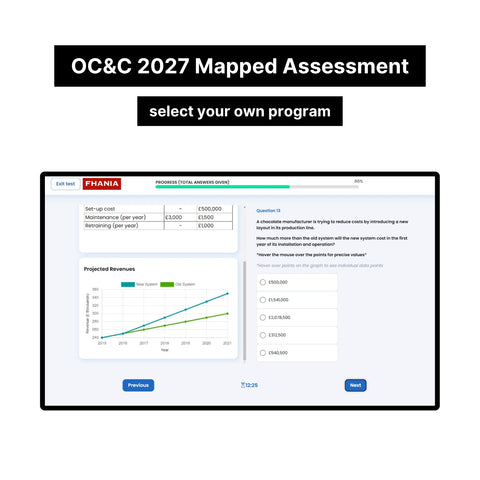
Preparing for OC&C Strategy Consultants's interview? Our 2027 OC&C Strategy Consultants Online Test Tutorials (One-Way Video Assessment and Mapped Test) has practice questions and answers — $79 one-time, instant download.