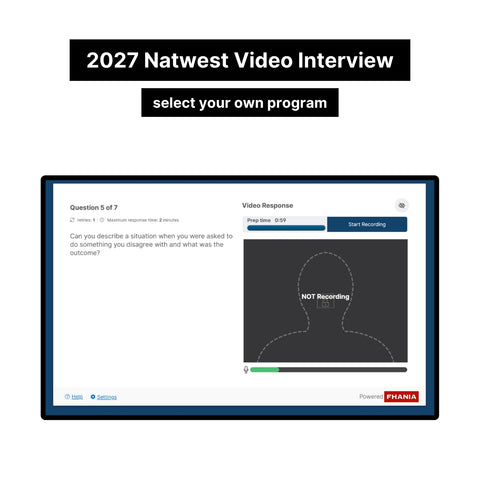
NatWest Video Interview: How to Use STAR Answers
The NatWest video interview STAR method is simple: Situation, Task, Action, Result. It is the structure NatWest assessors expect, and using it turns a rambling story into scorable evidence — assessors check your answers against defined strengths, and STAR makes each strength easy to find. Candidates who don't use it sound like they're making it up as they go — even when their experience is strong.
What the NatWest Video Interview STAR Method Is
STAR stands for Situation (the context), Task (what needed doing), Action (what you personally did), and Result (what happened because of it). In NatWest video interview answers, the Action section should be the longest — assessors score what you did, not what the team did. A complete STAR answer runs about two minutes: 20 seconds of situation and task, 60 to 80 seconds of action, and 20 seconds of result with a brief reflection.
How to Use the NatWest Video Interview STAR Method
Start by listing four to five real experiences: a team project, a difficult customer or deadline, a mistake you fixed, a leadership moment. For each, write the STAR skeleton in bullet points — never a full script, because scripted answers sound robotic on camera. Then tailor the emphasis to NatWest's values: highlight customer impact, integrity under pressure, and sound judgement. Practice delivering each story in under three minutes without notes. To see how strong STAR answers are constructed for NatWest's actual questions, our 2027 NatWest Group Online Assessment and Video Interview Tutorials include the real 2027 video interview questions with model STAR answers you can adapt.
Common STAR Mistakes to Avoid
Three mistakes kill otherwise good answers. First, the "we" problem: saying "we decided" instead of "I decided" hides your contribution — assessors score you, not your team. Second, skipping the result: ending at the action leaves the story unfinished and the impact unproven. Third, front-loading context: spending a minute on background before reaching the action loses the assessor's attention. Keep situation and task tight, and spend your time where the marks are.
Unstructured Answers Sound Like Guessing
Here's the FOMO truth about the video interview: assessors compare your answer against the last fifty they've scored, and structured ones win every time. Without STAR, even a great story comes out as a jumble — and the assessor, who can't ask follow-up questions in a one-way interview, simply moves on and scores you low. Your competitors are delivering crisp two-minute STAR answers right now. Every question you answer without structure is a question you lose to someone who used it.
FAQ
How long should a STAR answer be? About two minutes: brief setup, detailed action, clear result. Practice with a timer until it feels natural.
Can I use the same story for multiple questions? Yes, if it genuinely fits. Prepare four to five stories and learn which questions each one can answer — versatility matters more than volume.
Should I say "I" or "we" in team stories? Always "I" for your actions. Acknowledge the team briefly, then focus on what you personally did and decided.
What if my best story isn't from banking? That's fine. NatWest hires for strengths, not banking experience — a strong STAR story from retail, volunteering, or university works perfectly.
Preparing for NatWest's video interview? Our 2027 NatWest Group Online Assessment and Video Interview Tutorials has the exact questions and answers — $79 one-time, instant download.