

Millennium Coding Interview: Algorithms & Data Structures
The Millennium coding interview starts at hard difficulty and stays there: dynamic programming, graphs, heaps, and system design with low-latency twists. There is no warm-up round. Here is the algorithms and data structures syllabus that actually matters.
The Algorithm Topics That Appear
The Millennium coding interview draws heavily from dynamic programming (knapsack variants, sequence alignment, optimal substructure problems), graph algorithms (shortest path, topological sort, union-find), heaps and priority queues (top-K problems, streaming medians), and hash-based design. Expect finance-flavored framing: order-book problems, sliding-window statistics over tick data, latency-constrained data structures. Interviewers want optimal complexity, not just working code — an O(n²) solution where O(n log n) exists is a fail.
Data Structures Under Time Pressure
You will be asked to choose and justify data structures live: when does a balanced BST beat a hash map, how do you design a lock-free queue, what breaks at 10 million events per second. The Millennium coding interview tests whether your data structure knowledge survives contact with real constraints — memory limits, concurrency, cache behavior. Reciting definitions is worthless; reasoning about trade-offs under pressure is everything.
How to Prepare Algorithms and Data Structures
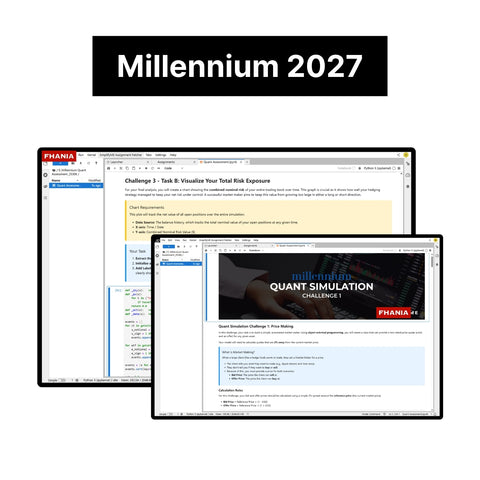
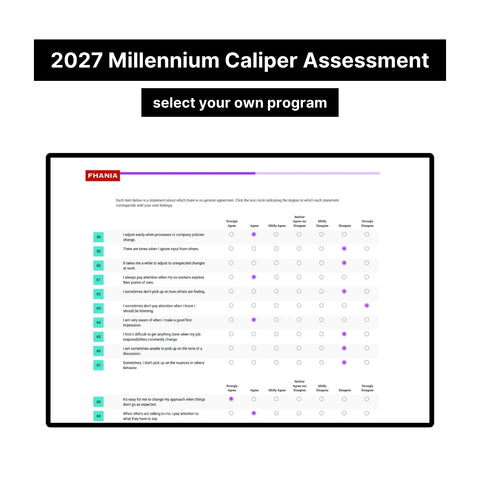
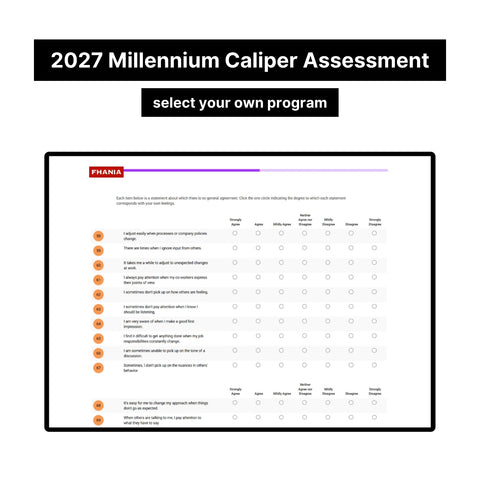
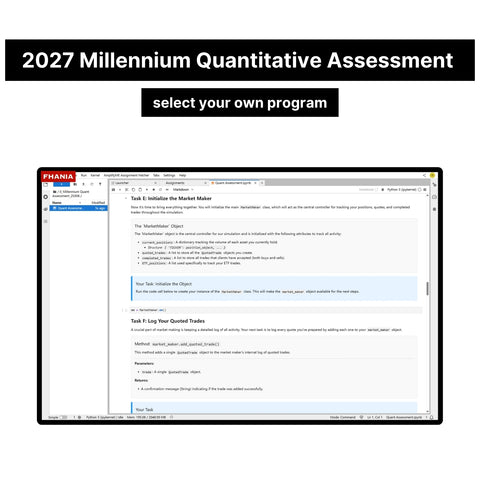
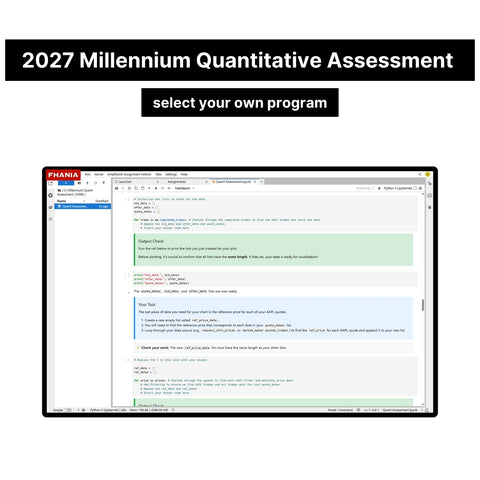
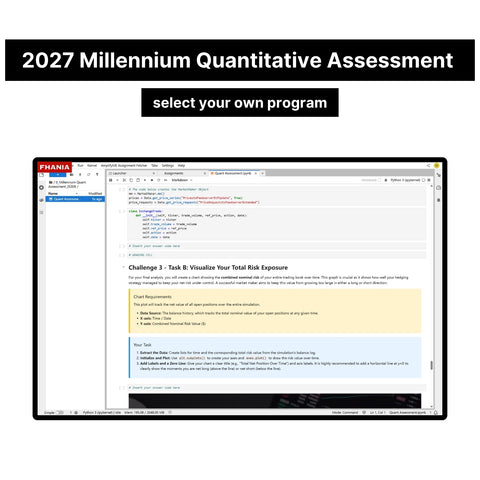
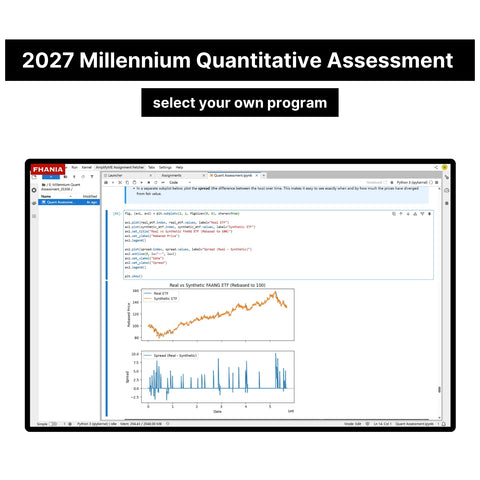
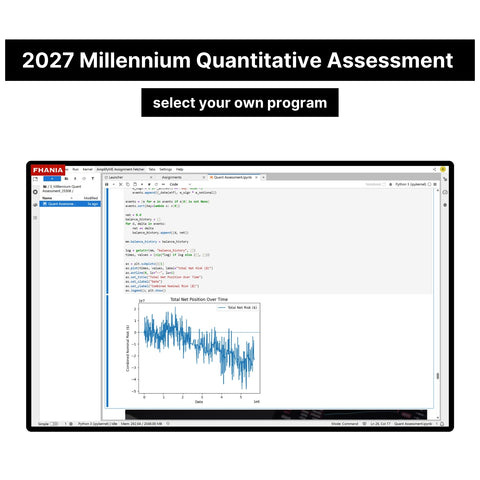
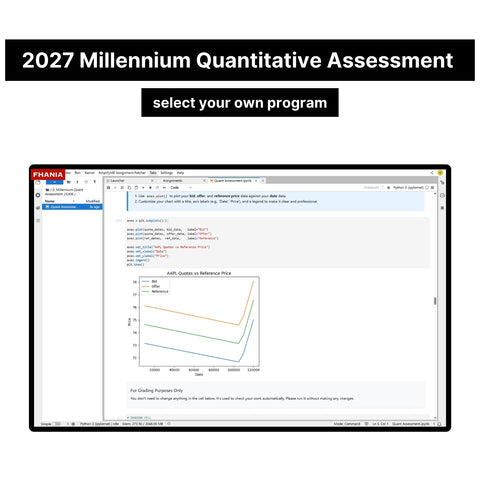
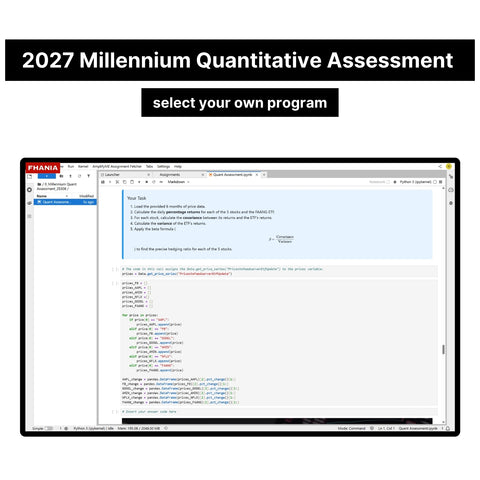
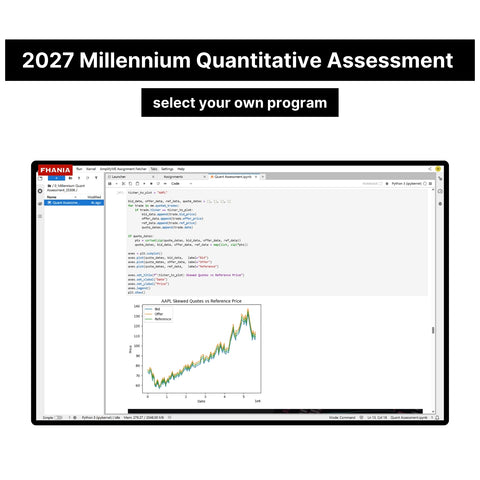
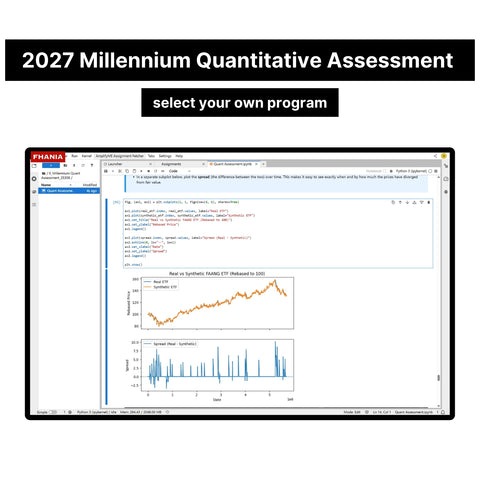
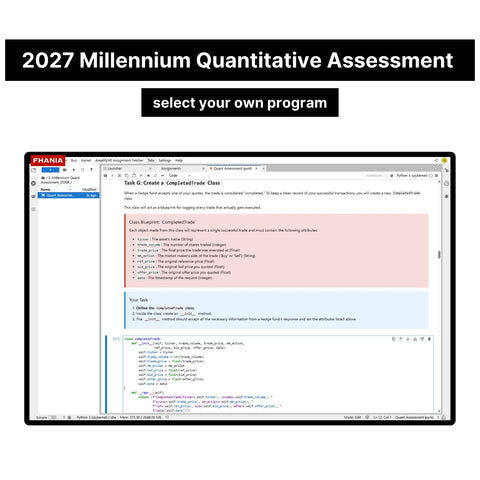
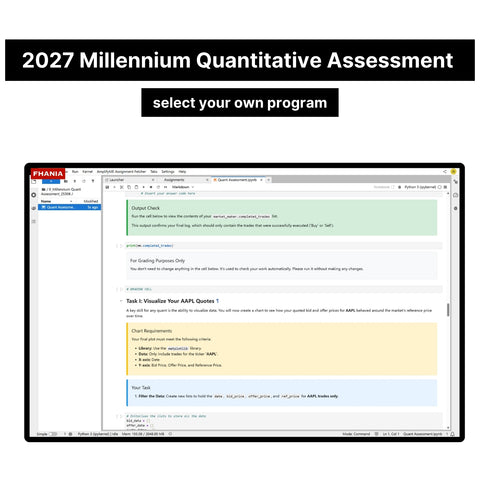
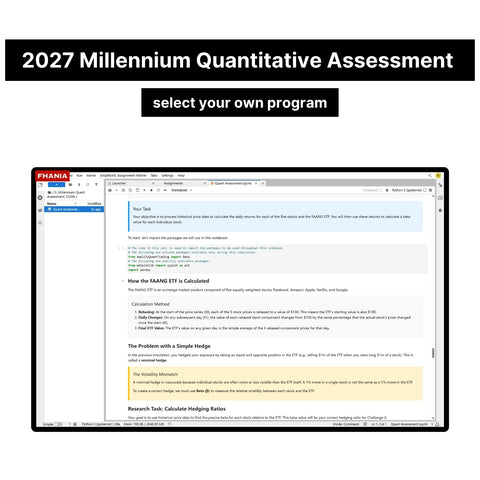
Drill hard problems with a strict timer and a hard stop — if you cannot produce optimal code in 35-40 minutes, you are not ready. Study low-latency system patterns, not just LeetCode: lock-free structures, memory pooling, network I/O models. And clear the assessment screens first: the Caliper test filters engineers before any coding round happens, and strong coders get eliminated there every cycle. Our 2027 Millennium Caliper Assessment and Quantitative Assessment Exact Questions and Answers has the exact Caliper questions and answers plus the quantitative assessment formats that gate the process — $79 one-time, instant download. Your algorithms only matter if you reach the round where they are tested.
The FOMO Angle: Hard Starts on Question One
There is no easy first problem to build confidence. The interviewer opens with something hard, watches you think, and decides within minutes whether you belong in the next round. Candidates who drilled mediums walk in and discover the gap in real time, on a shared screen, with silence on the other end. The difficulty is public knowledge — the only variable is whether you trained at it. Check the official careers page for the 2027 intake and start drilling at hard difficulty today.
FAQ
What is the difficulty of the Millennium coding interview? LeetCode hard-adjacent for algorithms, plus low-latency system design for infrastructure roles.
Which topics matter most? Dynamic programming, graphs, heaps, hash-based design, and concurrency-aware data structures.
How many coding rounds are there? Typically two to three live rounds, sometimes preceded by an online coding screen.
Is C++ required? Not required, but C++ is common for low-latency roles; use whatever language you are fastest and most precise in.
Preparing for Millennium's Caliper assessment? Our 2027 Millennium Caliper Assessment and Quantitative Assessment Exact Questions and Answers has the exact questions and answers — $79 one-time, instant download.