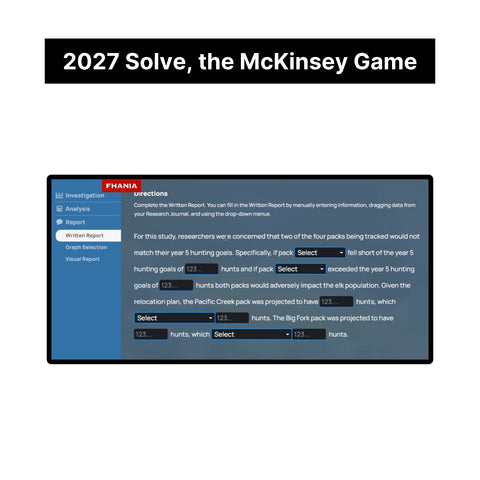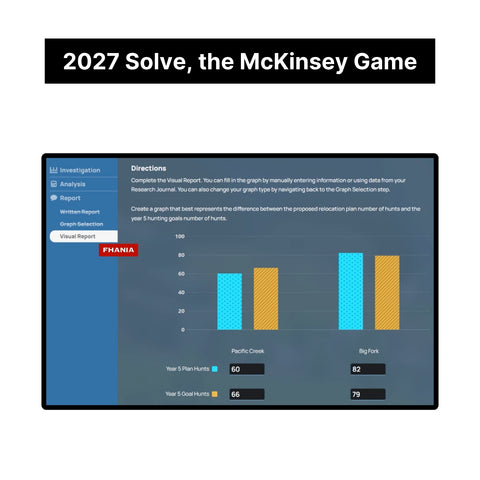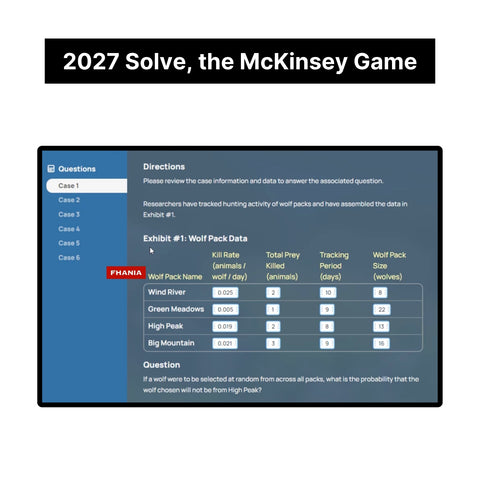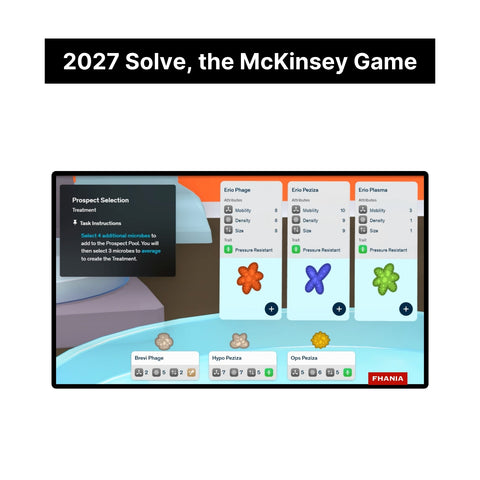


McKinsey Sustainable Futures Lab (SFL): The Newest Solve Game Explained
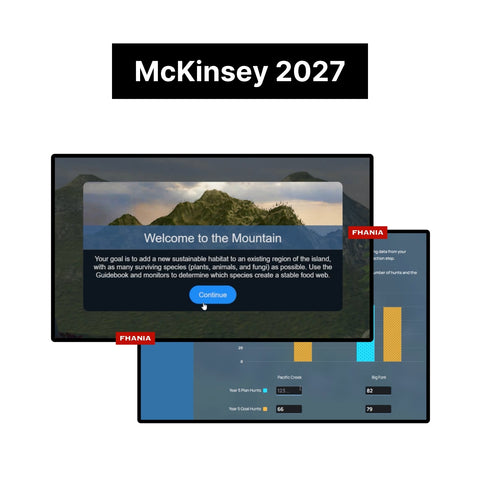
McKinsey Sustainable Futures Lab — SFL — is the newest game in the Solve portfolio, built around sustainability strategy: balancing environmental goals with business constraints. As McKinsey rolls it out for the 2027 intake, early candidates face a scored assessment with almost no public walkthroughs.
What McKinsey Sustainable Futures Lab Is
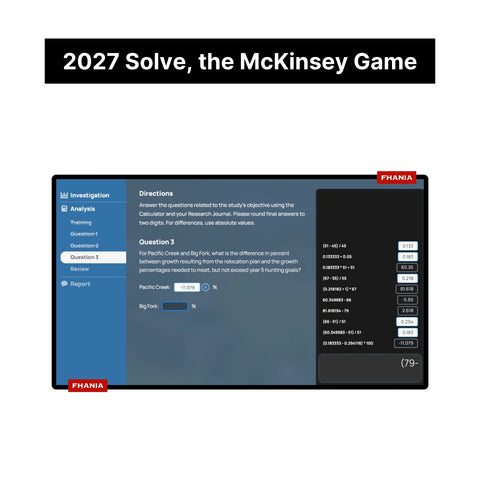
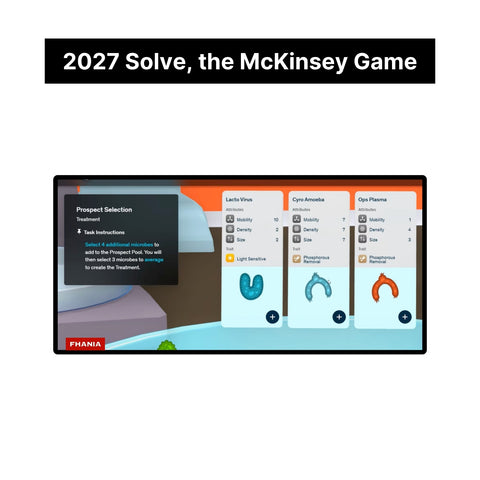
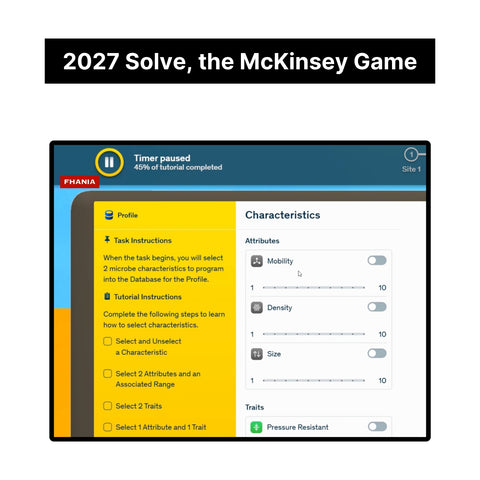
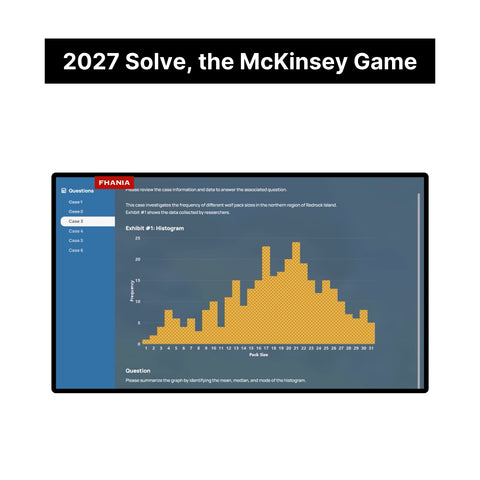
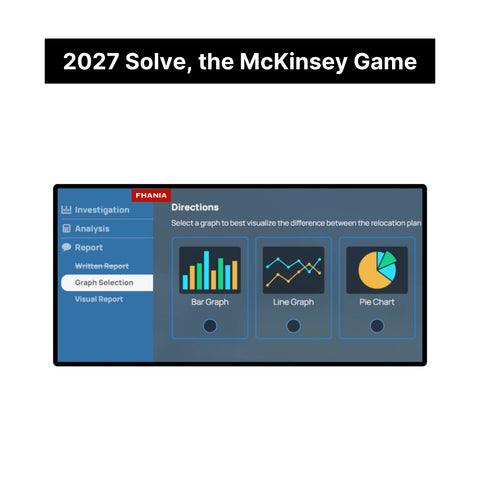
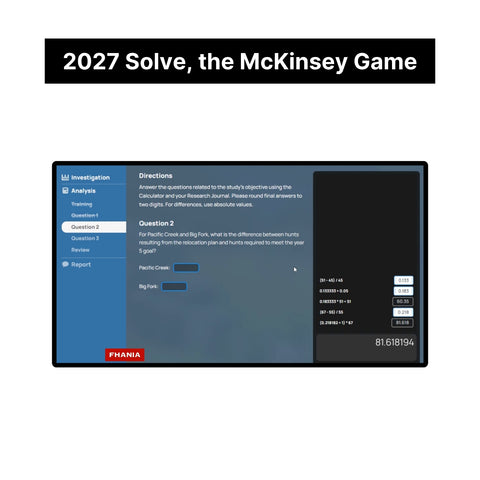
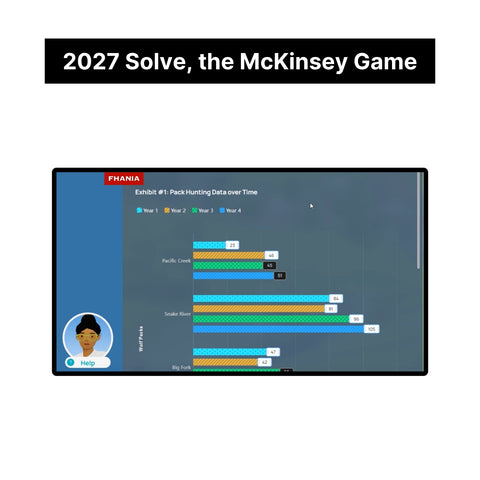
SFL puts you in charge of sustainability decisions for a simulated organization. Expect familiar Solve mechanics — data dashboards, resource allocation, trade-off decisions across rounds — wrapped in a sustainability theme: emissions targets, green investments, and the tension between environmental impact and financial performance.
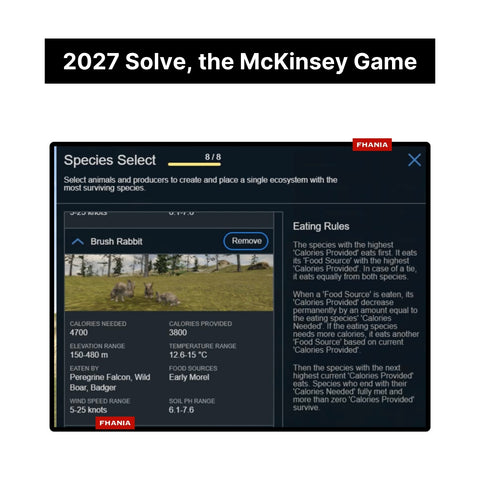
Like Red Rock Study and Sea Wolf, it's a dynamic simulation, not a quiz. You make decisions, watch the system respond, and adjust. The scoring evaluates your decision-making process: how you balance competing objectives when there's no obviously right answer.
What McKinsey Sustainable Futures Lab Tests
SFL probes the same consulting muscles as the rest of Solve, through a sustainability lens:
- Multi-objective optimization — advancing sustainability metrics without wrecking the economics
- Trade-off judgment — every green investment has a cost; every delay has a consequence
- Systems thinking — interventions ripple across environmental, financial, and stakeholder dimensions
- Long-term vs. short-term thinking — sustainability is inherently a long game, and the scoring likely rewards patience over quick wins
The sustainability framing is new; the underlying assessment logic is pure McKinsey.
How to Prepare for McKinsey Sustainable Futures Lab
The challenge with SFL is information scarcity — few candidates have played it, and public guides are thin. Your preparation strategy:
- Master the Solve fundamentals first. Red Rock and Sea Wolf teach the decision patterns — dashboard reading, triage, adaptation — that transfer directly to SFL.
- Think in trade-offs. Practice explicitly weighing environmental benefit against cost in every decision, and articulating why.
- Study real sustainability strategy. Familiarity with concepts like abatement curves, Scope 1–2–3 emissions, and green capex trade-offs gives you intuition the game rewards.
- Get SFL-specific walkthroughs. Generic Solve prep won't cover SFL's unique mechanics and scoring.
Our 2027 McKinsey Solve Game, RedRock, Sea Wolf, Sustainable Futures Lab, Case Interview Interactive Simulations includes Sustainable Futures Lab coverage alongside interactive simulations of the full Solve portfolio — so the newest game doesn't catch you unprepared.
McKinsey Sustainable Futures Lab: The Unknown Game Is the Dangerous One
New assessments punish the unprepared disproportionately — there's no crowd wisdom, no forum threads, no secondhand strategies. The candidates who walk into SFL having seen its mechanics will look like naturals. Everyone else will be learning during their one scored attempt. Don't be everyone else.
FAQ
Is Sustainable Futures Lab replacing Red Rock or Sea Wolf? No — it's an addition to the Solve portfolio. Offices assign different game pairs; SFL appears in some 2027 intake invitations.
How long is the Sustainable Futures Lab game? Expect roughly 30–35 minutes, consistent with other Solve games, played as one of two games in your session.
Do I need sustainability knowledge for SFL? Domain knowledge helps with intuition, but the game tests decision-making, not expertise.
Where can I practice Sustainable Futures Lab? Public practice materials are scarce since it's new. Our McKinsey prep package includes SFL walkthroughs with scoring logic, built for the 2027 intake.
Preparing for McKinsey's Sustainable Futures Lab? Our 2027 McKinsey Solve Game, RedRock, Sea Wolf, Sustainable Futures Lab, Case Interview Interactive Simulations has the exact questions and answers — $79 one-time, instant download.