"Makes an Impact" — KPMG Strength & How to Prove Yours
Candidates searching for kpmg makes an impact are asking one blunt question: when you did something, did anything actually change? "Makes an Impact" is the KPMG strength behind that question. KPMG scores it across the online assessment, the video interview, and Launch Pad — and it's the strength where vague answers die fastest.
KPMG Makes an Impact: What the Strength Means
This KPMG strength measures whether your actions produce tangible results for clients, teams, or organizations. KPMG is a professional services firm — clients pay for outcomes, not effort. So assessors look for candidates who focus on what their work achieved: revenue saved, time cut, quality improved, people influenced. In the SJT, scenarios testing "Makes an Impact" reward responses that prioritize real outcomes over looking busy or staying comfortable.
KPMG Makes an Impact: How It's Tested
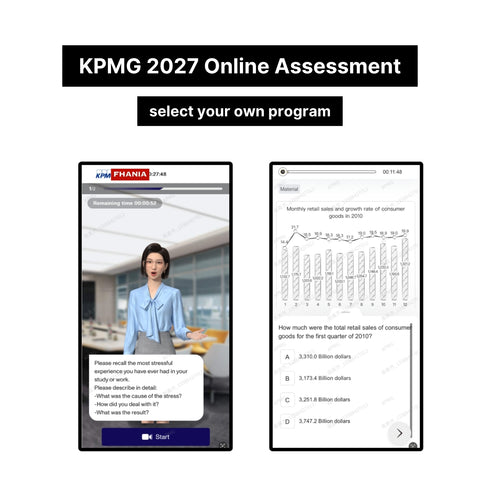
In the video interview, KPMG asks for this strength almost directly: "Tell me about a time you made an impact" or "Describe a project where your contribution made a difference." Assessors listen for specifics — numbers, before-and-after comparisons, and outcomes that outlasted your involvement. Weak answers describe activities ("I organized meetings"); strong answers describe impact ("I reorganized the rota, cutting no-shows by 40%"). At Launch Pad, the group exercise and written exercise both reveal whether you drive toward a conclusion or just participate. The SJT tests whether you instinctively choose outcome-focused responses.
How to Prove "Makes an Impact"
Audit your experience for outcomes, not tasks. For each project, internship, or society role, write down what changed: percentages, money, time saved, people reached. Then build your STAR story around the result, not the process — lead with the outcome and work backward. If your numbers are small, that's fine: impact is relative, and "increased sign-ups from 20 to 60" is more convincing than "helped with marketing." Our 2027 KPMG Online Assessment and Video Interview Tutorials includes model impact answers with the scoring breakdown KPMG assessors use.
"Makes an Impact" Is Where Most Answers Go Flat
The interviewer's memory works against you: they hear dozens of candidates describe similar experiences, and they only remember the ones with sharp, specific results. An impact story without numbers sounds like everyone else's. Worse, if you can't articulate your impact clearly, assessors assume there wasn't any — even if your work was genuinely good. Don't let strong experience die in a weak telling. For the 2027 intake, check KPMG's official careers page for your region's application deadlines.
"Makes an Impact" FAQ
What if I don't have big numbers to show? Small, specific results beat big, vague ones. Relative improvements ("doubled," "cut in half") are perfectly convincing.
Is "Makes an Impact" only about work experience? No — volunteering, societies, sports, and coursework all count if you can show a concrete outcome.
How do I avoid sounding arrogant about my impact? Credit the team, then state your specific contribution and its result. Precision reads as confidence, not arrogance.
Does this strength matter in the SJT too? Yes — SJT scenarios reward choosing responses that prioritize outcomes over activity or comfort.
Preparing for KPMG's strengths-based assessment? Our 2027 KPMG Online Assessment and Video Interview Tutorials has the exact questions and answers — $79 one-time, instant download.