Lloyds Verbal Reasoning Test: Format & Practice Tips
The Lloyds verbal reasoning test gives you long business passages and asks whether statements about them are true, false, or impossible to say — all against a strict timer. The passages are dense, the answer options are designed to mislead, and slow readers run out of time. Speed-reading with precision is the entire game.
What the Lloyds verbal reasoning test looks like
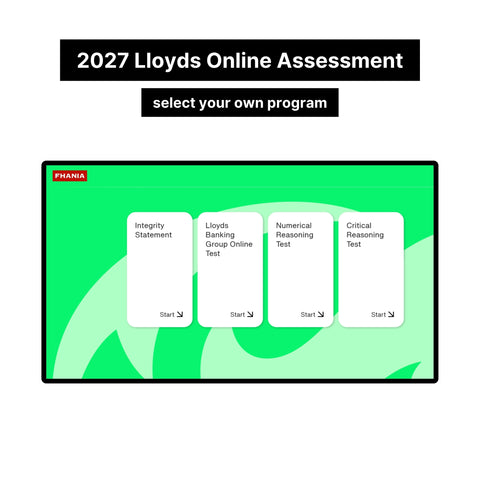
Inside the Cappfinity assessment, the Lloyds verbal reasoning test presents paragraphs styled like internal reports, customer policy documents, or market summaries. After each passage you're given several statements and must judge each one: true (the passage confirms it), false (the passage contradicts it), or cannot say (the passage doesn't give enough information). The trap answers almost always hinge on one word — "all" vs "some," "increased" vs "remained stable" — that changes the meaning entirely.
Why slow readers fail the Lloyds verbal reasoning test
This is the section where reading speed decides your score. Each passage is long enough that reading it twice is a luxury you don't have, so candidates who read word-by-word inevitably leave questions unanswered. The Lloyds verbal reasoning test punishes perfectionists: the winning strategy is to read the question statements first, then scan the passage for the relevant sentences, and decide fast. If a statement can't be resolved in 30 seconds, mark your best judgement and move on — an unanswered question scores zero.
How to prepare for the Lloyds verbal reasoning test
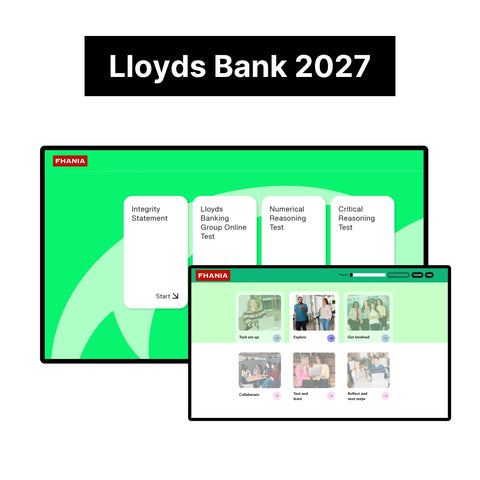
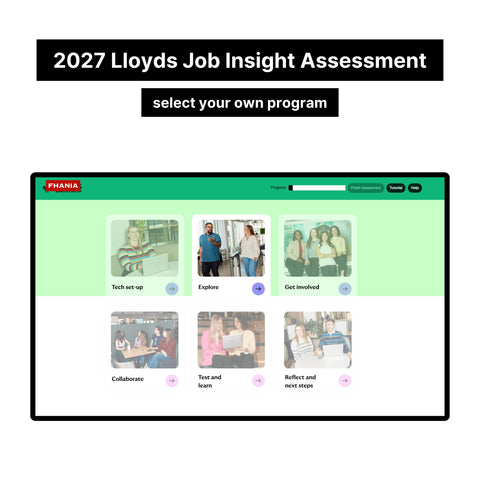
Train with Lloyds-style passages under real timing, and build one discipline above all: never bring in outside knowledge. The single most failed pattern in the Lloyds verbal reasoning test is marking "true" for something that's true in real life but not stated in the passage — that's a "cannot say," and the test is checking whether you notice. Our 2027 Lloyds Bank Online Assessment & Job Insight Assessment Tutorials include the exact questions and answers, including the cannot-say traps Lloyds actually uses.
Read slowly and you score zero on the questions you never reach
Blunt but true: in the Lloyds verbal reasoning test, a careful reader who answers 60% of questions perfectly loses to a fast reader who answers everything at 80% accuracy. Unanswered questions don't earn partial credit. Every practice session should end with the same question: did I finish? If not, you're not practicing — you're rehearsing failure. Build the scan-first habit now, while it's cheap.
Lloyds verbal reasoning test FAQs
What does "cannot say" mean in the Lloyds verbal reasoning test? It means the passage doesn't contain enough information to judge the statement — even if you personally know the answer is true. Only use the passage.
How long are the passages? Long enough to feel like real business documents — several paragraphs each. That's deliberate: the test measures comprehension under realistic reading load.
Is the Lloyds verbal reasoning test harder than other banks'? The format is standard, but the immersive Cappfinity wrapper adds pressure: you're switching between emails, videos, and passages, which breaks the rhythm that pure test-takers rely on.
What's the best practice method? Timed Lloyds-specific passages, reviewing every error. Generic verbal tests help with technique, but only the real question style teaches you Lloyds's traps.
Preparing for Lloyds's verbal reasoning test? Our 2027 Lloyds Bank Online Assessment & Job Insight Assessment Tutorials has the exact questions and answers — $79 one-time, instant download.