Lloyds Situational Judgement Test: How It's Scored
The Lloyds situational judgement test (SJT) puts you in realistic workplace scenarios — an unhappy customer, a deadline clash, a colleague asking for help — and asks you to rank or choose the best responses. It's scored against Lloyds's values, and one value dominates everything: customer-first. Answers that don't put the customer first are wrong, however reasonable they sound.
What the Lloyds situational judgement test looks like
Inside the Cappfinity assessment, the Lloyds situational judgement test drops you into short scenarios drawn from banking life: a customer complaint about fees, a team member missing a deadline that affects your work, a manager asking you to cut corners to hit a target. For each scenario you rank several possible actions from most to least effective, or pick the best and worst.
How the Lloyds situational judgement test is scored
Your rankings are compared against the profile of an ideal Lloyds employee, and closeness to that profile determines your score. The ideal profile is built on Lloyds's values — and the value that carries the most weight is putting customers first. That means in any scenario involving a customer, the response that protects the customer's interest outranks the one that protects your time, your team's metrics, or even short-term efficiency. Candidates who answer as "efficient professionals" instead of "customer advocates" consistently score below the benchmark.
How to prepare for the Lloyds situational judgement test
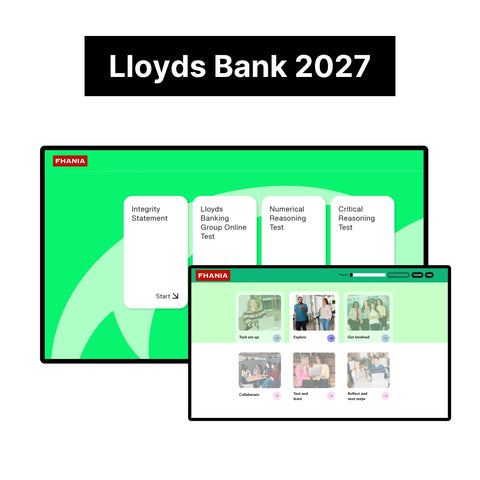
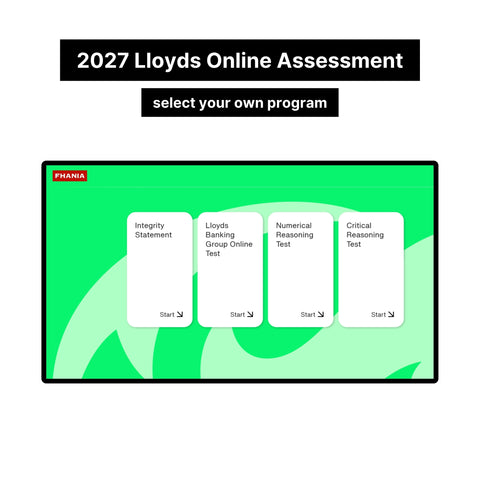
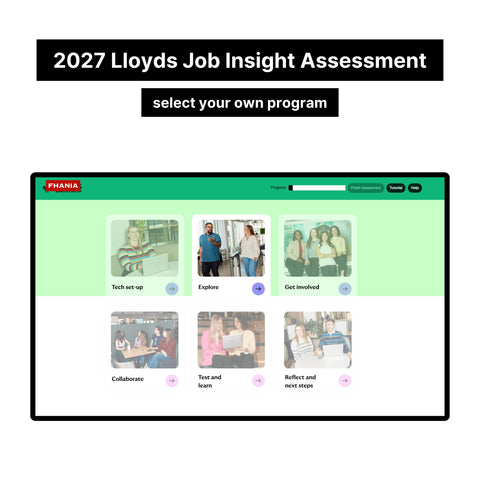
Stop answering as yourself and start answering as Lloyds. Before the test, internalise the customer-first hierarchy: customer needs first, then team collaboration, then personal efficiency. Practice with real Lloyds SJT scenarios so the value judgement becomes instinct — under time pressure you won't have time to reason it out from scratch. Our 2027 Lloyds Bank Online Assessment & Job Insight Assessment Tutorials include the exact questions and answers from the Lloyds situational judgement test, so you learn precisely which responses Lloyds rewards.
If it's not customer-first, it's wrong
Say it plainly: in the Lloyds situational judgement test, the answer that saves you time but leaves the customer hanging is always the wrong answer. The answer that hits the target by cutting corners on service is always the wrong answer. Lloyds is explicit about what it stands for — a bank built on customer trust — and this test is where they check whether you actually believe it or just wrote it in your cover letter. Every scenario is a loyalty test disguised as a judgement call.
Lloyds situational judgement test FAQs
Is there really a "right" answer in the Lloyds situational judgement test? Yes — responses are scored against Lloyds's ideal employee profile. It's not about your personal style; it's about matching what Lloyds values.
Should I always pick the most customer-friendly option? Almost always, but read carefully: sometimes the scenario tests whether you balance customer needs with realistic constraints. The customer-first principle still leads, but blindly picking the nicest-sounding option can miss the point.
How many SJT questions are there? The SJT forms one section of the 34-question Cappfinity assessment. Each scenario carries significant weight, so don't rush them.
Can I prepare for an SJT, or is it just common sense? Common sense fails here because "sensible" answers often contradict Lloyds's values. Preparation — learning the value hierarchy and drilling real scenarios — is the difference between passing and failing.
Preparing for Lloyds's situational judgement test? Our 2027 Lloyds Bank Online Assessment & Job Insight Assessment Tutorials has the exact questions and answers — $79 one-time, instant download.