

Lloyds Numerical Reasoning Test: Questions & Tips
The Lloyds numerical reasoning test asks you to interpret financial data — tables, charts and graphs — and answer multiple-choice questions under tight time pressure. The maths itself is basic (percentages, ratios, trends), but the clock is brutal: hesitate on the numbers and your score collapses. Here is what the questions look like and how to beat them.
What the Lloyds numerical reasoning test looks like
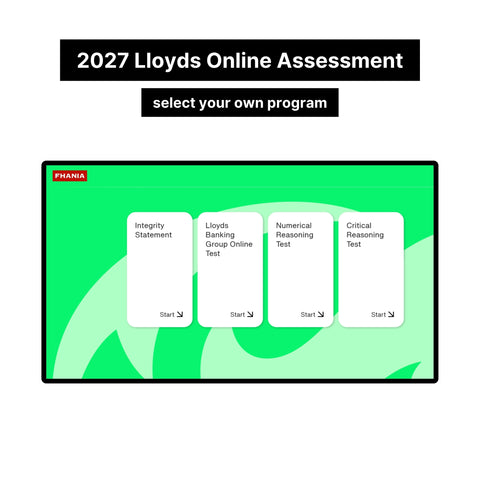
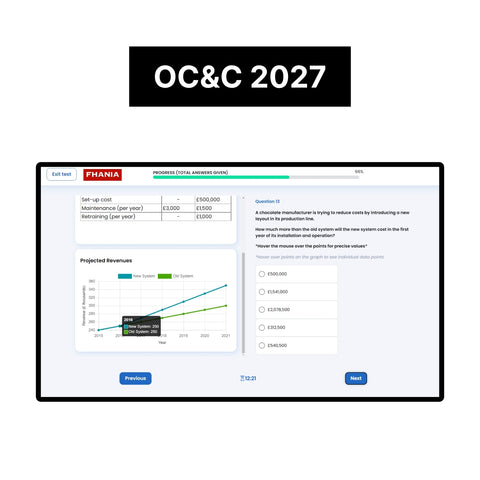
Set inside the Cappfinity immersive assessment, the Lloyds numerical reasoning test doesn't hand you abstract equations. You're shown realistic business data — branch performance figures, customer satisfaction scores, quarterly revenue tables — and asked to draw conclusions fast. Questions typically ask you to calculate percentage changes, compare ratios, or identify trends across multiple data sources. Calculators are usually permitted, but the real constraint is time: each question gets a short window, and slow readers bleed marks.
How the Lloyds numerical reasoning test is scored
You need both accuracy and pace. Getting every attempted question right but finishing only half the section won't clear the benchmark — and neither will rushing through with careless errors. Lloyds compares your score against other applicants for the 2027 intake, so the bar moves with the competition. In practice, this means the Lloyds numerical reasoning test rewards candidates who can estimate quickly, skip traps, and never get stuck on a single question.
How to prepare for the Lloyds numerical reasoning test
Drill Lloyds-style data sets under timed conditions — not generic maths worksheets. Learn to scan tables for the relevant row first, estimate before calculating precisely, and recognise the classic traps: percentage-point vs percentage confusion, and answers that look right but use the wrong base year. Our 2027 Lloyds Bank Online Assessment & Job Insight Assessment Tutorials contain the exact questions and answers from the Lloyds numerical reasoning test, so every practice rep trains the real format.
One wrong calculation can end your application
This is the harshest truth about the Lloyds numerical reasoning test: misreading financial data doesn't just cost you a mark — it signals to Lloyds that you can't handle the numbers a banking role demands. Candidates who treat this section as "easy maths" are the ones who fail it, because easy maths under a 60-second timer becomes hard maths. Practice until the percentage-change calculation is muscle memory, and you walk in treating the section as free points.
Lloyds numerical reasoning test FAQs
What maths do I need for the Lloyds numerical reasoning test? GCSE-level: percentages, ratios, averages, and reading charts. The difficulty is speed and data complexity, not advanced maths.
Can I use a calculator in the Lloyds numerical reasoning test? Typically yes — but calculator users who type every digit still run out of time. Estimation skills matter more than the device.
How many questions are in the Lloyds numerical reasoning test? It forms one section of the 34-question Cappfinity assessment. Treat every numerical question as high-value and budget your time ruthlessly.
What's the biggest mistake candidates make? Getting stuck. Spending two minutes on one hard question guarantees you'll miss two easy ones later. Skip, move on, come back if time allows.
Preparing for Lloyds's numerical reasoning test? Our 2027 Lloyds Bank Online Assessment & Job Insight Assessment Tutorials has the exact questions and answers — $79 one-time, instant download.