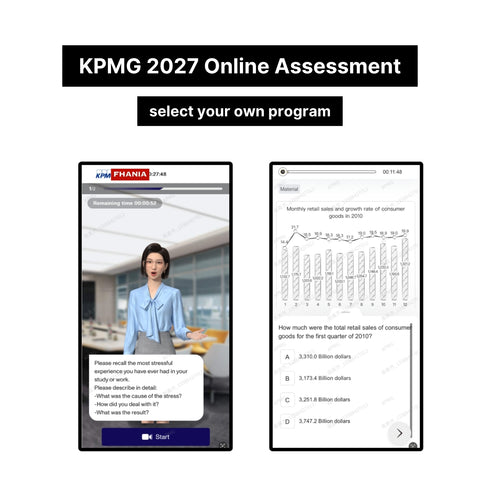
KPMG Situational Judgement Test: Question Types & Practice Tips
The KPMG situational judgement test (SJT) is the strengths-based core of KPMG's online assessment for the 2027 intake. You're shown realistic workplace scenarios — a deadline slipping, a teammate struggling, a client request you can't fully meet — and asked to rank or choose responses. There are no obvious right answers, which is exactly why the KPMG situational judgement test trips up candidates who try to logic their way through it.
KPMG Situational Judgement Test Question Types
KPMG situational judgement test questions come in a few formats. Most common: rank four possible responses from most to least effective, or pick the single response you'd most likely make. Scenarios cover teamwork dilemmas, ethical gray areas, time pressure, client service, and feedback situations. Each scenario is mapped to specific KPMG strengths — collaboration, resilience, critical thinking, integrity, delivering quality. The test also includes consistency checks: similar scenarios appear in different forms to catch candidates who answer randomly or try to game the profile.
What the KPMG Situational Judgement Test Really Measures
The KPMG situational judgement test measures your behavioral instincts against the strengths profile of KPMG's successful people. It's not testing whether you're a good person — it's testing whether your default reactions match KPMG's culture. That's why "common sense" answers can score badly: in a scenario about a struggling colleague, the instinct to quietly cover for them may conflict with KPMG's values of courage and integrity. The test rewards responses that balance empathy with accountability, initiative with collaboration, and speed with quality — the exact tensions of professional services work.
How to Practice for the KPMG Situational Judgement Test
Stop practicing generic SJTs and start practicing strengths-based ones. Before answering any scenario, ask: which KPMG strength is this really testing? Then choose the response that demonstrates it most strongly. Practice ranking formats specifically — they're harder than single-choice because every position counts. Time yourself; hesitation on 20 scenarios adds up. And review your answers against KPMG's values afterward, not just "what felt right." Our 2027 KPMG Online Assessment and Video Interview Tutorials includes real-style KPMG SJT scenarios with the strengths mapping and scoring rationale for each answer.
Guessing on KPMG's SJT Collapses Your Profile
The failure mode is silent and final: you answer the KPMG situational judgement test from gut instinct, your responses contradict each other across scenarios, and KPMG's system flags an inconsistent or misaligned profile. You never learn why — you just don't get the video interview invite. The SJT is the first scored stage of the 2027 process, which means it's also the cheapest stage to prepare for and the most expensive to fail. Check your region's test format and deadlines on KPMG's official careers page.
KPMG Situational Judgement Test FAQ
How many questions are in the KPMG situational judgement test? The number varies by region and test provider, but expect a substantial set of scenarios — enough that consistency across them matters.
Is there a time limit on each SJT question? The overall test is timed; pacing yourself matters more than perfecting any single scenario.
Can I prepare for a strengths-based SJT? Yes — learning KPMG's strengths and values lets you recognize what each scenario is measuring, which sharpens your choices dramatically.
Does the SJT differ between service lines? The core strengths framework is consistent across Audit, Tax, Consulting, and other service lines.
Preparing for KPMG's online assessment? Our 2027 KPMG Online Assessment and Video Interview Tutorials has the exact questions and answers — $79 one-time, instant download.