KPMG Critical Thinker Test: What It Is & How to Prepare
The KPMG critical thinker test is the analytical half of KPMG's online assessment for the 2027 intake — a timed test of how well you interpret data, evaluate arguments, and make sound judgments from business information. Expect roughly 30 minutes for around 10 scenario-based questions, each built around documents, data tables, or short reports. Candidates who've never practiced data interpretation under pressure routinely run out of time.
What the KPMG Critical Thinker Test Is
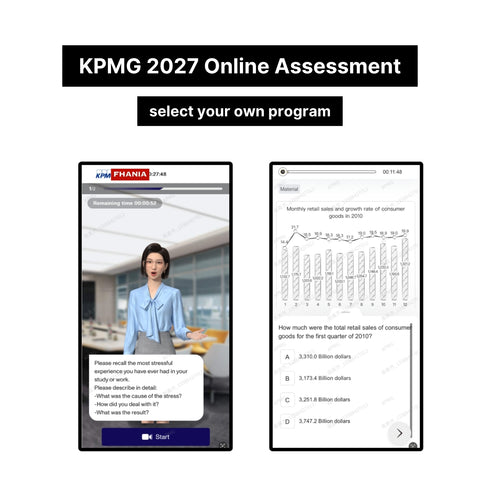
The KPMG critical thinker test replaced older-style psychometric batteries with something closer to real professional work. Instead of abstract puzzles, you get business scenarios: a client memo with financial data, a market report with charts, an email thread with conflicting claims. Each scenario asks several questions — which conclusions the data supports, which arguments are strongest, what the numbers actually show. It's designed to mirror the thinking KPMG juniors do on engagements, compressed into a half-hour sprint.
What the KPMG Critical Thinker Test Assesses
KPMG assesses three things: data interpretation (can you pull the right figures from messy documents?), logical evaluation (can you tell a strong argument from a weak one?), and judgment under time pressure (can you decide without perfect information?). The test deliberately includes red herrings — irrelevant data, emotionally persuasive but unsupported claims, and figures presented to mislead. Assessors aren't checking your business knowledge; they're checking whether you think like a professional advisor: evidence first, conclusions second, and no leaps of logic.
How to Prepare for the KPMG Critical Thinker Test
Practice with business documents, not IQ-test apps. Read annual report excerpts, market analyses, or case studies and force yourself to answer "what does this data actually prove?" within a time limit. Drill the common traps: correlation vs. causation, percentage changes on different bases, and arguments that sound convincing but lack evidence. Do full timed runs at 3 minutes per question — that's the pace the test demands. Our 2027 KPMG Online Assessment and Video Interview Tutorials includes KPMG-style critical thinker scenarios with worked answers and the reasoning behind each one.
Ten Questions in Thirty Minutes Is No Joke
Three minutes per question sounds manageable until you're on question four, staring at a data table with twelve columns, realizing you've spent six minutes and the clock is laughing at you. The KPMG critical thinker test is calibrated so that unpracticed candidates run out of time — that's the filter working as designed. The fix is boring but effective: timed practice until the pace feels normal. Don't let the 2027 intake be your first timed run — confirm your region's test details on KPMG's official careers page.
KPMG Critical Thinker Test FAQ
How long is the KPMG critical thinker test? Around 30 minutes for roughly 10 questions, though exact numbers vary by region — read the on-screen instructions carefully.
Is the critical thinker test the same as the SJT? No. The SJT measures behavioral strengths; the critical thinker test measures analytical and data skills.
What kind of data appears in the test? Financial tables, charts, memos, and reports styled like real business documents.
Can I go back to previous questions? Usually not — the test is designed to move forward, so commit to an answer and keep pace.
Preparing for KPMG's online assessment? Our 2027 KPMG Online Assessment and Video Interview Tutorials has the exact questions and answers — $79 one-time, instant download.