

How to Answer "Why Should We Hire You" for Goldman Sachs 2027
The strongest way to answer "why should we hire you" for Goldman Sachs is the Match method: state two or three relevant strengths, back each with one concrete proof point, and close with what you'll deliver in the first year. Confidence with evidence beats confidence alone.
Why Should We Hire You for Goldman Sachs: The Framework
This question isn't asking for modesty — it's asking for a business case. You are the product; make the pitch. Three steps.
Step 1 — Name two or three strengths matching the role. Pick what the job needs: analytical rigour, client communication, resilience under deadlines. "Hardworking" doesn't differentiate — match the role description, which may vary by region, so check the official careers page.
Step 2 — Prove each with one example. Every strength needs evidence: a project, an internship result, a measurable outcome. "I'm analytical" is a claim; "I rebuilt a reporting model that cut errors" is proof. One example per strength is enough.
Step 3 — Close with forward value. End with what you bring to Goldman Sachs specifically: "You get someone who can do the analysis and explain it to clients from day one." Goldman values ownership and client focus, so pick examples that show you carrying something difficult to the finish. This turns a backward-looking answer into a hiring argument.
Why Should We Hire You for Goldman Sachs: Good vs Bad Example
Good: "Three reasons. First, I'm analytical — in my internship I rebuilt a broken valuation model the team kept using after I left. Second, I communicate with non-technical people — I led client presentations for our consulting society. Third, I handle pressure — I delivered a market-entry report in three weeks while sitting exams. At Goldman Sachs, that means someone who contributes to live work quickly, not just observes."
Bad: "You should hire me because I'm passionate, hardworking, and a fast learner. I'm a team player and I'll give 110%." Every claim is unproven, every adjective generic. The interviewer has heard this answer fifty times this week.
When to Use It
Use the Match method for "why should we hire you", "why should we pick you", or "what makes you stand out" — at Goldman Sachs these are identical. It also works as a closing statement for "anything to add?" Don't use it for "why this firm" or "why this role": those ask about your motivation, this one about your value. In video interviews this is often the final question — your last 60 seconds shape the whole impression.
The interviewer is literally asking you to sell yourself — refusing reads as lack of conviction, not humility. Write your three strengths and proofs down, and say the answer until it feels natural, not arrogant.
Keep Reading
- strengths and weaknesses bcg
- How Many Questions in Goldman Sachs HireVue 2027? Format Explained
- How to Answer 'Why Goldman Sachs' in 2027 Interviews
FAQ
Isn't this arrogant? No. Arrogance is claiming without proof; strengths with evidence read as confidence, which interviewers want to see.
How many strengths? Two or three. One feels thin; four or more and none are remembered. Quality of proof beats quantity of claims.
What if I have less experience than others? Then proofs come from university, societies, or part-time work — and your forward-value close matters more.
Should I compare myself to other candidates? Never directly. "I'm better than other applicants" sounds insecure. Let your evidence do the comparing silently.
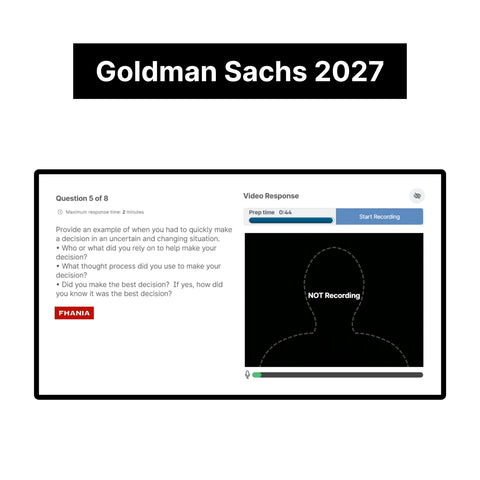
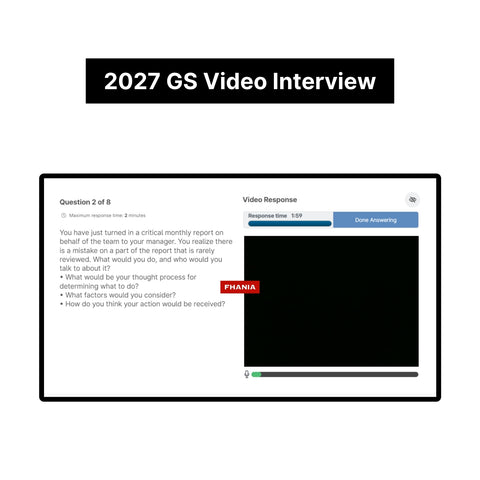
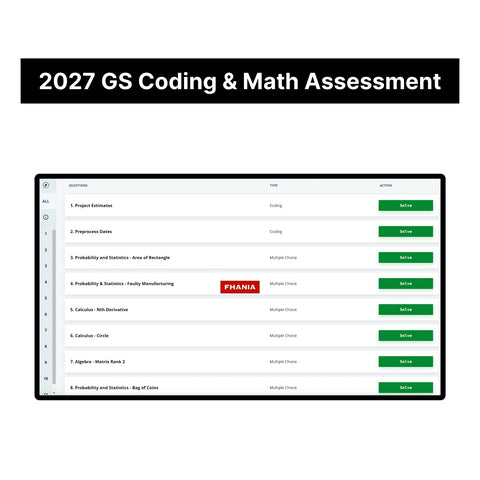
Preparing for Goldman Sachs's interview? Our 2027 Goldman Sachs Video Interview, Coding & Math Technical Assessment Answers has practice questions and answers — $79 one-time, instant download.