

How to Answer 'Why Shell?' in 2027: What Assessors Want
"Why Shell?" is the single most important question in Shell's 2027 recruitment process. It appears in the on-demand video interview, resurfaces at the final assessment, and colours every motivation judgement assessors make. Knowing how to answer 'Why Shell?' in 2027 means understanding what assessors are actually listening for — and it is not flattery.
What Assessors Want From 'Why Shell?'
Assessors score your 'Why Shell?' answer against three things:
- Specificity. "A global energy leader" could describe five companies. Named, concrete reasons — a particular business area, a strategy, a project — prove you did the work.
- Connection to the energy transition. Shell is repositioning itself around lower-carbon energy. Candidates who engage with that story seriously signal they understand where the company is going, not just where it has been.
- Fit with your own story. The strongest answers connect Shell's direction to your background: your degree, your projects, your interests. Motivation is believable when it is personal.
What assessors penalise: generic praise, salary-and-prestige honesty ("great pay, big brand"), and answers that could be swapped with BP or TotalEnergies without changing a word.
A Structure That Works
Use a three-part arc of about 90 seconds:
1. Your starting point (20 seconds). What genuinely connects you to energy, engineering, or business — a project, a course, an experience. Make it real and specific.
2. What Shell is doing that excites you (40 seconds). Name one or two concrete things: the energy transition strategy, a specific business area relevant to your role, an innovation or market position you have actually read about. This is where research shows.
3. What you bring (30 seconds). Connect your skills to that direction. "My background in X means I can contribute to Y" closes the loop between their needs and your offer.
How to Prepare Your 'Why Shell?' Answer
- Research beyond the homepage. Read Shell's strategy materials and recent energy-transition announcements from the 2026 application season. One specific, current reference beats ten generic ones.
- Tailor it to your role. A trading role, an engineering role, and a commercial role each deserve a different "why" — anchored in that business area's reality.
- Write it, speak it, time it. Draft the three-part arc, then rehearse aloud until it sounds like conviction, not recitation. Ninety seconds, clean finish.
- Stress-test it. Ask yourself: could this answer work for a competitor? If yes, it is not specific enough yet.
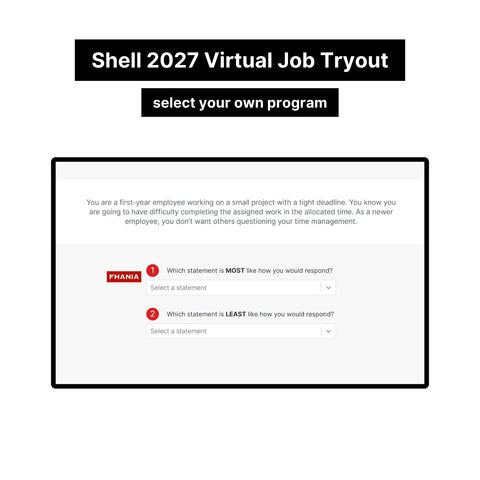
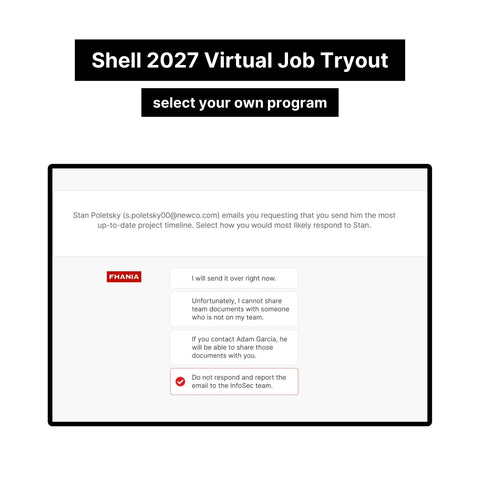
Our 2027 Shell Virtual Job Tryout and On-demand Interview Tutorials include model 'Why Shell?' answers for different role types, the energy-transition talking points assessors respond to, and rehearsal frameworks that make motivation sound genuine on camera.
A Weak 'Why Shell?' Poisons Everything After It
Assessors hear your motivation answer first and judge everything else through it. A generic answer does not just lose motivation marks — it makes your teamwork stories sound mercenary. This is the cheapest question to prepare and the most expensive to get wrong.
FAQ
How long should my 'Why Shell?' answer be? About 60–90 seconds in the on-demand interview — specific, structured, and finished cleanly.
Is it okay to mention salary or prestige? No. Assessors want genuine professional motivation. Prestige-and-pay answers signal you will leave for the next bidder.
Should I mention the energy transition? Yes — engaging seriously with Shell's lower-carbon direction shows you understand the company's future. Keep it informed, not preachy.
Preparing for Shell's Why Shell? Our 2027 Shell Virtual Job Tryout and On-demand Interview Tutorials has the exact questions and answers — $79 one-time, instant download.