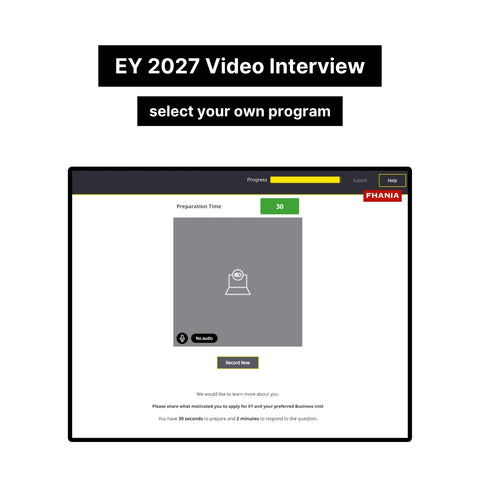
How to Answer 'What Will You Do in Your First Year at EY?' 2027
The EY what will you do first year interview question tests motivation through realism: to answer it for 2027, describe a realistic trainee year — qualifications study, rotations across engagements, building core technical skills, and contributing to teams. Candidates who cannot describe the first year convincingly lose their motivation marks.
EY What Will You Do First Year: What the Question Really Asks
"What will you do in your first year at EY?" is a motivation question disguised as a factual one. The interviewer checks whether your expectations are grounded. Every year, candidates describe a first year of client strategy meetings; the interviewer hears someone who never researched what trainees actually do.
The question appears in video and final-round interviews for the 2027 intake and is scored on realism plus enthusiasm. You must show you know the unglamorous truth — and want it anyway.
EY What Will You Do First Year: What a Strong Answer Contains
Four elements. First, qualifications: name the professional qualification for your service line (e.g., ACA for Assurance in the UK) and show you understand the study workload alongside client work. Second, rotations: working across clients and engagements, building breadth before depth.
Third, skill-building: the technical foundations you will develop — audit testing, financial modelling, data analysis — framed as things you are eager to master. Fourth, contribution: how you add value early through reliability, thoroughness, and fast learning, not expertise you lack. Deliver it with genuine energy — excited by the real first year, not merely tolerating it.
How to Prepare This Answer
Research the actual trainee experience: EY's careers pages describe the training structure; graduate forums describe the day-to-day. Build your answer from three researched facts — the qualification, the rotation structure, one real aspect of trainee work in your service line — and connect each to something in your background proving you will thrive.
Rehearse at 90 seconds and apply the realism test: would a current trainee recognise this? Cut anything resembling a partner's job description. Add one personal line about what genuinely excites you — the learning curve, client exposure, the qualification — because motivation without specifics is noise.
Our 2027 EY Online Assessment and Video Interview Tutorials includes the real motivation questions from EY's 2027 cycle with frameworks for grounded answers that survive interviewer follow-ups.
Why a Vague Answer Kills Your Motivation Score
If you cannot say what you will do in year one, your motivation marks go to zero — and motivation is scored at every interview stage. Interviewers read vagueness as brand-chasing, not job-wanting: a fast track to rejection. For the 2026 application season, check the official EY careers page for trainee programme details in your region, then build an answer a real trainee would recognise. The candidates who get offers are the ones who wanted the actual job.
FAQ
Why does EY ask about the first year? To test grounded motivation. Realistic answers signal genuine interest; vague ones signal brand-chasing.
What do EY trainees actually do in year one? Study for professional qualifications, rotate across engagements, build core technical skills, and support teams — varying by service line.
How long should the answer be? About 90 seconds: specific enough to convince, short enough to stay sharp.
Should I mention qualifications? Yes — it shows you researched the training commitment seriously.
Preparing for EY's video interview? Our 2027 EY Online Assessment and Video Interview Tutorials has the exact questions and answers — $79 one-time, instant download.