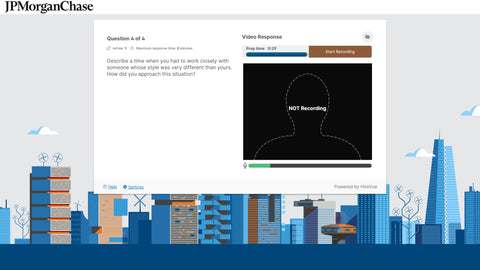
The 2027 Global Private Bank Investment Solutions Program at JPMorganChase, the Hong Kong summer internship, opens with a recorded HireVue before a human joins the process, and it cuts a lot of people early. The ones who clear it usually practiced the real questions rather than improvising into a webcam on 30 seconds of prep. This question is behavioral, and it is really asking whether you can work with someone who operates nothing like you and still deliver, which is what Private Banking teams and clients demand every day.
Here is the exact wording:
Describe a time when you had to work closely with someone whose style was very different than yours. How did you approach this situation?
It sounds soft, so people answer it softly. But the interviewer is not checking whether you are pleasant. They want evidence that when a colleague's way of working rubs against yours, you can still produce good work and keep the relationship steady.
Where candidates go wrong
- A difference with no stakes. "He liked slides, I liked docs" is not a story if nothing was ever at risk. Pick a difference that actually threatened the work.
- Blaming the other person. If they come off as the problem and you as the hero, the interviewer hears how you will talk about a future teammate or client. Show that you moved first.
- No visible action. "We figured it out" skips the exact part they are grading. Name the specific move you made to close the gap.
- No outcome. If the story ends without a result, it reads like it did not count. Say what the two of you delivered because you found a way to work together.
- Ignoring the firm. In Wealth Management you sit between clients, specialists, and senior bankers who all work differently. Frame adapting to other styles as the job itself, not a rare event.
What a strong answer does
A strong answer runs on STAR and does not linger on setup. Pick one real situation where you were tied to someone whose style clashed with yours: a teammate who wanted the whole plan mapped before touching anything while you prefer to start and adjust, or a partner who went silent in chat while you wanted to hash it out live. Make the friction concrete so the interviewer believes the difference mattered.
Then put your weight on the action, since that is the graded part. Show that you read how they operated and met them halfway: you asked how they liked to communicate, you divided the work by each person's strength, you set one shared checkpoint so nobody was working blind. End on the outcome and the takeaway: the deliverable landed, the relationship stayed good, and you came away seeing that adjusting to someone else's style is not a loss, it is how strong work gets made. Keep it near ninety seconds, one example, one clear action.
Get the ones for your role
This is only one of the four questions, and the rest are behavioral in the same way. Picking your examples ahead of time beats scrambling on the timer. OfferTutoring keeps the full JPMorganChase Global Private Bank Investment Solutions question set if you want your stories ready before you record.