GSK Situational Judgement Test 2027: Question Types & Strategy
The GSK Situational Judgement Test (SJT) presents realistic workplace scenarios and asks you to rank or rate possible responses by effectiveness. It sits inside GSK's digital assessment for 2027 roles, and it quietly eliminates more applicants than any other module — because most candidates answer with everyday instincts instead of GSK's judgement profile. Learn the question types and the scoring strategy before you sit it, or the SJT will end your application.
What the GSK Situational Judgement Test Is
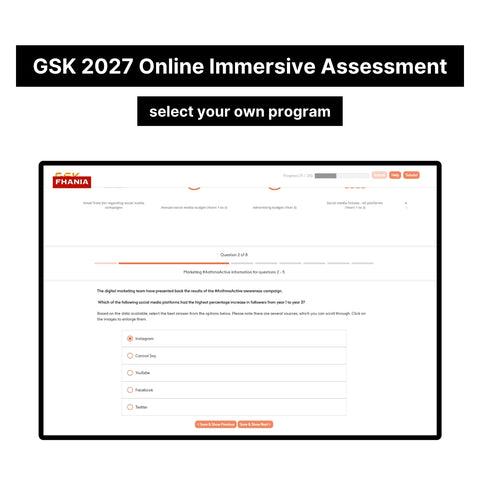
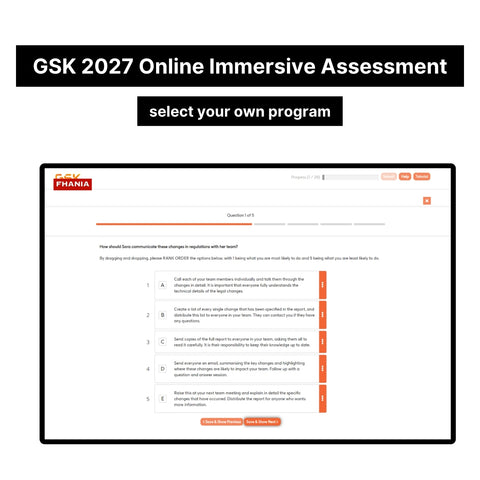
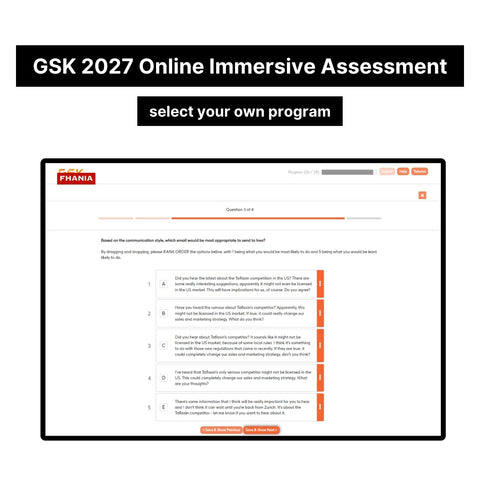
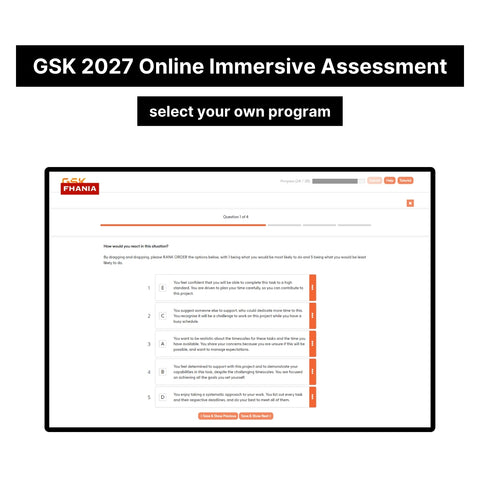
The GSK situational judgement test is a scenario-based module within GSK's 2027 digital assessment. You receive short descriptions of realistic work situations — a missed deadline, a disagreement with a colleague, pressure to cut corners, conflicting priorities — and either rank four response options from most to least effective, or rate each option's effectiveness individually. Scenarios are built around GSK's real culture: patient focus, scientific integrity, transparency, and cross-functional teamwork. This is not a personality quiz and there is no knowledge syllabus; it is a judgement test scored against an expected response profile drawn from high-performing GSK employees.
What the GSK Situational Judgement Test Assesses
The SJT assesses judgement and values alignment. GSK wants to know whether your workplace instincts match how GSK operates: do you protect patient outcomes over convenience, escalate integrity issues instead of smoothing them over, collaborate rather than work around people, stay calm when priorities collide? Each ranking is scored by its closeness to the expected profile. "Common sense" answers imported from other industries often score poorly because GSK's profile reflects a specific culture — a pharmaceutical company where scientific integrity and patient safety are non-negotiable. That cultural gap is the filter: candidates who would pass an SJT elsewhere fail here because they never learned GSK's judgement language.
How to Prepare for the GSK Situational Judgement Test
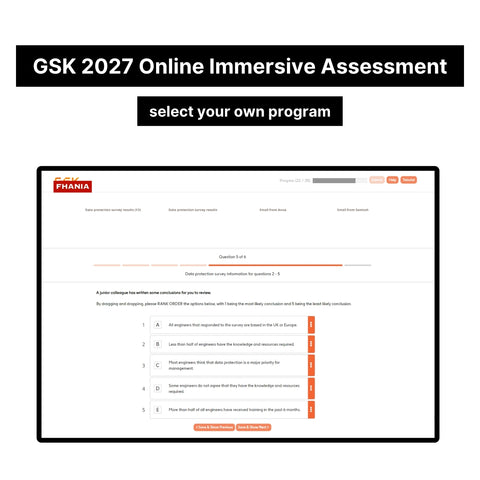
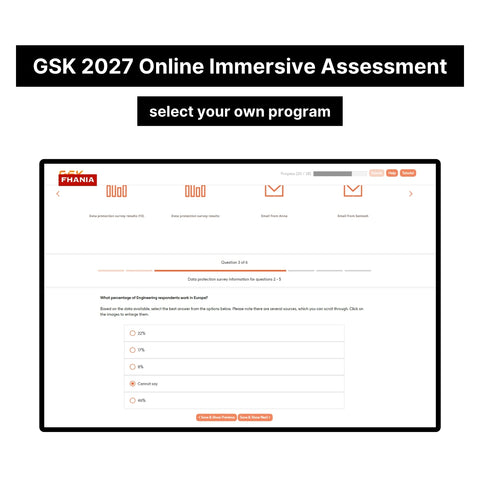
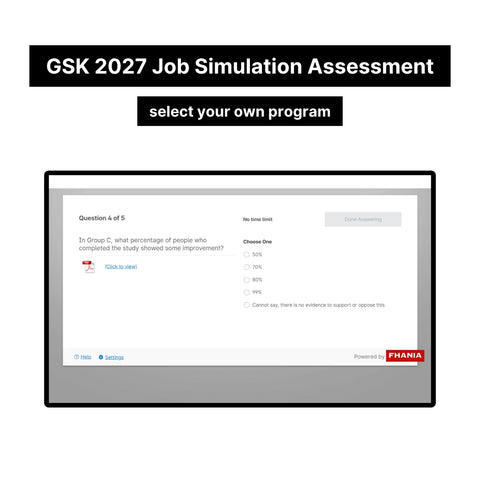
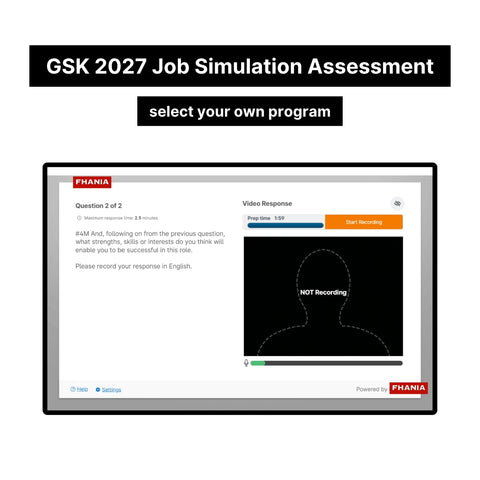
Preparation means internalising the judgement pattern, not memorising answers. Study real GSK-style scenarios and learn the decision logic: when GSK expects escalation versus ownership, when collaboration beats independence, how the values of patient focus and integrity resolve ambiguous dilemmas. Our 2027 GSK Online Immersive Assessment and Online Job Simulation Tutorials include exact-style SJT question sets with worked rankings and explanations of why each option scores the way it does — $79 one-time, instant download. Practise until the GSK pattern feels automatic, because under time pressure you will default to instinct — and that instinct must be GSK's.
Most candidates give the SJT zero preparation because it looks easy. That is the trap. Easy-looking questions with unfamiliar scoring eliminate the majority of the pool.
FAQ
What question types appear in the GSK situational judgement test? Ranking (most to least effective) and rating (how effective each response is). Expect teamwork, integrity, pressure, and priority-conflict scenarios.
Is the GSK SJT timed? Yes — it runs inside the timed digital assessment, so practise making judgement calls at pace.
Can the SJT alone fail me? It is heavily weighted in your overall digital assessment score, so a weak SJT alone can sink your application.
Should I answer honestly or strategically? Answer the way GSK's strongest performers would — which you learn by working through real GSK-style scenarios, not by guessing.
Preparing for GSK's Situational Judgement Test? Our 2027 GSK Online Immersive Assessment and Online Job Simulation Tutorials has the exact questions and answers — $79 one-time, instant download.