GIC Behavioral Interview: Questions & STAR Answers
GIC behavioral interview questions follow the classic "tell me about a time" format: leadership under pressure, conflict with a teammate, a failure you owned, a decision with incomplete information. Every answer should use the STAR structure — Situation, Task, Action, Result. No story, no credibility.
What GIC Behavioral Interviews Ask
Common gic behavioral interview questions include: Tell me about a time you led a team through a difficult situation. Describe a conflict with a colleague and how you resolved it. Tell me about your biggest failure. Describe a time you had to make a decision with incomplete data. Why GIC, and why this role? The questions are standard — the grading is not. Interviewers probe each story with follow-ups: What exactly did you do versus the team? What would you do differently? What was the measurable outcome? Vague stories collapse under two follow-ups.
What the GIC Behavioral Interview Assesses
The gic behavioral interview evaluates character and judgment: resilience, integrity, collaboration, and ownership. GIC hires people it trusts with enormous capital over decades — the behavioral interview is where trust is tested. Interviewers are listening for specificity (real details signal real experience), self-awareness (do you understand your own role in the outcome?), and growth (did the failure actually change your behavior?). Polished stories with no substance — all result, no struggle — read as rehearsed fiction.
How to Prepare Behavioral Stories with STAR
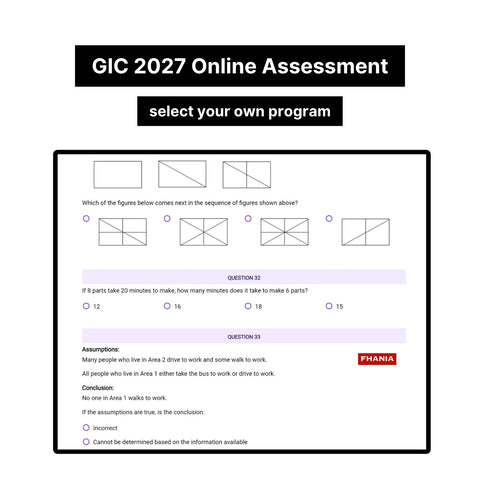
Build a bank of six to eight real stories covering leadership, teamwork, conflict, failure, initiative, and analytical problem-solving. For each, write the STAR structure explicitly: set the situation in two sentences, state your specific task, detail your actions (this is 60% of the answer — use "I," not "we"), and close with a quantified result plus what you learned. Practice each story in under two minutes. Then stress-test them: have someone ask "why" three times after each story, because GIC interviewers will. Cut any story you cannot defend under pressure — a weak story is worse than an honest "I haven't faced that, but here's the closest situation." Our 2027 GIC Learning Indicator PI Cognitive Assessment Exact Questions & Answers covers GIC's complete interview process including behavioral preparation with real question examples.
Here is the FOMO truth: candidates with no prepared stories walk in planning to "be themselves" — and discover under pressure that they cannot recall a single concrete example. Behavioral interviews reward the prepared, not the authentic. Six strong stories, rehearsed until natural, beat raw honesty every time. No stories means no offer.
FAQ
How many behavioral stories should I prepare for GIC? Six to eight versatile stories that can each answer multiple question types. Quality and defensibility matter more than quantity.
What is the STAR method? Situation, Task, Action, Result — a structure that keeps answers concise and complete. Spend the most time on Action: what you personally did.
How long should each behavioral answer be? About two minutes. Shorter feels thin; longer loses the interviewer's attention.
What if I don't have a good story for a question? Use the closest real experience and say so honestly. Interviewers prefer an imperfect true story over a polished fabrication — they can tell the difference.
Preparing for GIC's PI Cognitive assessment? Our 2027 GIC Learning Indicator PI Cognitive Assessment Exact Questions & Answers has the exact questions and answers — $79 one-time, instant download.