Fidelity Skills-Based Assessment: What to Expect
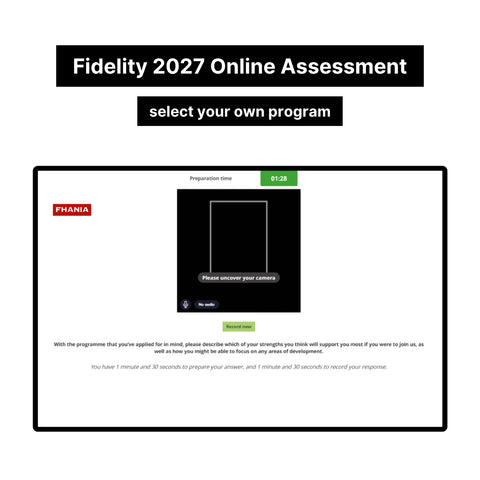
The Fidelity skills based assessment is the practical stage of Fidelity International's 2027 intake process, where you demonstrate ability instead of answering questions. Depending on your programme, it can mean a work sample, a case task, or a simulation. The format varies, but the principle is fixed: Fidelity wants to see you do the job, not just talk about it.
Fidelity Skills Based Assessment: What to Expect
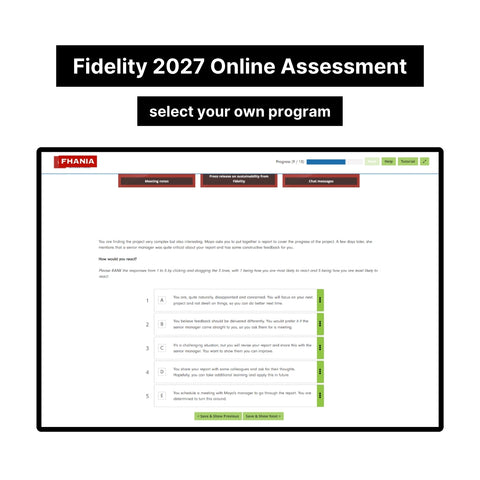
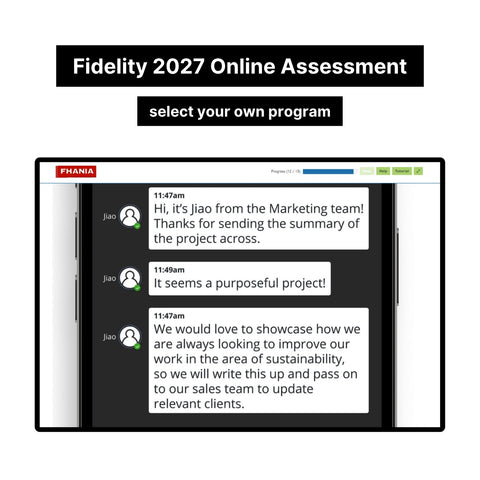
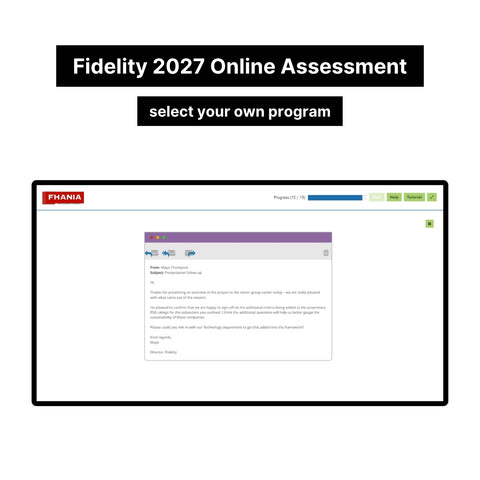
For investment roles, expect a market or company analysis task: read the materials, form a view, present it clearly. For technology roles, expect practical coding or debugging exercises. For business and operations roles, expect inbox-style prioritisation tasks or written communication exercises. You are usually given realistic materials and a deadline, then assessed on the quality of your output — your thinking, your structure, and your judgement.
What It Really Assesses
Three things: competence, judgement, and composure. Competence — do you have the actual skills the role needs? Judgement — when the materials are ambiguous, do you make sensible calls and flag what you don't know? Composure — can you produce good work under a deadline without falling apart? Assessors compare your output against the standard of people already doing the job. Polished but shallow work scores worse than rough but insightful work.
How to Prepare for the Fidelity Skills Based Assessment
You cannot cram real skill the night before — that is exactly what this stage is designed to expose. Build the underlying ability over weeks: read markets and practise writing up investment views, do timed coding exercises, or practise prioritising realistic workloads, depending on your programme. Then rehearse the format: timed practice tasks with the same constraints you'll face. Our 2027 Fidelity International Online Assessment Tutorials includes realistic skills-based practice tasks with model approaches, so you can rehearse doing the job before you're asked to do it for real.
Real Skill Can't Be Faked on the Day
The skills-based assessment exists for one reason: to catch candidates whose CVs and interviews outrun their actual ability. If your preparation has been real — practising the work, not memorising answers — this stage is where you shine. If it hasn't, no amount of interview polish will save you. For the 2027 intake, start building the skill now, while there is still time.
FAQs
When does the Fidelity skills-based assessment happen? Usually after the online assessment and phone interview, as part of the later stages. Check the official careers page for the 2027 intake timeline.
How long does the Fidelity skills-based assessment take? It varies by programme — from a one-hour exercise to a half-day task. Your invitation will specify the format.
Is the skills-based assessment the same as the assessment centre? It can be part of it. Some programmes run the skills task as a standalone stage before the final round.
What should I bring to the Fidelity skills-based assessment? Whatever the invitation specifies — usually just yourself and a clear head. The materials are provided.
Preparing for Fidelity's skills assessment? Our 2027 Fidelity International Online Assessment Tutorials has the exact questions and answers — $79 one-time, instant download.