

EY Pymetrics Games 2027: What They Measure & How to Prepare
The EY Pymetrics games measure your real behavioural traits — risk appetite, attention, fairness, learning style — and they are designed to catch candidates faking a calmer, smarter persona. The games assess you through gameplay, not self-report, so "gaming" them backfires: the algorithms detect inconsistency across games, and a fake persona gets flagged.
What the EY Pymetrics Games Are
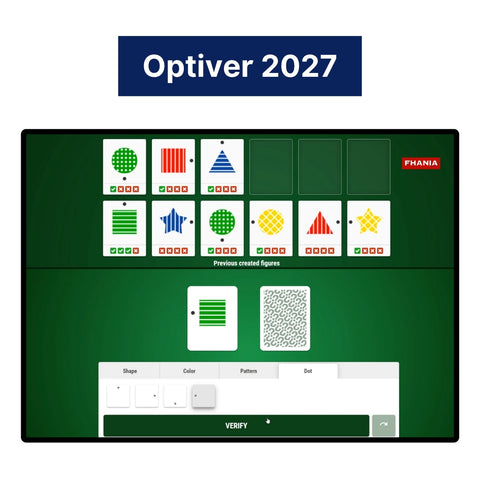
The EY Pymetrics games are short neuroscience-based games — typically 10 to 12, taking 25 to 35 minutes total. Each looks simple: tapping balloons, sorting cards, remembering sequences, splitting money with a stranger. Behind the simplicity, each measures specific traits: risk tolerance, focus, memory, generosity, decision speed.
You complete them online after the initial application screen for the 2027 intake. Each game has brief instructions and then you play — no preparation material inside the platform. Your results are compared against the trait profile of successful EY employees in your target role.
What the EY Pymetrics Games Measure
Roughly 90 traits, but the ones that matter for EY cluster into four groups: attention and focus (sustaining concentration on dull tasks?), risk and reward (sensible risks or gambles?), social fairness (sharing credit and resources?), and learning agility (adapting when rules change mid-game?).
The key insight: the games cross-validate each other. Play cautiously in the balloon game but aggressively in the card game and the system registers inconsistency — which reads as inauthenticity. You cannot hold a fake profile steady across 12 games measuring the same traits differently. The algorithm was built to detect exactly that.
How to Prepare for the EY Pymetrics Games
Three steps. First, familiarise yourself with the game types via walkthroughs or similar cognitive games — not to learn "correct" answers (there are none), but to remove surprise so nerves do not distort your play. Second, play calm and focused: tired, rushed play produces noisy data that misrepresents you. Third, play naturally and consistently — be yourself at a steady pace throughout.
Do not reverse-engineer the scoring. Candidates who try to play "optimally" produce inconsistent profiles and score worse than authentic players. The games reward the genuine article, which is what they were designed to find.
Our 2027 EY Online Assessment and Video Interview Tutorials explains how the Pymetrics-style games fit into EY's 2027 assessment sequence and what the trait profiles mean, alongside the full question bank for the written and video stages.
Why Faking It Gets You Caught
The candidates who fail Pymetrics are not the ones who played badly — they are the ones who tried to play smart. Twelve games, 90 traits, cross-validated: the system was built by people who anticipated every trick candidates try. For the 2026 application season, check the official EY careers page for your region's assessment stages, then approach the games rested and genuine. The only working strategy is the one you cannot fake — being the person EY is looking for.
FAQ
How many games are there? Typically 10 to 12 games, 25 to 35 minutes total.
Can you cheat the EY Pymetrics games? No. Traits are cross-validated across games, so manipulated play is detected and scored down.
What traits does EY look for? Focus, balanced risk-taking, fairness, and learning agility — profiled from successful EY employees in the role.
Should I practise beforehand? Familiarise yourself with the game types to cut nerves, but play authentically on the day.
Preparing for EY's online assessment? Our 2027 EY Online Assessment and Video Interview Tutorials has the exact questions and answers — $79 one-time, instant download.